
I don't know what I think about bullfighting, but I know what I think about Diego Silveti
Bethany Platanella is a travel planner and Michelin Guidebook writer based in Mexico City. She lives for the dopamine hit that comes directly after booking a plane ticket, exploring local markets, practicing yoga and munching on fresh tortillas. Sign up to receive her Sunday Love Letters to your inbox, peruse her blog, or follow her on Instagram.
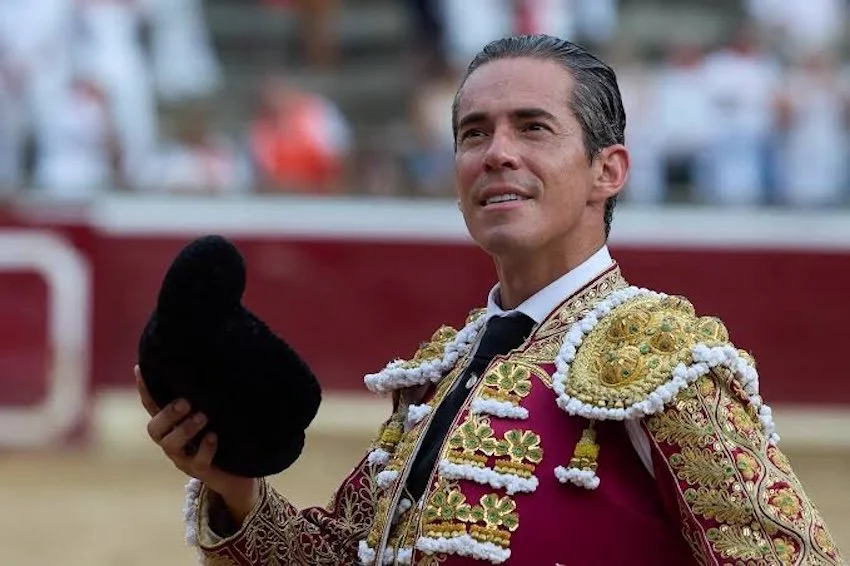
I have a type. And my type is Diego Silveti. The first time I saw him was – if you can believe it – on Instagram, and, omg, swoon. Perfect teeth, wide smile, salt-and-pepper hair, furrowed brow, high cheekbones…okay okay, I’ll stop, but yes, Diego Silveti stopped me in my figurative tracks (or should I say, in my scroll?). Who, you might be wondering, is this dreamy Guanajuatan, who regularly jetsets (with his wife and kids, sigh) to Spain (probably in first class!), always dressed to the nines?
He’s a bullfighter. A fourth-generation matador, Diego comes from a line of toro-fighting macho men who saw the sport peak and decline, yet their dedication never waned. And now, a new era is dawning on bullfighting, and Diego is at the forefront.
The first recorded bullfight in Mexico – then New Spain – took place on the Feast of Saint John in late June 1526, according to Hernán Cortés himself, who sent a handwritten letter to the King of Spain, stating:
“The next day, which was San Juan, as I dispatched this messenger, another arrived, while certain bulls were being run and in the rejoicing of reeds and other festivities...”
Throughout the next centuries, the practice would continue, but not without the occasional struggle. The Vatican stepped in several times in an attempt to abolish it; President Benito Juarez banned it in Mexico City in an attempt to modernize the Mexican Republic; his ban was later overturned by Porfirio Diaz for the significant tax revenues he could collect through ticket sales.
Which takes us to the Mexican Revolution, when a bloodthirsty, macho fighter named Juan Silveti Mañón, aka El Tigre de Guanajuato, debuted in Condesa’s historic arena (no longer in existence). He’s said to have “left a positive impression and cut off the ears of [the bulls].” This marked the start of Mexico’s longest bullfighting dynasty – two years later, Silveti Mañón would return to this same stadium to take his alternativa: the formal graduation ceremony where an apprentice bullfighter (novillero) is officially promoted to Master (Matador de Toros).
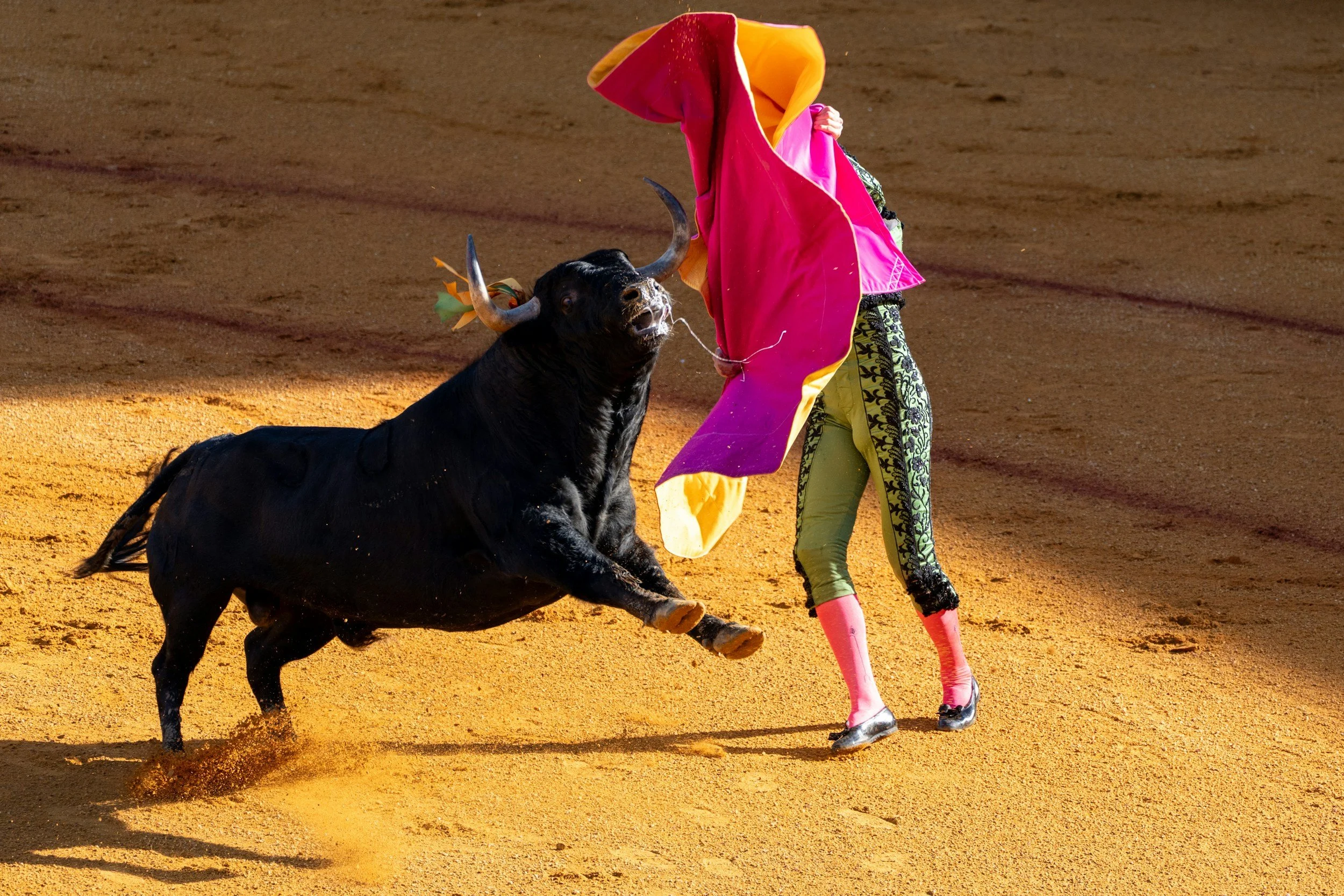
Fights in Revolutionary Mexico were reckless, and so was Silveti Mañón. As a military captain fighting in the Revolution, he interacted with the likes of Pancho Villa and Emiliano Zapata. He has 32 registered gorings and, it’s been whispered, multiple gunshot and knife wounds from street fights. Also known as Juan Sin Miedo, he wore a hair extension across his forehead to hide a particularly unpleasant goring, and was known to carry around a pistol at all times.
In 1929, Silveti Mañón’s son was born. Juan Silveti Reynoso had no intention of being a bullfighter. He wanted to be an architect. But one day he went to a cattle ranch in Tlaxcala with some friends, and his plan changed.
Unlike his father, Silveti Reynoso, or El Tigrillo, was a purist, perfecting the classic techniques of stopping, pacing, and commanding – he moved in harmony with the bull. He was highly precise, killing the beast with one clean insertion to ensure a dignified death. He was an artist in the ring, coinciding well with what would be considered the sport’s Golden Age. Mexico City’s new 40,000+ capacity arena turned bullfighting from raw violence to elegant entertainment, where bullfighters were as popular as fútbol players, often seen rubbing shoulders with celebrities and politicians.
But all good things must come to an end, and by the late 20th century, the "Golden Age" of bullfighting was fading. Two of Silveti Reynoso’s sons, Alejandro and David, took over the dynastic profession anyway. When David debuted, he was noted for a style more akin to his daring grandfather. He stuck close to the bull, suffering countless injuries that required 40 surgeries. The fighter known as El Rey David retired several times, only to return, injure himself, and retire again. In the background, the King suffered from bi-polar disorder, the condition that would eventually cause him to take his own life.
Which brings us to today. To Diego Silveti, David’s son and fourth generation matador, fighting in a vastly different world than his predecessors. And while he fights in the ring, the future of that ring is being decided outside it.
Bullfighting has long sparked heated debate – since the Catholic Church’s attempt to eliminate the sport in the 16th century, it’s hardly been a smooth ride. You, too, probably have an opinion or two. But if we can stand, just for a few minutes, to remove all preexisting notions, here’s the argument we’re left with.
On September 29, 2026, the Mexican Senate approved a new General Law on Animal Welfare, Care and Protection, which now heads to the Chamber of Deputies. If the Deputies approve it, the law would “establish a nationwide framework for animal protection, including standards governing welfare, mistreatment and cruelty, while recognizing animals as sentient beings and distributing enforcement responsibilities among federal, state and municipal authorities.”
This does not ban bullfighting outright. But, it can fundamentally change the rules of the sport, which affects far more than the bull, the matador, and the arena. In 2025, Mexico City enacted a non-violence rule in the bullring, where fights are effectively bloodless, and to which Silveti (amongst others) was strongly opposed. Silveti responded:
“What they propose goes against the essence and the rituals of bullfighting. It’s a veiled prohibition that opposes the ways in which it has been done since its origins.”
Still, Diego Silveti and the larger taurine community aren’t anti-animal-welfare legislation as such. What they want to know is how could this framework affect a cultural heritage and, moreover, the thousands of agricultural workers, livestock raisers, craftspeople and trainers who rely on bullfighting for their livelihood. They want to be at the table when the framework is drafted.
In terms of my own opinion on bullfighting, I simply don’t know what I think. I could go either way on this argument. All I can say for certain, is if Diego Silveti is going to be in the ring, I’m going to be in the crowd. Maybe with my own blindfold.