Hurricane preparednessA hurricane is heading your way. Now what?
Publisher’s Note: With Hurricane Polo currently being watched along Mexico’s Pacific coast, I thought it was a good time to share some general hurricane-preparedness information. This is not a forecast for Polo. Storms can change quickly, so please follow the latest information and instructions from Mexican authorities for your specific area.
Hopefully, Polo decides to be a whole lot less dramatic than some of the forecasts are suggesting. But whether it actually comes your way or simply gives you a very good excuse to check the batteries and fill the gas tank, it never hurts to be prepared.
If you live on Mexico’s coast, hurricane preparation shouldn’t begin when the first bands of rain arrive. By then, the important decisions should already have been made.
It’s very easy to look at a storm that’s still days away and think, It’ll probably turn. Maybe it will. Maybe it won’t. But storms have a habit of doing whatever they please.
So, if a hurricane or tropical storm is heading your way, here’s what you should know and what you should do.
Knowledge is power
Do you live in an evacuation zone?
Where is your nearest temporary shelter?
Which roads would you take if you needed to leave?
Where would your family meet if you became separated?
And how will you receive official emergency information?
Those aren’t things you want to be figuring out while the rain is coming sideways, so familiarize yourself with the answers now.
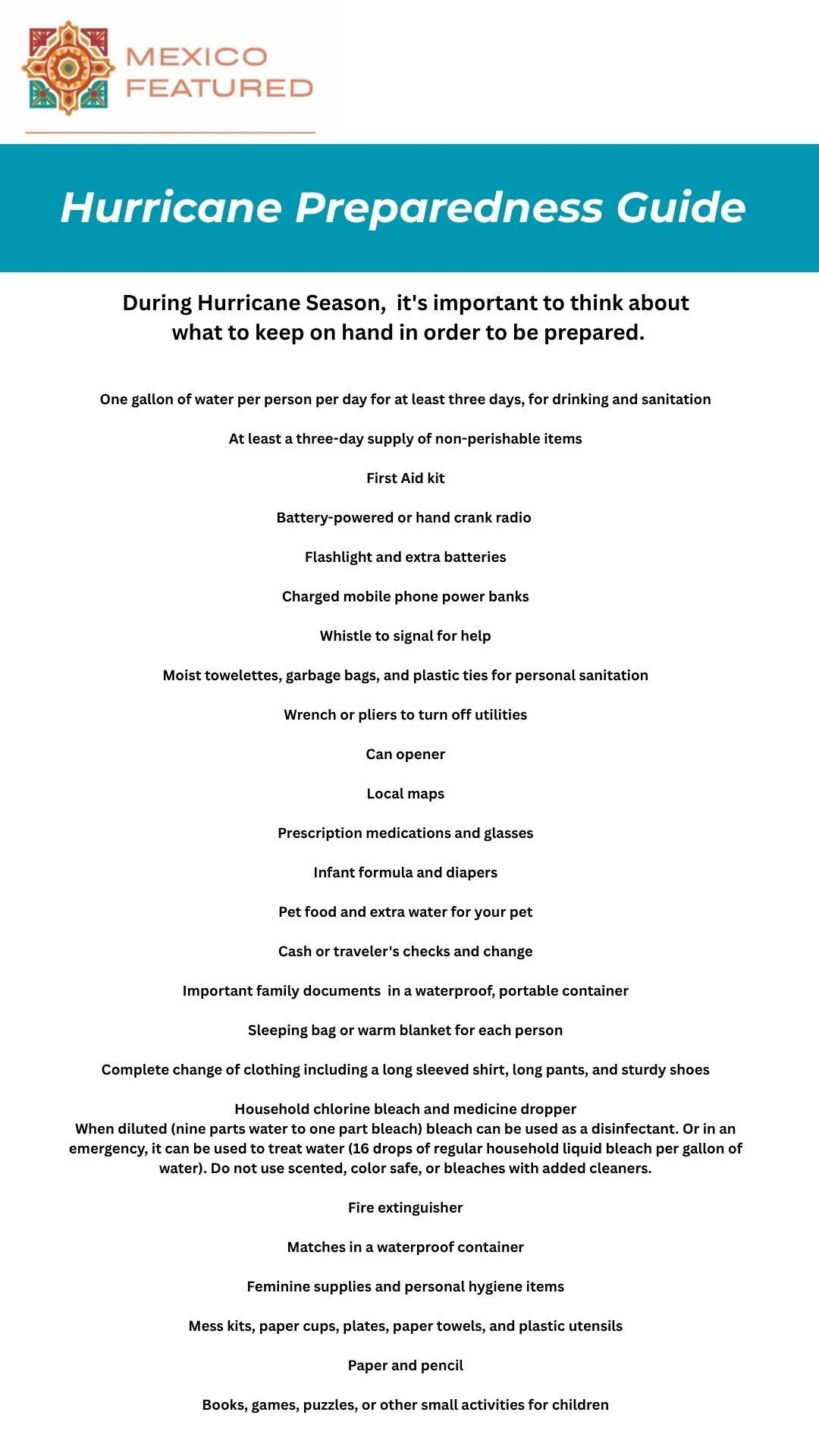
It’s also a good idea to have enough supplies at home to get through a period which may see you without electricity or running water. Think drinking water, non-perishable food, medications, first-aid supplies, flashlights and spare batteries, phone power banks, a battery-powered radio if you have one, important documents, cash and, of course, whatever your pets need.
And put those important documents somewhere waterproof! Floodwater has absolutely no respect for birth certificates, passports, favourite photos, or the folder you carefully labelled ‘IMPORTANT DOCUMENTS.’
Get your home ready
When a storm approaches, clear drains and gutters so leaves and debris don’t turn them into miniature swimming pools. Bring outdoor furniture inside and secure anything that could become airborne.
Check your windows, your doors, and your roof for signs of leaks.
Secure outdoor equipment such as grills, and make sure gas and electrical connections are protected.
This is also the time to think about your car.
During hurricane season (generally June through November), keeping the gas tank reasonably full is a very good habit. If authorities tell you to evacuate, you need to evacuate, and sitting in a kilometre-long line at the gas station while a storm is bearing down on you isn’t the ideal time to discover you should have filled up yesterday.
If you need to leave, take your emergency bag, medications, documents, pets, and essential supplies, and go.
When the storm arrives
Stay inside and away from windows and doors. Don’t be fooled if things suddenly become eerily calm.
The eye of a hurricane can bring a temporary period of much calmer weather before the dangerous conditions return. It’s not an invitation to pop outside and see what’s happening.
And forget about surfing for now! Emergency services are stretched to their limits during times like this, so please don’t take them away from a situation that requires their full attention by doing something you already know you shouldn’t be doing.
If the power goes out, use flashlights rather than candles whenever possible. Follow instructions from your electricity, water, and gas providers about disconnecting your utilities, and don’t take unnecessary chances with electrical equipment.
Most importantly, keep an eye on official updates. A forecast your mate posted yesterday isn’t the forecast you’re dealing with today, so I’m stressing the word “official” here. Think Servicio Meteorológico Nacional de Mexico (Mexico’s National Meteorological Service), your municipal and state Civil Protection services, the NOAA NWS National Hurricane Center, and your local area alert apps.
When the storm has passed
The danger doesn’t necessarily end when the rain stops. Once authorities say it is safe to go outside, be extremely careful around floodwater. Don’t walk through, it and don’t drive through it.
Floodwater can look deceptively harmless while hiding open drains, debris, contaminated water, damaged roads, or a current strong enough to move a vehicle.
Don’t touch fallen power lines, either. A cable doesn’t have to be sparking to be dangerous.
Before reconnecting electricity, gas or other utilities, check your home carefully for damage and follow the instructions from the relevant service provider.
The most important thing you can do during hurricane season is prepare before you need to. You may never need the emergency bag. You may never need to evacuate. The storm may turn, weaken, dissipate, or completely miss you.
But having the water, the batteries, the documents, the full-ish gas tank, and a plan already sorted means that if the storm does come your way, you’re dealing with the weather rather than scrambling to figure out what the hell you’re supposed to do.
A hurricane isn’t something you can control, but being prepared for one is.