
From Here: A Saturday in Querétaro
Dr. Mark A. Arcuri is an integrative coach, author, speaker, and psychology professional based in Querétaro, México, where he works with clients worldwide. He is the author of A Life Aligned, serves as Associate Dean and Program Director of the BS in Integrative Health program at Walden University, and writes on Substack. More at drmarkarcuri.com.
An Uber driver recently asked me, “¿De dónde eres?” Then, before I could answer in Spanish, he repeated the question in English: “Where are you from?” I told my friend Victor about it on Saturday as we walked through Centro, and we laughed about what might have given me away. My appearance probably did most of the work. The fact that the driver supplied the English translation before hearing a word from me removed any doubt about how he had read me.
Victor had been reading some of my earlier writing about living in México. At some point in our conversation, he said he suspected that soon enough people here would stop treating me like a foreigner. I laughed because I can think of several people, Uber drivers among them, who may need more time. I kept thinking about his comment, though, because it came from a friend who has known me long enough to see something a stranger in a rearview mirror cannot.
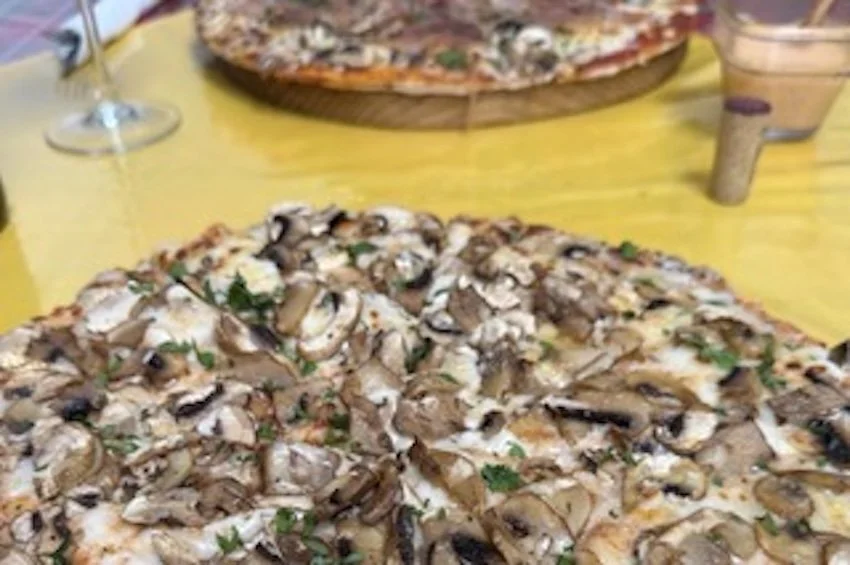
We spent much of the afternoon in Centro. We had pizza and a bottle of Italian wine at Trattoria La Nonna, then continued the conversation over coffee at Bigotes at Carola. I also stopped at Cházaro, my favorite coffee roaster in Centro, to buy beans for a friend I would be seeing in the United States later in the week. Eventually we wandered into an alchemical shop where we came away with tarot cards, an Om chime, a blessing for my door, and a few other things that seemed reasonable at the time. We pulled a few cards over coffee. Mostly, we talked, then kept talking as the afternoon moved from one place to another.
The schedule itself was ordinary, which may be part of why I noticed the day so much. We spent time together in a city where both of us already had lives, moving through familiar places while the conversation changed subjects many times. There was no particular occasion attached to the afternoon. By the time I went home, I had the sense of having spent the day exactly where I wanted to be.
I have lived in Querétaro for two years now, after visiting for nearly a decade before moving. For a long time, I learned the city through places themselves. I noticed streets, plazas, restaurants, churches, traffic patterns, and the practical details that help a visitor or new resident find a way around. Those things still register, and I now notice something else when I return to familiar places: I remember who I was with, what we talked about, and what was happening in our lives at the time.
In my last Mexico Featured piece, I wrote about Plaza de Armas and the many unrelated lives that can occupy a public place at once. I was thinking then about what becomes possible when people have somewhere to sit, linger, eat, talk, or simply pass through. That afternoon gave me another way to think about the same part of city life. Over time, I associate particular tables, streets, shops, and corners with the private histories that have unfolded there.
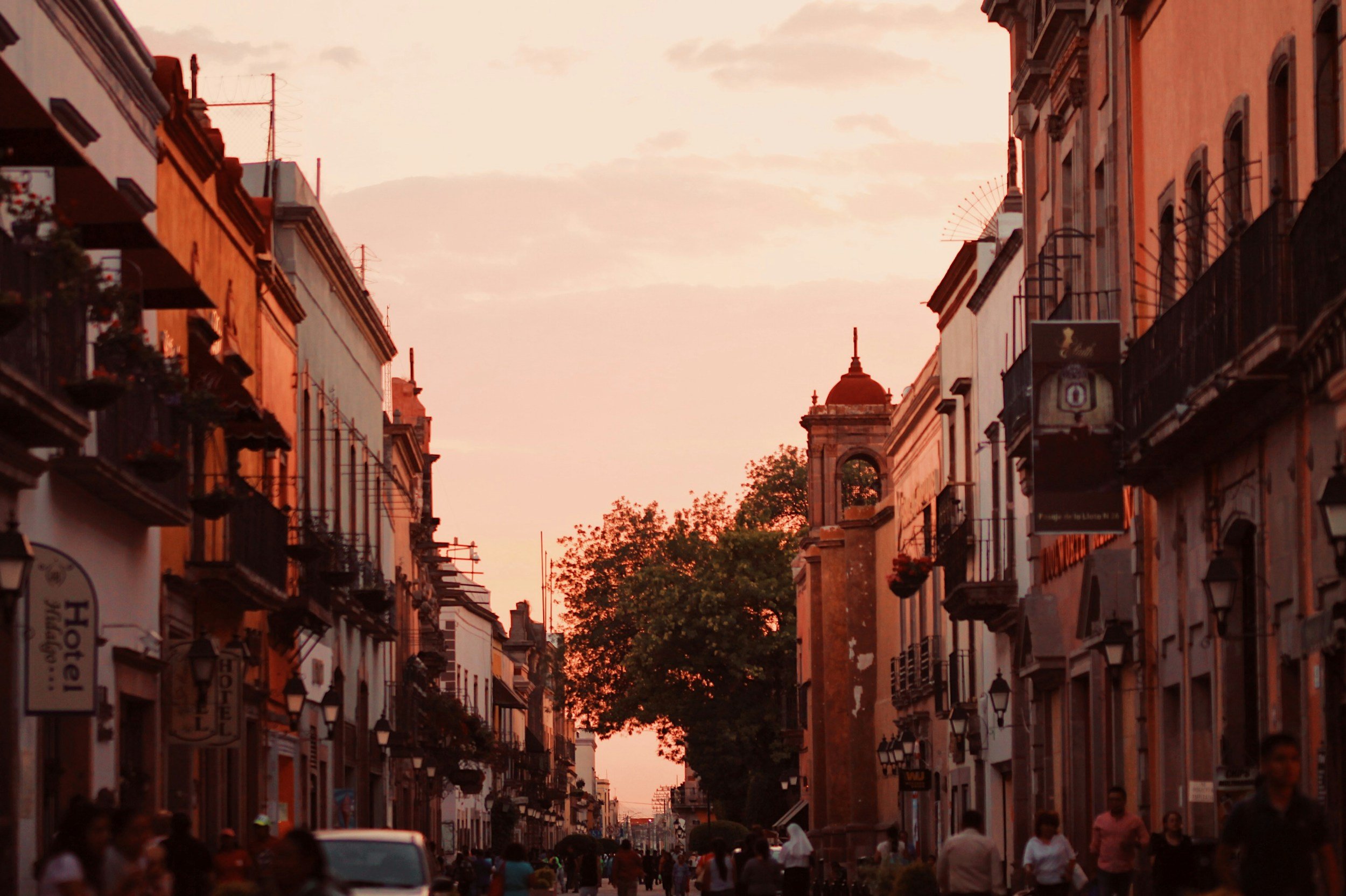
The next time I pass Trattoria La Nonna, I may remember the bottle of wine and whatever we were talking about when it arrived. Coffee at Bigotes at Carola may bring back the cards spread between us and the conversation that kept going around them. The shop will probably remind me that I apparently needed both an Om chime and a blessing for my front door on the same Saturday. Those associations are now part of my experience of Querétaro, which includes more of my history with other people than it did when I first arrived.
Before moving, I underestimated how much relationships would alter my experience of the physical city. I knew that friendship would be part of making a life here and that it would take time. A place I once knew because I had visited it becomes different after I have sat there with someone I care about through enough conversations that the setting and the relationship become linked in memory.
In February, my residency becomes permanent. That change comes with a date and paperwork I can point to. Other changes in living somewhere happen gradually enough that I cannot put a date to them. I cannot tell you when Victor stopped being someone I knew in Querétaro and became a friend whose company could fill an afternoon without either of us needing to make much of a plan. I only know that on Saturday I became aware of how much history we already share.
Perhaps that was what I heard underneath his prediction that I would eventually stop being treated like a foreigner. We both found the idea that I might suddenly look Mexican funny. My Spanish can still become clumsy at exactly the wrong moment, and strangers will continue making quick judgments based on what they see and hear. People who know me have access to different information: previous conversations, shared jokes, familiar habits, things we have helped each other through, and an expectation that there will be another afternoon after this one.
The Uber driver and Victor were both responding to something real. One saw a passenger who looked foreign and made what was probably a useful decision to repeat his question in English. The other has watched me live here long enough to imagine a future in which my presence in Querétaro feels less unusual to the people around me. Those two experiences can coexist. I can be the person an Uber driver immediately identifies as foreign and also the person a friend assumes will still be here for the next conversation.
I expect another driver will ask me where I am from and translate the question before giving my Spanish a chance. I will probably laugh again, especially if it happens soon enough for me to tell Victor. When I think back on that Saturday, though, I will remember pizza and wine at La Nonna and coffee at Bigotes with cards spread between us. I will remember stopping at Cházaro for beans to bring to a friend in the United States, and the chime and blessing that eventually came home with me. Most of all, I will remember sitting with Victor and talking for hours in Querétaro, which feels like a good way to have spent a Saturday.