
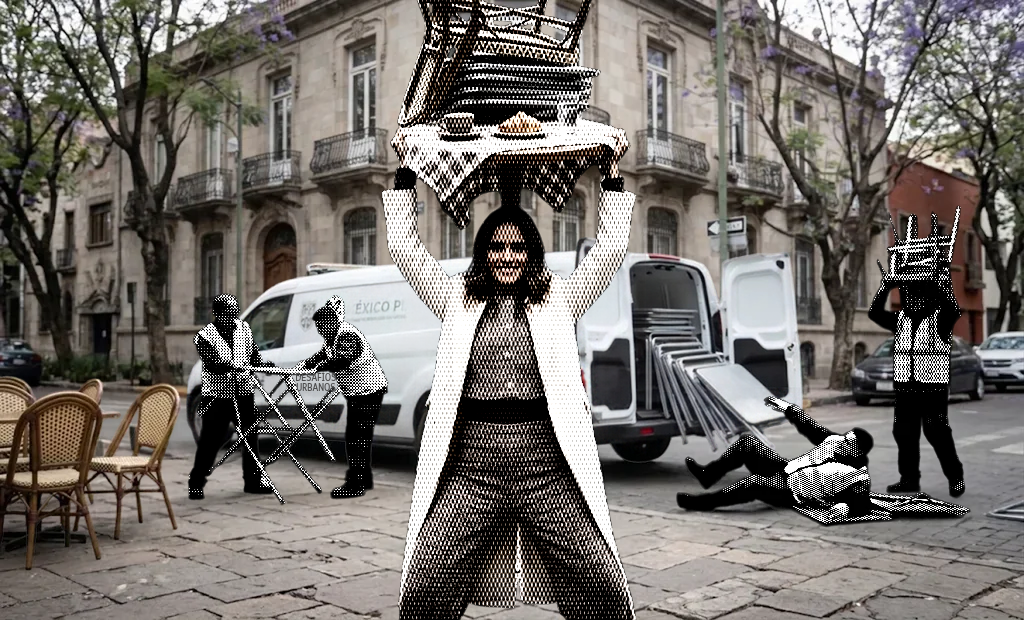
Mexico City’s most online mayor is coming for your café patio
“The alcaldesa took everything last night,” a waiter told me.
Everything is a slight exaggeration. Where nine tables once stood, four remain (please don’t fact check me on those exact numbers) and where a lovely collection of potted plants lined the facade, zero survived the vespertine visit.
Alcaldesa (mayor) Alessandra Rojo de la Vega is quite the star. She’s hot, she’s loud, she’s social-media-savvy. And she’s determined to take down Morena (or, at minimum, remain the party’s key opposition leader). She’s a pioneer of gender safety, building a network of 400 “Puntos Violeta,” safe spaces where women at risk can wait for help from the borough’s police (she even signed an agreement to put 186 of them inside local restaurants – ironic, given what follows).
Here, women can start the process of reporting violence with support from a team of lawyers and psychologists on call 24/7. (Alcaldía Cuauhtémoc) She’s overseen the rehabilitation of public parks and walkways, including a total revamp of Plaza Río de Janeiro. During the recent dog-poisoning scandal in Condesa’s Parque España, Rojo de la Vega raised the alarm by immediately hitting the streets, declaring “No son cifras, son vidas” (“They’re not numbers, they’re lives”) and urging witnesses to come forward. A couple of days later, she delivered security footage gathered from neighbors to the city prosecutor’s office, and on Friday, October 30, city police announced the suspect’s arrest.
Still, she’s not everyone’s cup of tea, and her latest restaurant raid serves as clear evidence.

In Mexico, there are no quiet fans
From kindergarten futbol fields to World Cup stadiums, Mexico has turned cheering into something of an art form. And not because of the athletes or the games themselves.
You see, I've learned a thing or two after years of attending sporting events in Mexico, and it's that nobody, and I mean nobody, comes to sit quietly. It doesn't matter whether you're watching a professional athlete compete in front of thousands or a group of six-year-olds chasing a ball around a field. The enthusiasm is remarkably similar. The volume is impressive. The language can be colourful. And the emotional investment? You would think someone's entire future depended on the outcome.
Coming from Canada, where spectators are generally expected to maintain at least some degree of composure, it was one of those cultural differences that initially caught me off guard. Here, the crowd isn't simply watching the game. It's actively participating, and sometimes, the spectators are every bit as entertaining as the athletes.
Let's just say officiating a sporting event here is probably not a career for the thin-skinned.

From Here: Beginning again, 30 years later
There is something curious about having to explain a period of one's life that has long since become part of an established history. I remember the education and training, the people involved, and the professional work that followed. The application requires a different kind of accounting. Dates, documented hours, evaluations, and original signatures have to establish what occurred, often for someone who had no connection to that period and must make a determination according to present-day standards.
The licensing specialist working with me in Texas has been remarkably attentive, asking questions that may help the Board understand my background and anticipate concerns before the application reaches a decision. I appreciate that approach, particularly because some of the original institutional records are no longer available. Our correspondence has involved reconstructing a professional history from documents that still exist and acknowledging the limitations of what can now be verified. The process has given me an unexpected opportunity to look again at the years when I was still becoming established in my field.
Dallas itself has a place in that history. Following completion of my doctorate in 2002, I spent a year at UT Southwestern Medical Center in a clinical psychology fellowship with the Consult Liaison Psychiatry and Behavioral Medicine service. It was an important period in my professional development, and I could hardly have imagined then that I would return more than two decades later for a fingerprinting appointment related to another licensing application. This time, I traveled from my home in México, where much of my work now takes place remotely and where my daily life has developed in directions I had never anticipated.
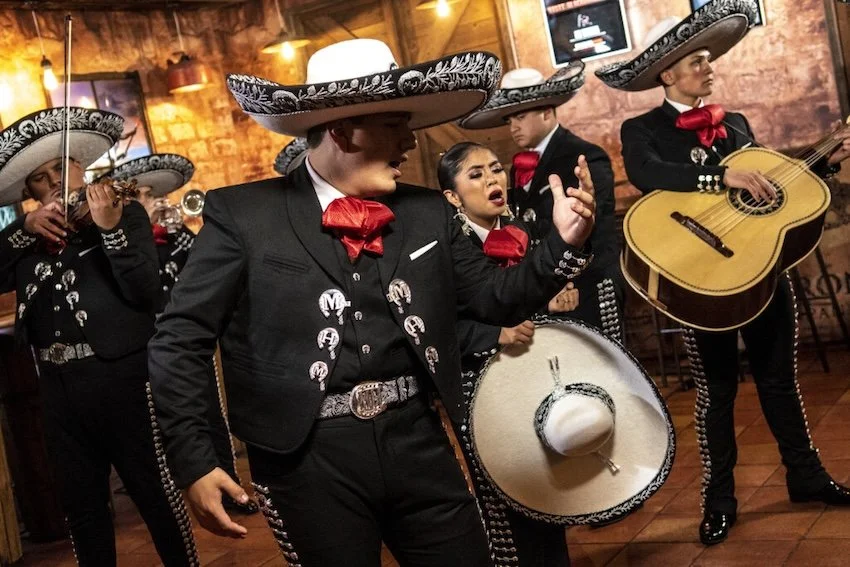
Mexico has a song for every kind of heartbreak
There are few things quite as dramatic as a broken heart, and if you’ve spent any time listening to Mexican music, you’ll know that pretending everything is fine isn’t always the preferred response.
Sometimes heartbreak calls for a quiet drink and a little solitude. Other times, it calls for a mariachi band, a public declaration of undying love, a dramatically passionate exit, and enough emotional turmoil to keep the neighbours entertained for the rest of the evening.
I’m exaggerating, of course. Slightly.
But spend enough time in Mexico and you’ll discover that love and loss occupy a rather significant place in the country’s musical traditions, and that’s there’s a song for almost every stage of a romantic disaster.
The wonderful thing is that these songs don’t necessarily expect you to get over it. Sometimes, they simply let you feel it.