
From Here: What a plaza does
Dr. Mark A. Arcuri is an integrative coach, author, speaker, and psychology professional based in Querétaro, México, where he works with clients worldwide. He is the author of A Life Aligned and serves as Associate Dean and Program Director of the BS in Integrative Health program at Walden University. More at drmarkarcuri.com.

When I think of Plaza de Armas in Querétaro, I think first of the fountain. I took a photograph there that caught one of its streams of water suspended above the stone, with a cluster of brightly colored balloons blurred in the background. The photograph leaves most of the plaza outside the frame, yet it contains much of what draws my attention when I am there: the Fuente de los Perritos, children playing nearby, vendors carrying balloons and toys, and music coming from the restaurants along the plaza.
None of those things belongs to the same activity. The children are doing one thing, the vendors another, and the people at the restaurants something else again. Others sit or pass through. Some appear to have somewhere to go, while others seem content to remain where they are. The plaza accommodates all of them without requiring them to be there for the same reason.
I have used Plaza de Armas that way myself. For a while, I often met my friend Uriel there on Sunday mornings. He came to practice English, and I came to attempt my Spanish. We would sit together and move back and forth between the two languages while the rest of the plaza continued around us. The plaza was simply where we met, and our reasons for being there existed among many others.
Much of adult life is organized around purpose. We go somewhere because there is something to accomplish when we arrive. Work has an expectation attached to it. Stores are places where we buy things, and restaurants assume we will order. Even leisure can become another scheduled activity, with a reservation, a ticket, or a plan for how the time will be spent. A plaza allows for something less organized: a person can sit on a bench, meet someone, walk through on the way elsewhere, stop because something caught their attention, or remain for a while.
I have become interested in what that makes possible. The restaurants surrounding Plaza de Armas are commercial places, and vendors make their living within it, yet being in the plaza itself requires no transaction. A child does not need to be enrolled in anything to play near the fountain. Someone sitting alone does not need to explain why they are there. People who may have little else in common occupy the same physical setting for a period of time and then continue with their lives.
Researchers use the term “third places” for settings outside home and work where informal contact with other people can occur. In a scoping review of 32 studies involving older adults, Masaki Sugiyama found that accessible community facilities, local businesses, and open or green places were often associated with greater social interaction. The authors were also careful about the limits of the evidence, which is still developing. Their findings point toward a fairly modest possibility: the places where we live can affect how easily we encounter one another.
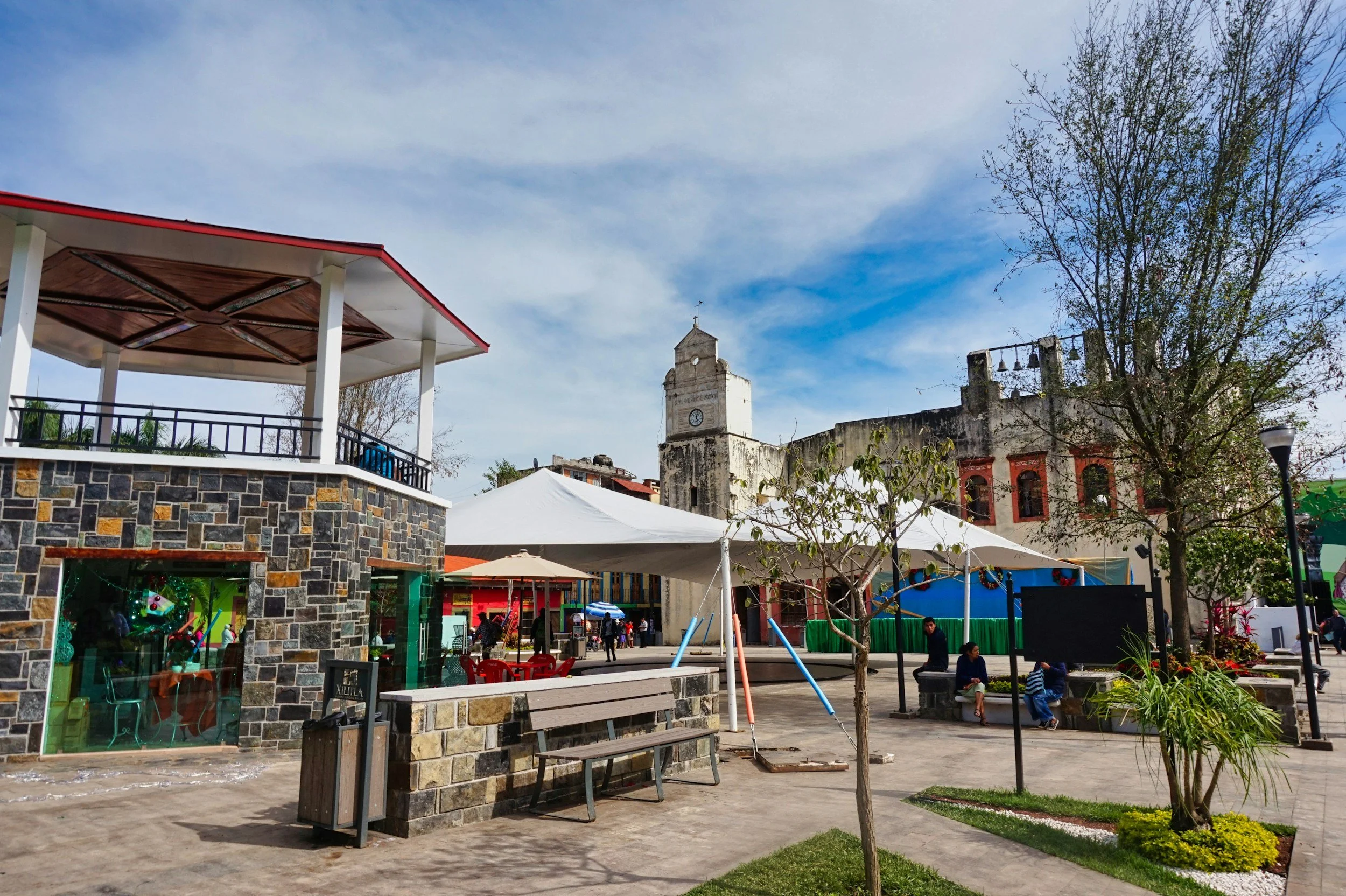
That possibility interests me because conversations about health and well-being often focus on what individuals do. We talk about sleep, movement, stress, food, relationships, and the choices people make each day. Those choices take place within surroundings that make some behaviors easier than others. A place where people can walk, sit, linger, and encounter one another creates opportunities that do not arise in the same way when daily life moves from a private home to a car to another private interior.
The encounters themselves may be small. Most of the people sharing Plaza de Armas on a particular day will never know one another, and many will never speak. They are still aware of one another. A child near the fountain, a vendor passing with balloons, a conversation at another table, or music reaching beyond the restaurant where it began becomes part of the common experience for a few minutes.
Close relationships carry forms of intimacy and support that a public square cannot provide. Ordinary life also includes people we recognize without knowing well, brief exchanges, repeated faces, and moments in which we participate in something because we happen to be there together. The research on third places interests me partly for that reason. It pays attention to forms of social contact that are easy to miss when we think only about friendship, family, or organized community.
Technology has changed how much of that contact is necessary. I can work from home, order food, conduct business, communicate with friends in other countries, and complete much of an ordinary day without leaving the house. I appreciate many of those conveniences and depend on some of them. They also make it possible to remove a surprising amount of incidental human contact from daily life.
Plaza de Armas interrupts that possibility simply by being there. The fountain gives children something to gather around. The benches give people somewhere to remain. Restaurants send music and conversation beyond their own tables, while vendors move among everyone else carrying things designed to attract attention. None of this guarantees connection, and nobody needs to participate in every part of it. The plaza makes contact possible without arranging it in advance.
I am cautious about drawing cultural conclusions from what I observe in Querétaro. I live here, and I continue to learn how much I do not know. Public squares have long histories in many countries, including the one where I was born. What living here has done is make me notice them more, especially the simple fact that a physical place can make it easier for people to be in one another’s presence without organizing an event to make that happen.
I think that is part of what caught my attention when I took the photograph. I was focused on the water and the stone, and behind them the balloons became patches of color. The people themselves are almost absent from the image. Their presence is suggested by what surrounds the fountain: toys being sold, children nearby, restaurants open to the plaza, and the movement continuing beyond the part the camera held.
I like the photograph because it does not explain the place completely. Plaza de Armas is doing several things at once, depending on who has entered it and why. Someone is earning a living there. Someone else is having lunch. A child is interested in the fountain or in one of the balloons behind it, and another person may be sitting for no reason that needs to be named.
The next time I am there, much of this will probably happen again with different people. The Fuente de los Perritos will still be in its place, the restaurants will open onto the plaza, and people will arrive carrying whatever brought them into the center of Querétaro that day. For a while, their separate lives will occupy the same place. Then they will move on, leaving room for whoever comes next.