
Counting Mexico's wonders: The UNESCO list
Gordon Hawkes is a world traveller with over 110 countries visited. Mexico is his favourite place in the world, a land he turns to whenever he is lost or confused with life, which means he visits regularly! He loves hiking in a desert wilderness or sitting in a dusty library with old books.
Antipater of Sidon never saw the Hanging Gardens of Babylon. He put them on his list anyway, around 100 BC, alongside six other wonders he thought worth the journey — and modern archaeologists, who have never found a trace of a garden on that scale, are no longer sure the place existed at all. Every list of wonders works this way. It is a record of what one man had heard of, and of what he happened to rate.
Why seven? To the Greeks seven was a mystic number: there were, for example, five known planets plus the sun and moon, hence seven celestial objects. Other writers followed Antipater's example, offering their own lists, but there was a core of recognized sites that included the Great Pyramids, the Walls of Babylon, the Mausoleum at Halicarnassus, and the Colossus of Rhodes, with slightly less consensus over properties such as the Temple of Artemis or the Statue of Zeus at Olympia.
Over time the limitations of the list were exposed. It had been compiled when much of the world was unknown to the Greeks, and none of the authors were aware, for example, of the Great Wall of China. Rome's Colosseum is not on the list either, a building we consider ancient but which would not be built for another 200 years. As the centuries passed humans became ever more aware of distant civilizations, while new and magnificent buildings continued to be built around the Mediterranean world. People also started to value natural wonders. Seven was clearly no longer an adequate number for the modern world.
So how many "wonders of the world" are there? There is a definitive answer: 1,272. These are the sites, spread across 173 countries, that are recognized by UNESCO and placed on their World Heritage List as being of "Outstanding Universal Value to all of humanity."
The list was created in 1978 with just 12 original nominations, but the story starts some twenty years earlier. In 1959, Egypt planned to build the Aswan High Dam, creating a lake that would flood the great temple at Abu Simbel as well as other monuments in ancient Nubia. Egypt and Sudan asked UNESCO for help and an international campaign was launched. In what was the world's biggest jigsaw puzzle, the great temple was cut into massive stone blocks which were moved to higher ground and reassembled against specially constructed reinforced-concrete domes. As the young engineers and administrators who had raced against the clock in the Egyptian desert rose through the ranks at the UN, they brought a belief that the world should never again risk losing such a magnificent testament to human achievement.
Yet the idea struggled to gain traction. One reason was that there were already organizations to oversee such work, led by the International Union for Conservation of Nature (1948) and the International Council on Monuments and Sites (1965). The catastrophic 1966 flood in Venice once again focused attention on the vulnerability of humanity's most admired inheritance, and in June 1972 delegates at the United Nations Conference on the Human Environment in Stockholm voiced overwhelming support for a governing body that had the legal and political power the previous bodies had lacked. From there things moved quickly, and the World Heritage List was created in 1978. Unlike the ancient seven, both man-made and natural wonders were included, the latter on the initial list including the Galápagos Islands, Simien National Park in Ethiopia, and three national parks in North America.
The first drive towards Mexican participation came from the academic world, particularly the archaeologists and historians of the National Institute of Anthropology and History, who hoped that by adding sites to the UNESCO list they might acquire support for conservation. After Miguel de la Madrid became President in 1982 the movement gained support at the highest level, and Mexico ratified the World Heritage Convention in February 1984. Working through organizations such as the National Institute of Anthropology and History (INAH), advisory bodies were established to evaluate each tentative site. These groups did not have to work in a vacuum. Earlier work from men such as Dr. Guillermo Tovar de Teresa, the influential Mexican historian who had spent his life fighting to preserve Mexico's colonial and indigenous architectural legacy, provided a solid starting point. A nation nominating a site is no guarantee that it will be accepted for Heritage status, for UNESCO demands not only a strong argument for inclusion but plans for long-term protection.
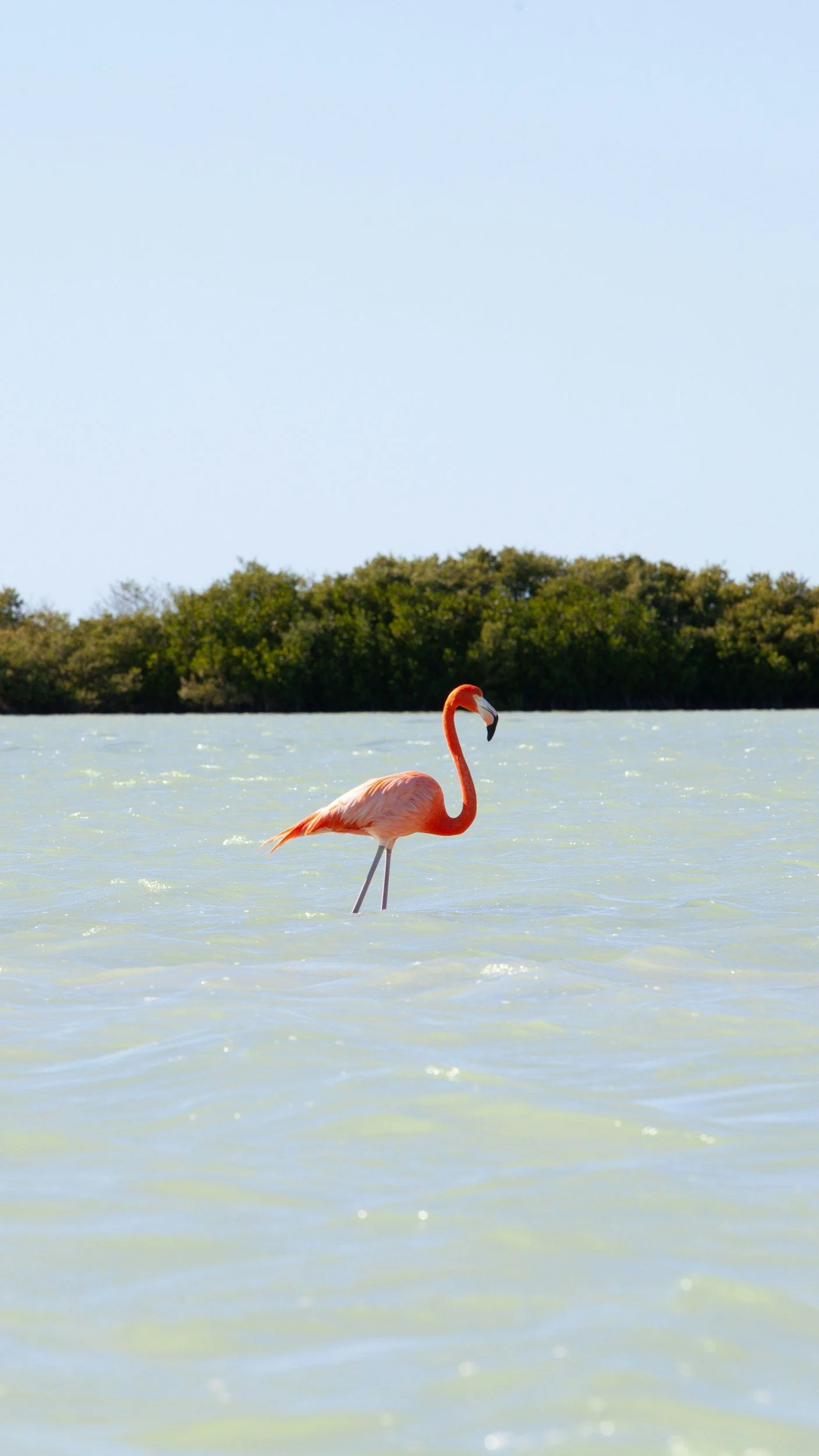
The first six Mexican sites were placed on the World Heritage List at the 11th session in Paris in 1987, and these established two patterns that continue today. Archaeological sites would feature prominently, as would the old colonial centers of Mexican cities. In part this was because UNESCO demanded guarantees of preservation, and this is far easier to offer for a relatively small archaeological site than for a natural park that might cover thousands of square kilometers. Sian Ka'an was the exception, and was included in the original list. It stretches along 120 kilometers of Yucatan coastline and is home to rare animals such as jaguars, tapir, and manatee. The fact remains that of the 36 Mexican properties now on the list, ten are pre-Hispanic archaeological sites and 11 cover the architectural legacy of colonial cities.
Mexico has also made some surprising nominations, one of the most notable being the Luis Barragán House and Studio in Mexico City. Built in 1948, in what was then the suburbs, it represents an outstanding example of the famous architect's work. It could be argued that its inclusion illustrates the advantage of having a site inscribed onto the UNESCO list. While the property is a fascinating building, and certainly worth visiting, it does not have the obvious attraction of larger and better known sites. The fact that it now attracts so many visitors that it is difficult to get a spot on the daily tours owes a lot to its heritage status.
Today Mexico's 36 sites rank it seventh on the UNESCO table, which is led by Italy with 62. This gives Mexico more "wonders of the world" than other ‘culturally rich’ countries such as Japan, Brazil, and the United Kingdom.
We have to wonder, though, if the energy has gone out of the campaign, for Mexico has only added one new site since 2018 (and we will get to this site in a moment). The Tentative List — the properties each country intends to nominate in future — currently holds 22 Mexican sites. Chapultepec Woods, Hill and Castle, Diego Rivera and Frida Kahlo's Home-Study Museum, and a few others have been stuck there since 2001.
There are also several sites around the country which would merit heritage status but where the local authorities have not yet found the inclination to start the process. Two that instantly come to mind are the beautiful old mining city of Taxco and Laguna Bacalar in Quintana Roo with its unique ecosystem. A third interesting suggestion, brought up on the internet, was to combine several "Pueblos Mágicos" with the World Heritage List. While individual villages such as Tequisquiapan or Linares might not merit Heritage Status, a collection of five or six villages representing rural Mexico might well do so. This collective approach has already been used to have 15 monasteries on the slopes of Popocatépetl inscribed as a single site.
The latest, 2025 Mexican addition to the list is also one of the most intriguing. It is the Wixárika Route through Sacred Sites, an old pilgrim route that is an important part of the culture of the Huichol people. It stretches over 500 kilometers and crosses five states as it winds from the Pacific coast to the Chihuahuan Desert, taking in sacred mountain peaks, geological formations, and a series of ecosystems that anyone completing the full walk would pass through in turn.
Mexico nominated its first half dozen sites forty years ago. Having scrolled through all 36, the Mexico Featured team have returned to the theme of the Seven Wonders to draw up their own. Readers are invited to let us know what they think.
1. Historic Centre of Mexico City and Xochimilco
The site covers the heart of Mexico City with its colonial buildings, great plaza, the cathedral leaning over a little more with each earthquake, and the remains of the Aztecs' Templo Mayor. It also includes the waterways of Xochimilco, where the Aztecs once grew the food to feed their great city.
2. Monarch Butterfly Biosphere Reserve
Up to 200 million monarch butterflies gather to winter in these hills, settling on branches that bend under their weight. No individual butterfly makes the round trip. The year-long cycle takes five generations, so the insects arriving here each autumn have never been here before.
3. Chichen Itza
These extensive Mayan ruins date from 550 AD and cover five square kilometers, a fraction of the city's original size. The centerpiece is the towering 30-meter pyramid known as the Temple of Kukulcan, whose stepped edge throws a serpent of shadow down the staircase at the equinox.
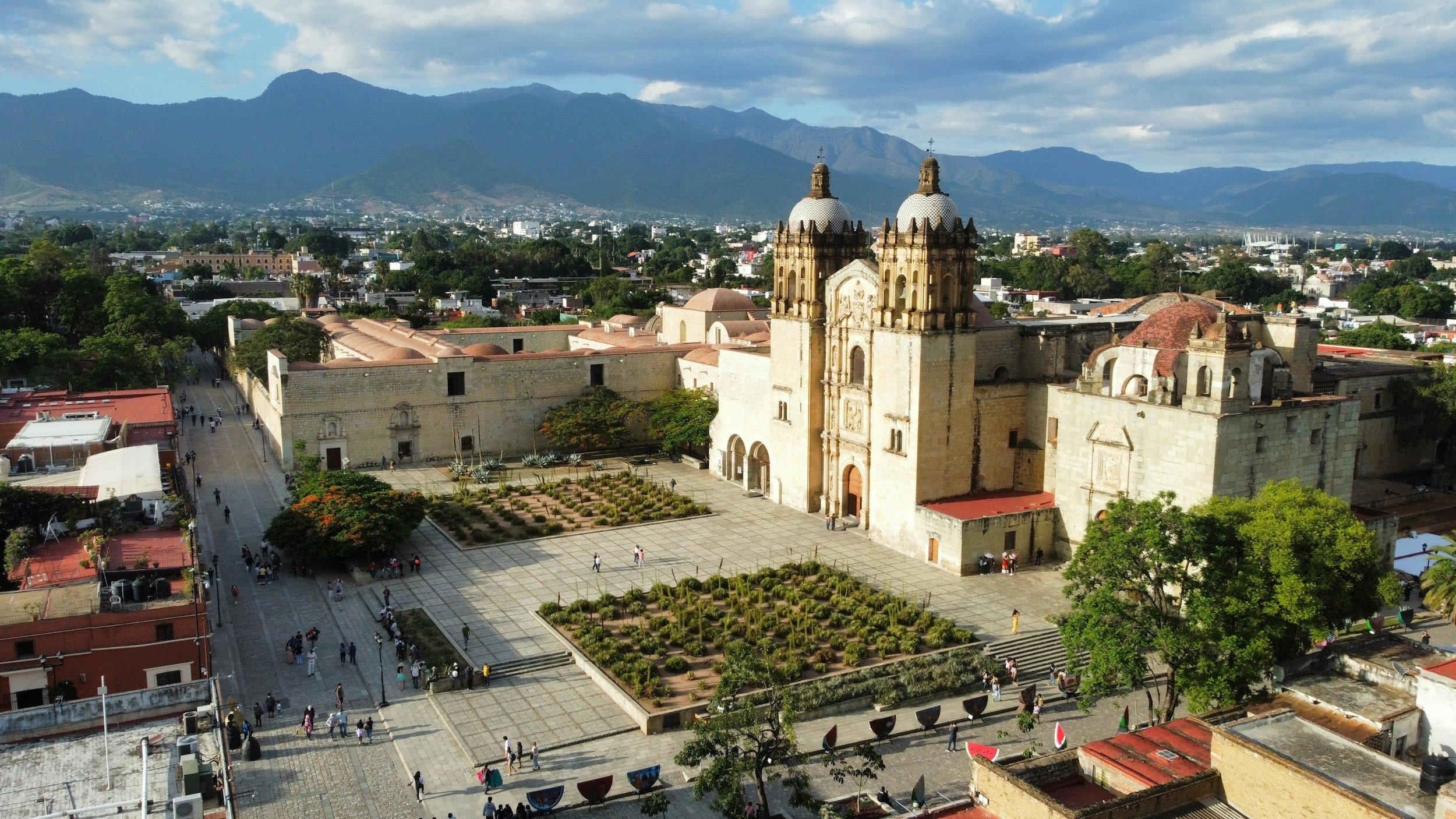
4. The Historic Centre of Oaxaca and the Archaeological Site of Monte Albán
Founded in 1529, Oaxaca is a wonderful example of a 16th-century Spanish colonial town. A short bus ride away lies Monte Albán, capital of the Zapotec civilization. Together they offer a cross section of Mexican history, Zapotec and Spanish, within a single afternoon.
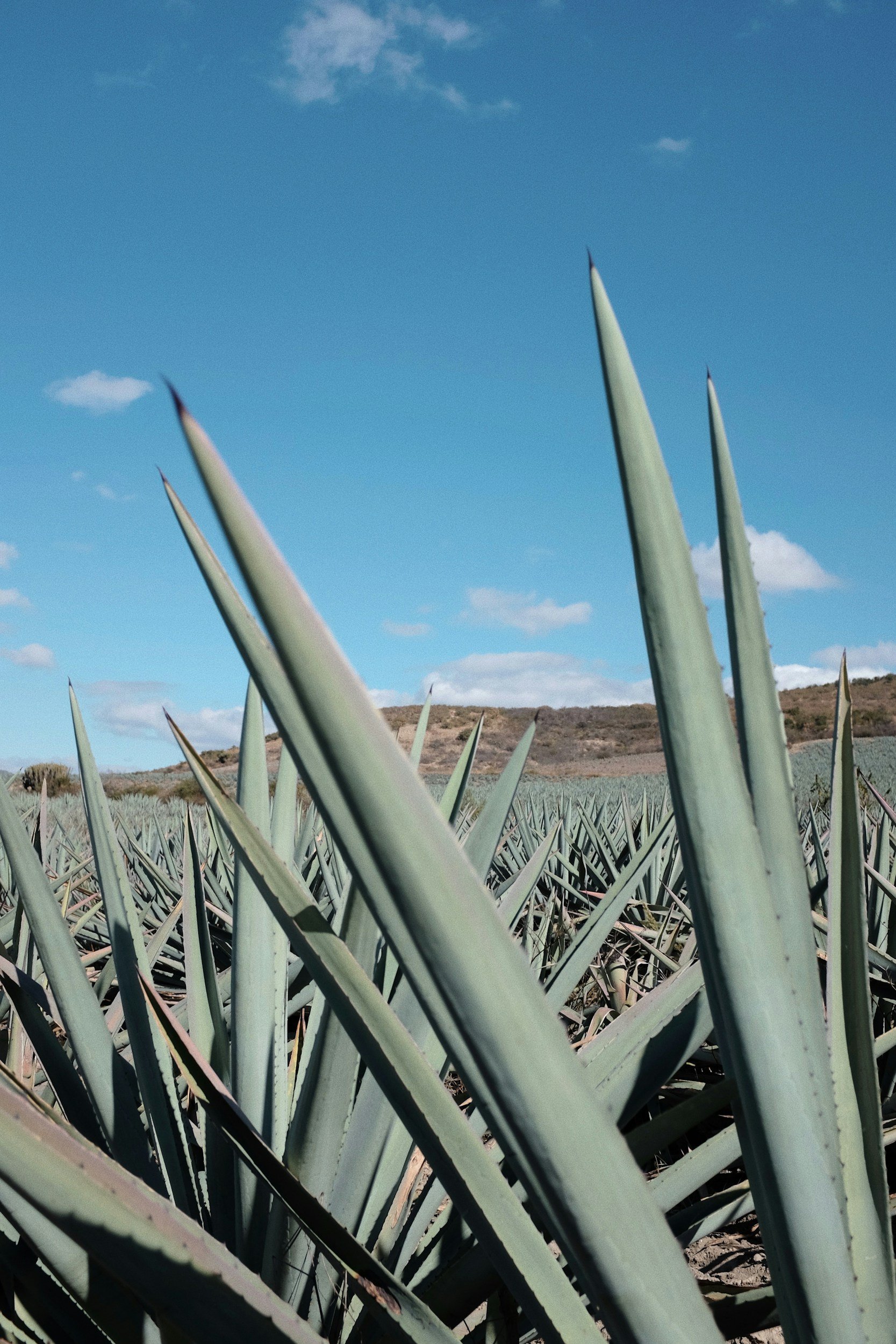
5. The Agave Landscape and Ancient Industrial Facilities of Tequila
For four hundred years people have been using the blue agave plant that grows in this region to make tequila. The drink is so central to Mexican culture that the town of Tequila and the surrounding fields, distilleries, and haciendas have been designated a heritage site.
6. San Miguel de Allende
San Miguel de Allende owes its place on the list to the beauty and unique architecture of its 18th-century religious and civil buildings, and is, by common consent, the most beautiful town in Mexico.
7. The Revillagigedo Islands
Four volcanic islands in the Pacific Ocean, 400 kilometers off the Mexican coast, and few readers will have set foot on them. The sea here is rich in rays, sharks, and dolphins, while humpback whales linger on their great migration. The barren rocks are home to colonies of seabirds as well as endemic reptiles and birds. Little wonder this is called the Galápagos of Mexico.