
Charlotte Smith is a storyteller and unapologetic observer of life in Mexico, who writes about the country as she experiences it - with curiosity, a healthy dose of skepticism, and genuine affection. From people and places to the strange, funny, and sometimes complicated moments of everyday life, Charlotte believes there’s a story almost everywhere if you stop long enough to notice it.
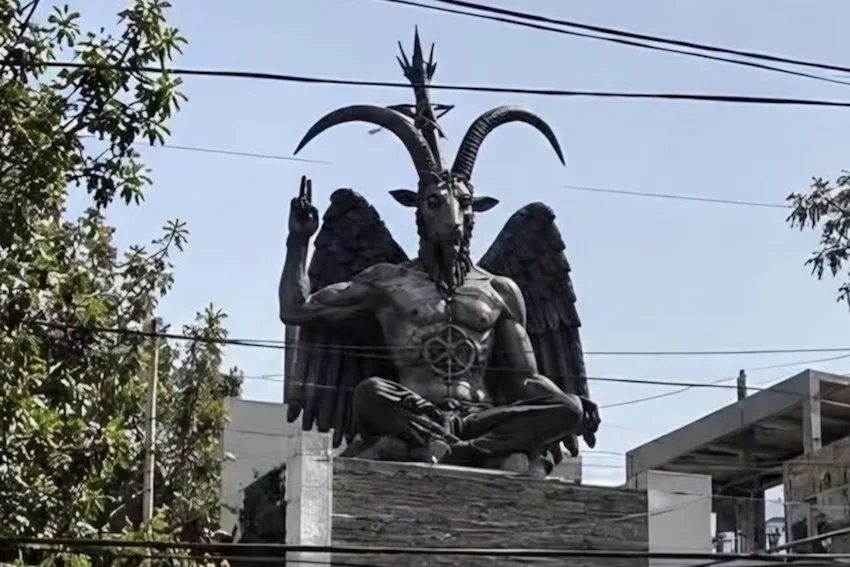
Jardines del Pedregal, one of the wealthier neighbourhoods in the south of Mexico City, was built on lava. Its streets were cut through the black rock left by an ancient eruption of the Xitle volcano, and its houses sit behind high walls and dense gardens. Very little there is meant to be seen from the street, which made it all the more surprising when the neighbourhood appeared to acquire a rather conspicuous new resident.
Enter Baphomet, the horned, goat-headed figure associated with occultism and Satanism. According to a story that spread across social media, an enormous statue had appeared on the façade of one of those houses. It was apparently so unwelcome that neighbours had started demanding its removal, with photographs circulating online showing both the imposing figure and notices supposedly protesting its presence. There was just one small problem, though. Nobody could establish that the statue actually existed.
The story was intriguing enough to send people looking for it. The location was supposedly near a house belonging to the Legionaries of Christ, a Catholic religious congregation, which added another layer of irony to an already unusual tale. Social media did what social media does best, and speculation grew. The comments multiplied, and before long, a mysterious statue had become a neighbourhood controversy.
Except that when journalists went looking, they couldn’t find convincing evidence of the sculpture. There was no verifiable address or independent confirmation of the supposed dispute. Even the photographs raised questions about whether artificial intelligence had been involved. And so, what began as a story about a possibly unwelcome demonic-looking garden ornament became a story about something rather more familiar in 2026. How difficult it can be to distinguish something that happened from something that merely looks as though it happened.
Mexico is hardly short of unusual sights or stories that might leave an outsider wondering whether someone has made them up. From elaborate Día de Muertos displays to the wonderfully inventive ways people decorate their homes for the season, there’s plenty here that doesn’t need embellishment. Reality is generally doing a perfectly respectable job on its own. That may be part of what made this particular tale so easy to believe. It arrived at a time of year when spooky or unnerving decorations are entirely plausible. It featured an eye-catching image and offered the added attraction of an apparent clash between neighbours and a controversial religious symbol. It had all the ingredients of a story people would want to share.
But wanting something to be true and having evidence that it is true are two very different things. AI has made creating convincing images easier than ever. A photograph that once might have offered reasonable grounds for questioning whether something existed can now be manufactured in seconds. Add a plausible location and a few supposed eyewitness accounts, and an invented event can acquire a life of its own.
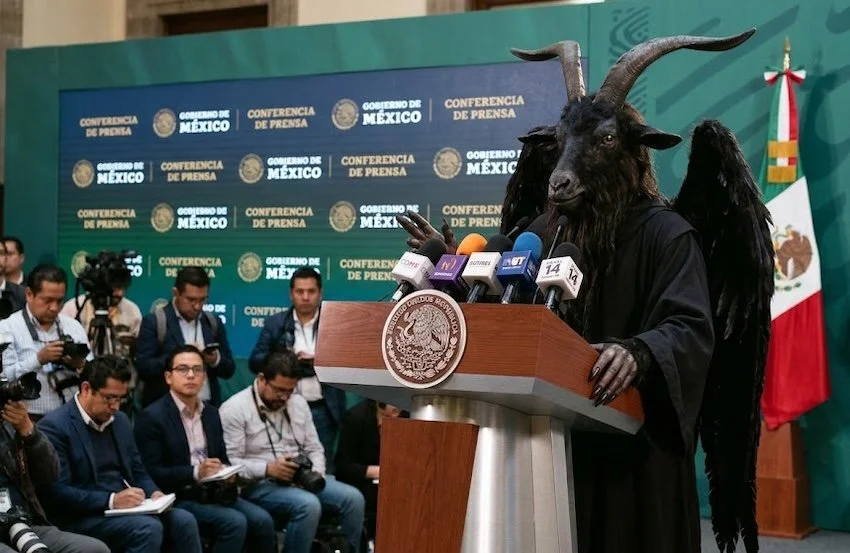
The difficulty isn’t simply that people might be fooled by an image. It’s that repetition can begin to look like confirmation. One account shares a photograph, another repeats the claim, and a third reports that people are talking about it. Before long, the sheer volume of discussion can make a story feel established, even when nobody has verified its central claim.
And there’s a particularly interesting twist to all this. We tend to think of misinformation as something designed to persuade us of a political position, sell us something, or deliberately damage someone’s reputation. Sometimes it is. But a fabricated curiosity can travel just as far simply because it entertains us.
Who wouldn’t be tempted to click on a story about an enormous satanic statue appearing in an affluent Mexico City neighbourhood, particularly when the supposed neighbours are outraged and the location adds an extra layer of intrigue? It’s unusual, slightly ridiculous, a bit bizarre, and just controversial enough to invite a look. There’s even the possibility of a few entertaining photos to share with friends!
The problem is that the more entertaining the story, the less inclined we may be to interrupt the fun by asking whether it’s true. And the consequences aren’t always as harmless as a few people searching for a statue that isn’t there. A fabricated image can affect a real neighbourhood’s reputation and attach a controversy to people who had nothing to do with it. It can leave residents answering questions about an event that never actually happened. And even after a claim is corrected, the original version may continue circulating long after the clarification has disappeared from view.
For those of us living in Mexico, there’s another reason to be careful about the stories we share. The country is often viewed through a remarkably narrow lens from abroad. A tale involving religious controversy or supposed local outrage can fit neatly into somebody’s existing ideas about Mexico, whether those ideas are accurate or not. An invented story can therefore reinforce an impression of a place just as easily as a genuine one.
That doesn’t mean we should approach every unusual story with suspicion or stop sharing the oddities that make life here so interesting. Quite the opposite! Mexico is full of stories worth telling, and the smaller, stranger ones often reveal far more about a community than another round of statistics or official announcements. It simply means that a little curiosity should extend beyond the original claim.
AI isn’t going away, and neither is our appetite for an extraordinary story. We don’t need to become forensic investigators every time we open Facebook, but we can pause before treating a dramatic image as proof. The Baphomet story is a useful reminder that a viral post isn’t the same thing as a verified event, and a convincing photograph isn’t necessarily evidence of anything beyond someone’s ability to create a convincing photograph.
It also makes a good case for curiosity over outrage. Before deciding that a neighbour has gone too far, that a community is in uproar, that something foul is afoot, or that something extraordinary has happened down the road, it might be worth asking a few questions. Where is it? Who’s actually seen it? Can anyone independently confirm the details?
Sometimes, the answers will lead to an even better story. Sometimes, they’ll lead to a dead end. And sometimes, as appears to be the case here, the most interesting thing about a supposed statue of the devil is that it may never have existed at all.
We’ll leave the question of whether Baphomet would have been a particularly appropriate neighbour in Jardines del Pedregal to the residents themselves. They may have more pressing things to worry about. First, of course, they’d need a statue.