
María Castillo is a Mexican writer with a deep affection for her home and a passion for exploring the stories, customs, and everyday moments that help explain what makes Mexico unique.
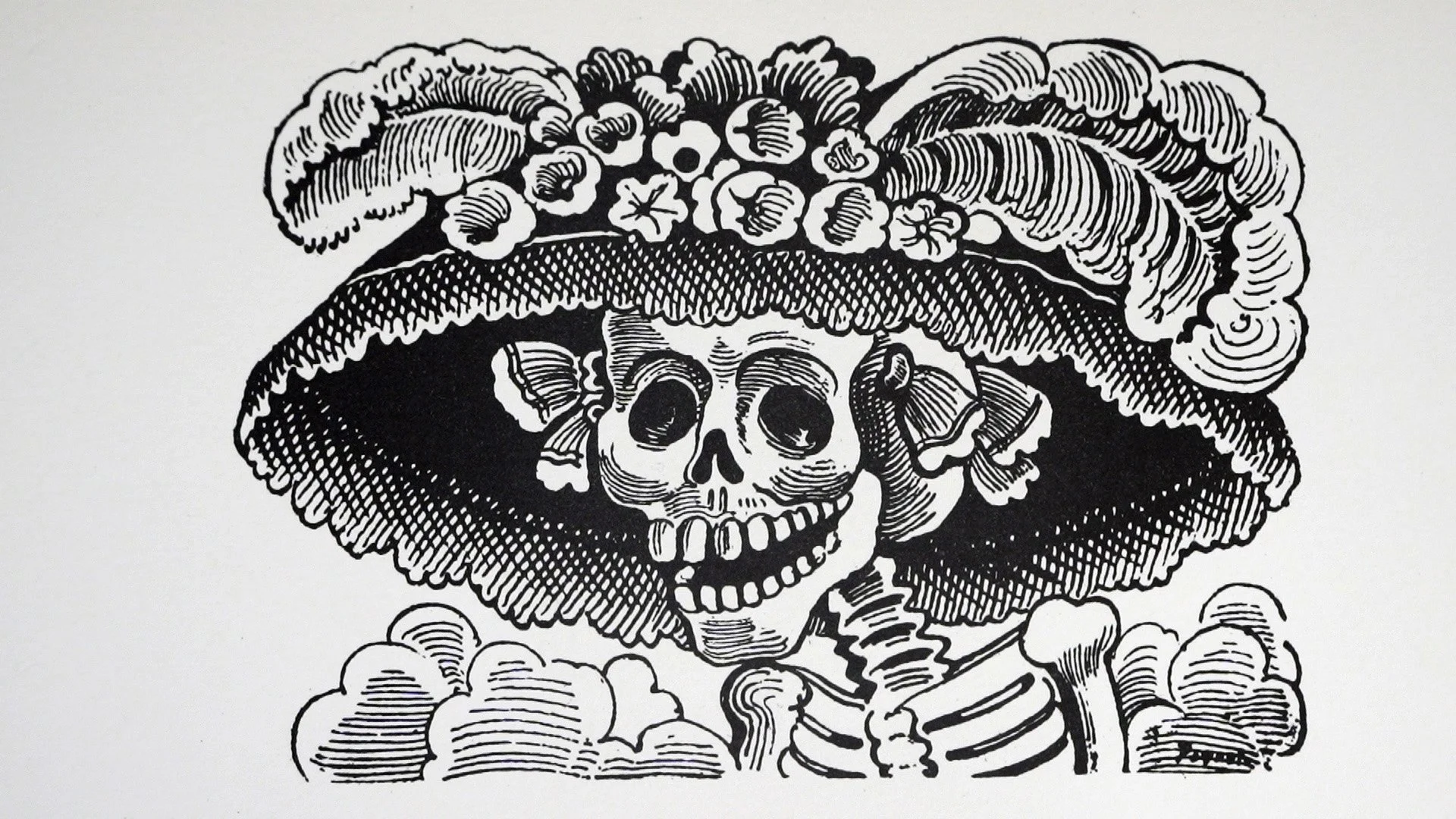
Every year, as October draws to a close, something wonderful happens. Streets across Mexico begin to fill with cempasúchil, papel picado flutters above market stalls, ofrendas are created and filled with family memories, and faces are painted to resemble elegant skeletons. La Catrina, with her elaborate hat, beautiful dress, welcoming arms, and unmistakable skeletal smile, takes center stage across Mexico.
For many people outside of the country, La Catrina has become the face of Día de Muertos. She appears in photographs and in elaborate makeup tutorials shared across social media. Her image is instantly recognisable, and her popularity continues to grow far beyond Mexico’s borders.
I love seeing people from other countries become curious about our traditions. I love that they want to learn and that they travel to Mexico to experience our celebrations. I love seeing how many films have encouraged families around the world to ask questions about a cultural holiday they might never have understood before.
But there is something important I hope people discover along the way. La Catrina is much more than a beautiful skeleton, and Día de Muertos is much more than a colorful celebration. To understand why, we need to look at where it all began.
Although La Catrina is now closely associated with Día de Muertos, she did not originally emerge as a symbol of the holiday. Her story begins with Mexican artist and illustrator José Guadalupe Posada, who created a satirical image known as La Calavera Garbancera around the beginning of the twentieth century. Posada was interested in the inequalities of Mexican society. Through his illustrations, he criticised the wealthy and powerful, often using skeletons to make his point. Death, after all, has a way of reminding us that money, social position and expensive clothes cannot change the one thing we all share.
The original Calavera Garbancera wore an elaborate hat. The image mocked people who rejected their Indigenous heritage in an attempt to imitate European upper-class society. The message was that pretending to be someone else does not change who you are. It was a sharp piece of social commentary, and it remains relevant today.
Years later, famed Mexican muralist Diego Rivera gave the character the elegant appearance we now recognise. In his 1947 mural Sueño de una tarde dominical en la Alameda Central, Rivera depicted her in a full-length outfit and helped establish the name La Catrina. She grew to become one of Mexico’s most recognizable cultural symbols.
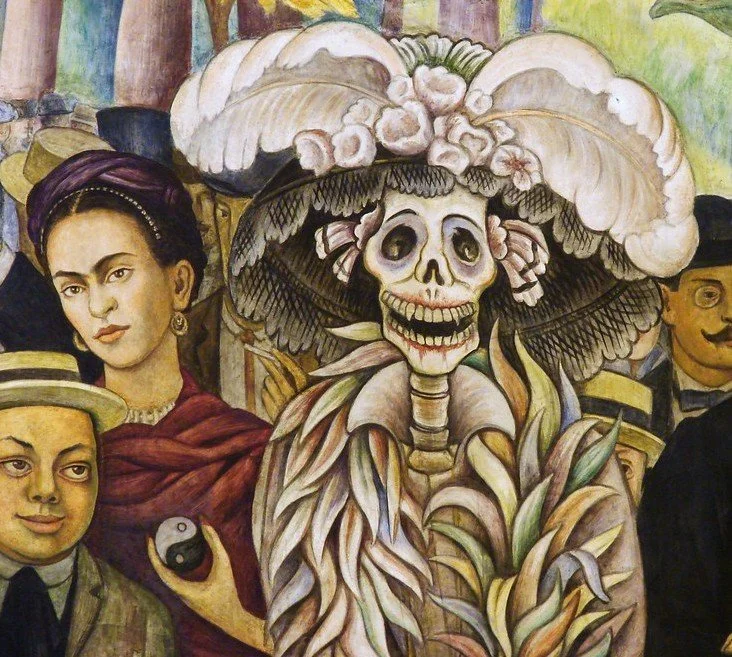
She was never intended to frighten people. She was created to make them think. Her skeleton reminds us that death does not discriminate. Her elegant clothing invites us to look beyond physical appearances. And her story carries a distinctly Mexican sense of humor about something that many cultures find difficult to discuss.
As Mexicans, we can acknowledge death without allowing it to frighten us into silence.
For generations, Día de Muertos has provided Mexican families with an opportunity to remember those who have died. Traditions vary from one community to another, but remembrance remains at the heart of the celebration.
Many families prepare ofrendas with photographs of loved ones, candles, flowers and the foods or objects associated with their lives. Pan de Muertos for a grandfather. A small, wooden car or a doll for a child. Cempasúchil brings its vivid orange and golden colors and distinctive scent to homes, cemeteries, and public spaces.
For many families, these preparations are deeply personal. A photograph might show a grandparent whose stories are still repeated around the dinner table. A favorite meal might recall someone who always insisted on cooking for everyone. A familiar song might bring back a voice that has been gone for years. These are not only decorations. They are expressions of love.
In recent years, films have helped introduce these traditions to audiences who might otherwise have known little about them.
Pixar’s Coco, released in 2017, brought Día de Muertos into millions of homes through the story of a young boy and his family, and their connection to the world of the dead. Its colorful portrayal of ofrendas and cempasúchil pathways introduced viewers to the idea that remembering someone is an active expression of love. For many people, the film was their first meaningful encounter with the holiday.
When a child watches Coco and asks why a family would place photographs of deceased relatives on an altar, a conversation begins. When a visitor sees an ofrenda for the first time and wants to understand its meaning, an opportunity opens up. Curiosity can lead to respect, and respect can lead to a deeper appreciation of another culture beyond the stereotypes people may have encountered before.
Films cannot tell the whole story of a culture. They are not documentaries, and no one production can represent the experiences of millions of people. But they can open a door. What matters is what we do after walking through it.
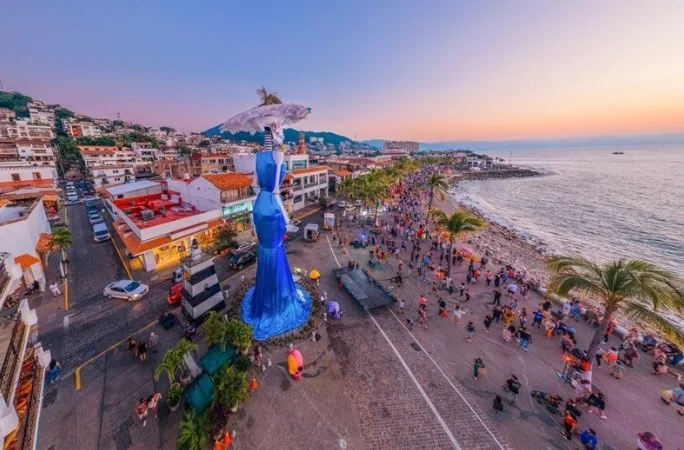
As Día de Muertos becomes more visible internationally, its imagery is increasingly found in places far removed from the communities where the traditions developed. There is nothing wrong with admiring that creativity or wanting to participate in a celebration. Seeing people take an interest in Mexican culture makes me happy. But I also hope that anyone drawn to the traditions and customs takes time to learn what lies beneath.
Día de Muertos is not a Mexican version of Halloween. Although the two occasions occur around the same time of year, they have different histories and meanings. Treating them as interchangeable misses what makes each one distinctive.
Some traditions are public and festive. Others are quiet and closely connected to family. A public installation and a small altar in someone’s home may look very different, but both can hold meaning. Respect means recognising that difference. It means asking questions rather than assuming you already understand. It means listening when people explain the significance of a tradition, and remembering that a place of remembrance is not necessarily a backdrop for a photograph. Most importantly, it means understanding that unless you’re Mexican, you’re being invited to appreciate something that has meaning to other people.
Cultures have always influenced one another. Traditions evolve, art travels, outside influences add new elements, and stories find new audiences. I do not believe that Mexican culture should be hidden away or that people from other countries should feel unwelcome when they want to experience Día de Muertos. I think the opposite.
I want people to discover the artistry of La Catrina, to learn about José Guadalupe Posada, to watch Coco with their children, and to ask questions about the traditions they see. I want them to visit Mexico with open minds and leave with a greater appreciation for the people who make this country what it is.
And I want them to understand that behind the cempasúchil, the painted faces, the ofrendas, and the elaborate costumes are real people remembering those they have loved and lost.
That is the part of Día de Muertos that no film or photograph can fully capture. It is something we understand through the stories we share about the people who came before us, the recipes we continue to prepare, the music that reminds us, and the memories we refuse to let disappear.
La Catrina may have begun as a satirical drawing, but she has become something much larger. She is a reminder of our shared humanity and of the importance of remembering where we come from. If you find yourself admiring a Catrina this year, take a moment to look beyond her beautiful clothes and painted smile. Ask about her history and learn what Día de Muertos means to the people celebrating it.
The most meaningful way to appreciate another culture is not simply to admire how it looks, but to understand why it matters. We are happy to share our traditions with the world, but we hope that, in sharing them, the world will take the time to understand them.