
The Noble Savage
Martín Ramos is a Mexican, passionate about diversity, people, history and music.
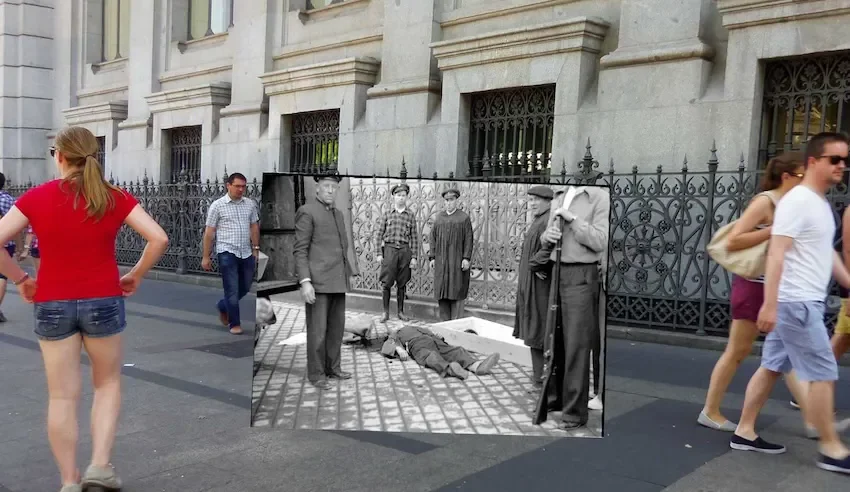
It's 6 p.m. in the Madrid neighborhood of Lavapiés. Nearly thirty years ago, a handful of streets away on Calle de la Cabeza, a woman named Gloria Fuertes died in her apartment. In that same apartment, thirty or forty years earlier, surrounded by books, plants, cigarette smoke and a semi-enclosed balcony, she would write the following:
I think table and say chair//I ask for bread and leave it//What I learn, I forget//The thing is, I love you
The poem is longer, but I remember my first encounter with it and how, for the first time in my life, a poem made me feel that the world wasn't all bad. It felt like reading a painting by Henri Matisse: I saw its colors, I saw its edges and its shadows. It seemed so beautiful in its simplicity that it wasn't long before I tattooed a chair and a piece of bread as a symbol of how this poem made me feel and the connection and resemblance it has with this neighborhood in the center of Madrid.
I arrived here not quite by chance. I separated from my ex-wife and immediately wanted to find an apartment in a place I liked. I’ve always preferred to pay a little more to live in a place I like, where I can walk and go for a run, or not take long to get to a good bar to have a beer. Among the more than twenty visits I made over a period of five days, my small apartment won me over, even though it doesn’t get direct sunlight and only gets it when the sun reflects off the window of the neighbor across the street onto mine.
The street is quite noisy; Every morning sounds the Fajr, the first prayer of the day at the nearby mosque. It sounds like the French spoken by the Senegalese walking towards Nelson Mandela Park or Lavapiés Square. It sounds like the Caribbean when the Dominican parents, who don’t live far, walk their children to school. It sounds like Urdu from the Pakistanis who own almost all the restaurants on the main avenue and the one who has a barbershop under my house. It also sounds like chaos at night, when junkies take advantage of the darkness to inject themselves or smoke crack in some doorway, and in a euphoric rush, they scream or fight.
If I stick my head out my window and turn to the right, I can see my friend Alvise working on his animations. If I walk a few meters, I can go to the communal square where a sweet Argentine lady will open the door to get the pétanque balls and play a game with Ben and Julien while I listen to her complain about how smoking is no longer allowed in the square. It rains some Sundays; that’s when I feel the richest. I once joked about it with my ex-wife when she invited me to move to her apartment: all my life, everything I had could fit in a car, and now, before coming here, I sold the car, so I’d have nowhere to put it all if I left.
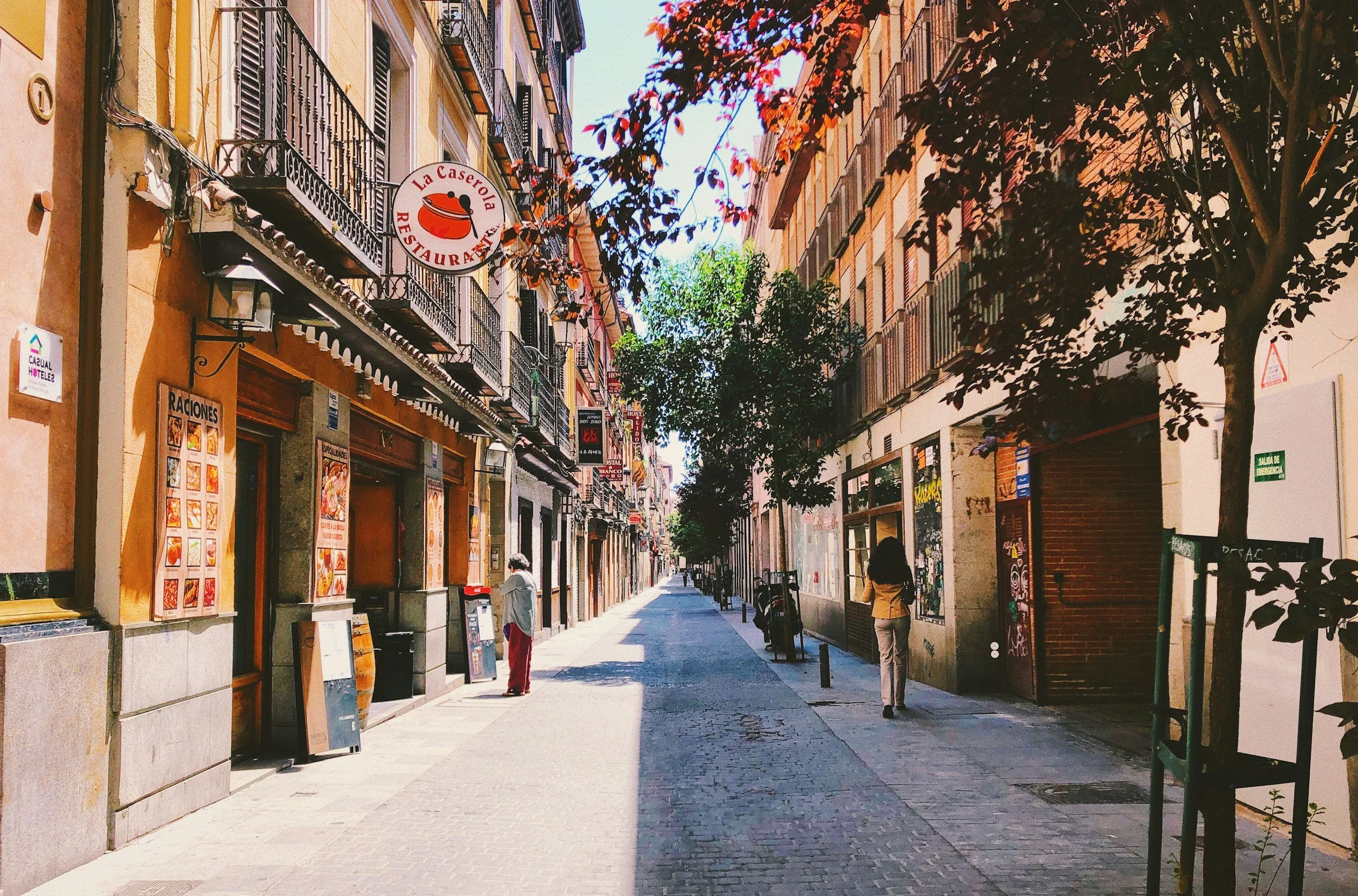
I feel at home. I feel like a rebel, and like a goldfish, I feel like I’m growing inside this enormous fish tank.
My favourite rapper, Bocafloja, in his song "Memoria," uses the term: "El Buen Salvaje" (The Noble Savage). This term, created by colonizers, refers to natives and slaves who maintained the standard of behavior, morals, manners, and even aesthetics of the colonizer. I think I've never been this noble savage, and when I’ve tried to hide my deep insecurities, it’s when I’ve felt the most alien, the most foreign to myself and my spirit. I tried it for the first time in high school when I wanted to be part of the cool kids’ group and ended up more alone and disheartened than before.
I did it by studying business instead of something related to my great passion of art and music so as “not to starve,” as my parents once told me, and this only resulted in all the baggage I tried to sweep under the rug of aesthetics and appearance exploding in various ways: like a failed ska/cumbia band, a solo guitar project with only one performance where my legs trembled with fear before abandoning it, and finally the two writing and chronicle courses I’ve taken. I once talked about it with a painter friend in Querétaro who told me, “Freedom is expensive,” as I lamented losing my job. In this case, he was referring to the freedom I was paying for with failure and the gift of starting anew.
When I moved to Madrid with my ex, we lived in a neighborhood not far from here, at most two kilometers away. It’s an affluent neighborhood with a beautiful park view. These neighborhoods, El Retiro, Barrio Salamanca, etc., were never bombed by the fascists during the Spanish Civil War; the rest of Madrid, especially in popular neighborhoods like Lavapiés or Tetuán, or even Gran Vía, were, with planes and pilots provided by Hitler and Mussolini. In these neighborhoods live a large number of the heirs of the great fortunes that supported Francisco Franco’s uprising against the Republic (although not all of them) and who to this day yearn for the glories of “El Generalísimo” and his crusade for a “unique and Catholic” Spain.
It has always seemed ironic to me to think of these soldiers taking entire families —Jews, Masons, union members, and Republican politicians— to a ring to be gunned down and then, two days later, going to mass to hear about a Jesus who spoke of loving thy neighbor and asking for forgiveness for their sins as they forgave those who trespassed against them. The contrast between Jesus and many of his followers has always amazed me. I once experienced it while living there and waiting outside a store on the luxurious Calle de Serrano. An old man with a beret and sideburns sits next to me. He asks me where I’m from and proceeds to say, “Damn, you should thank us for saving you from cannibalism.” I can still hear the rosary tinkling around his neck.
I experienced it other times too, when, in a bar, a lady approached me as I sat among all my white European friends, to ask if she could order something — as if I worked there. I confronted her, asking what made her think that, and I remember her response: “You’re taking it too personally.” It’s impossible not to take it that way in that neighborhood where the only people with my skin color are just there to take care of the elderly who vote for parties that support closing the borders and a Spain free of migrants. Or perhaps we are serving in trendy restaurants to young people who vote for parties like VOX, which publishes images openly stating that Spain “brought civilization” to the Indians of America. I can’t help but take it personally, and it makes me think that I’m only a noble savage when I offer a “minor” service, when I serve, when I “integrate” and leave behind my customs, my religion, my accent, and my food to belong to a rancid and decaying Spain.
I, who have always prided myself on my adaptability, felt like I had lost one of my powers: Mexico City and my ability to pull a trick out of my sleeve to make new friends, find a place to be with myself, a call for a mezcal, a run down Paseo de la Reforma, feeling my family close, wrestling, baseball, bookstores, and street food. I liked the idea of feeling like I was in a Roberto Bolaño book or the excitement of thinking that one day I might run into Carlos Monsiváis on Donceles Street, even though he’s dead. The magic of that city where I had lived the best years of my life now seemed something absolutely distant and nonexistent, something that crumbled with my friends and the people I love, to find myself facing a city that felt cold, unknown, and dull. My experience was tainted by a neighborhood where designer taverns, Michelin-starred restaurants, and expensive bakeries abounded, and people who didn’t want me here. My refuge was the corner bar where a Thai waiter received me several times drunk, and a restaurant a few blocks away where the Ecuadorian and Peruvian waiters gave me the spiciest salsa to see if it affected me; one of them reminded me a lot of a close friend.
In the movie “Sound of Metal,” when the main character loses his hearing and goes to a recovery clinic, the main “Dean” describes “Moments of stillness…where God is.” I think that when I arrived in Madrid, I missed those “moments of stillness.” The anxiety was back, the fear of losing everything. I always talked about it in therapy: as a teenager, I was terrified of becoming my father. I saw him as the defeated and vanquished hero. It saddened me to see that, because of his family’s selfishness, he had lost it all while still very young. My parents divorced around the same age I was when I got divorced. My father lost everything: family, money, house, social status. Everything. He moved to an apartment very close to home and, as the years passed, he grew older. He never stopped being a good father, always attentive, always there, always correcting, always saying in his way that he loved us.
My first day in this apartment in the Lavapiés neighborhood, I felt like my father surely felt in his small apartment around the corner. Alone and overwhelmed. I went out, walked with a book in my hand, “Slaughterhouse Five” by Kurt Vonnegut. A book that has always accompanied me in new beginnings.
I walked to a bar and sat down, opened a page at random, and found the drawing Kurt used to illustrate the tomb of protagonise Billy Pilgrim, which said: “Everything was beautiful and nothing hurt.”
I looked up and found that, my first moment of stillness while lighting a cigarette, seeing two kids chasing each other in the background, hearing the photocopier in the business across the street, Maritrini walking her dachshund. I immersed myself in living in this place. The moments of stillness returned, like seeing the orange sky in the middle of a pétanque game. Like the first Friday beer with Ben. Like the afternoon Alex and Alvise, my talented artist friends, invited me for a vermouth and to draw in La Latina. Like when I see my brother and sister-in-law arrive for a visit with her parents. Like on Sunday mornings, before running, I have an espresso and eat a cookie from the corner café watching people pass by. Like when the guy from the corner store recommends a cheese or gives me a croissant. Like when I’m cleaning my house, listening to a podcast, and taking a second to appreciate the moment. I turn to the window, remembering my recently divorced mother, when we were kids and how one night, we dressed up and danced in her room while she surely felt inside what I felt when I saw myself a failure because my marriage had fallen apart. Everything was beautiful and nothing hurt.
Everything will be okay.