
Who makes the giant people dance?
Charlotte Smith is a storyteller and unapologetic observer of life in Mexico, who writes about the country as she experiences it - with curiosity, a healthy dose of skepticism, and genuine affection. From people and places to the strange, funny, and sometimes complicated moments of everyday life, Charlotte believes there’s a story almost everywhere if you stop long enough to notice it.
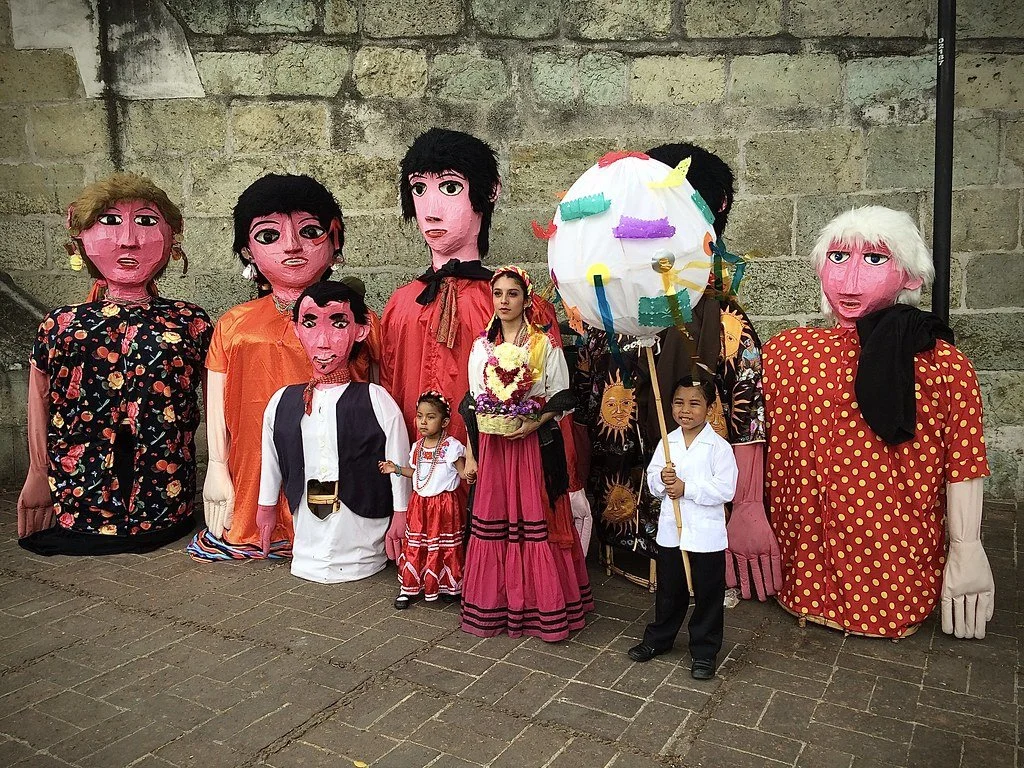
The first time you see one of Oaxaca’s giant dancing figures, there are a few things that go through your mind. The first is probably, “What the hell is that?” The second is, “How is someone inside that thing?” And the third, once you’ve watched one of these enormous figures spin around in the street, arms flying and clothes billowing to the sound of music, is probably something along the lines of, “Okay, that’s actually brilliant!”
They’re called monos de calenda, and they’re one of those wonderfully odd pieces of Mexican culture that you can stumble across and immediately realize you know absolutely nothing about.
They’re giant puppets, sometimes reaching several meters in height, and dressed in elaborate fabrics and given enormous painted faces. Then someone climbs inside. And then, the giant starts dancing.
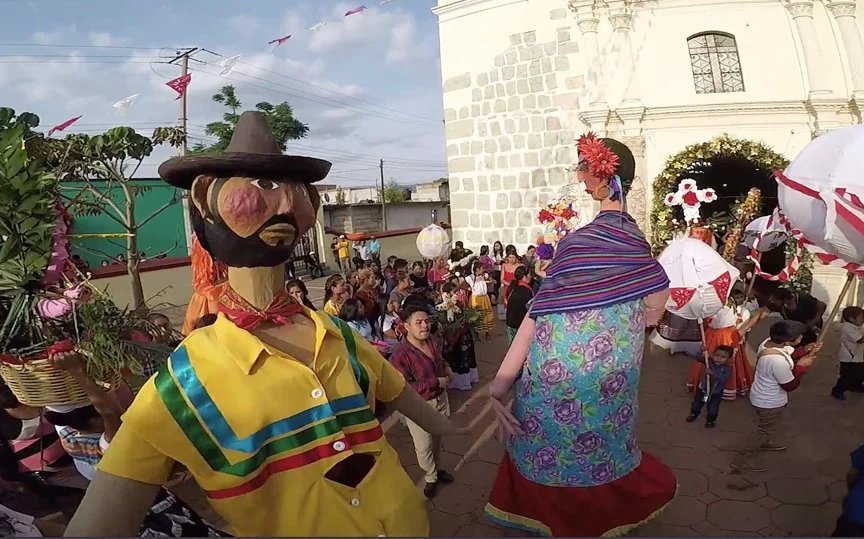
The effect is somewhere between a parade, a puppet show, and a highly enthusiastic group of people who have forgotten that human beings aren’t supposed to be five meters tall. But the monos aren’t simply there to make people laugh. They’re part of the traditional calendas of Oaxaca, where festive processions announce and celebrate everything from religious festivals to weddings to community celebrations.
There’s a reason they feel so completely at home here. The figures have changed over time, but their roots reach back to the colonial period and the religious processions used to bring communities together. Eventually, the giant figures became part of the popular celebrations themselves, taking on characters and personalities of their own.
And that’s where it gets interesting. Because someone has to make them.
This isn’t a case of ordering a giant puppet from Amazon and waiting for the delivery driver. The bodies are built by hand. The traditional structure uses carrizo, a type of reed, which is shaped into the frame. Paper and paste are then used to create and reinforce the figure before the head is painted and the clothing made to fit.
These aren’t small projects either. Oaxacan makers learn the craft from their own experiences growing up around Oaxaca’s celebrations and eventually develop it into a business, Many work with their families from small workshops at home. Depending on the size and complexity of the figure, one can take anywhere from a week to a month to make.
We tend to think of traditions as things that simply exist.
Oaxaca has monos de calenda. Guadalajara has mariachi. Mexico City has lucha libre. Veracruz has carnaval. And families still make the same food year after year as Dia de Muertos offerings. But traditions don’t simply exist; people make them.
Someone has to learn how to bend the carrizo. Someone has to know how to build a head that’s light enough to carry but strong enough to survive being bounced around a street. Someone has to paint the face. Someone has to sew the clothes. And, eventually, someone has to teach the next person how to do it.
In 2025, a workshop in Santa María Mixtequilla introduced children and young people to the making of monos de calenda. They didn’t just watch someone else make them; they got their hands dirty, building the cardboard and paper figures themselves. The workshop organizers described the tradition as something that was slowly being lost in the community and saw teaching children the craft as a way of keeping it alive.
The children made a female figure, right down to her skirt, headdress, earrings, and makeup. Then they decided they wanted a male figure too. So, they organized themselves and made one.
The finished figures were too heavy for the children to carry during the procession, so an adult did the dancing.
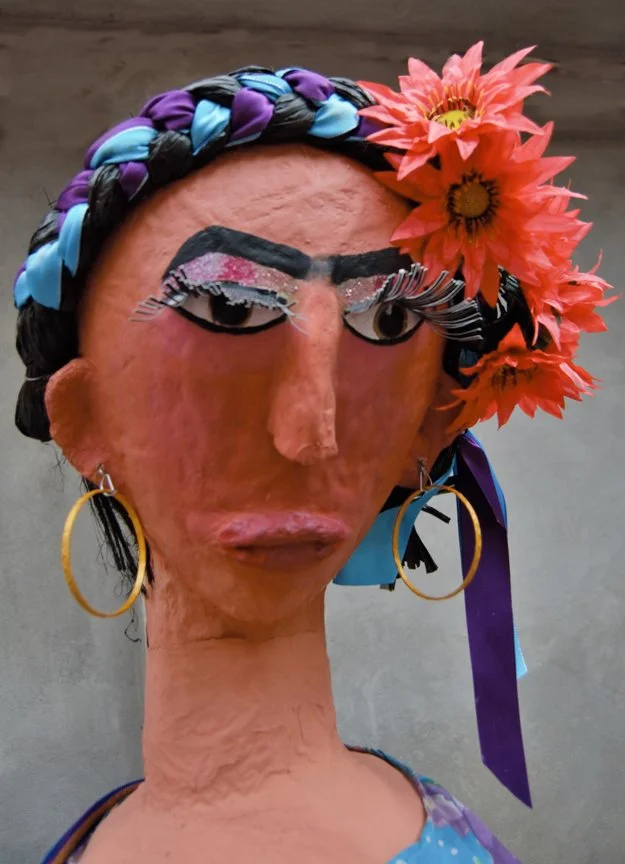
But that’s almost beside the point, as the important part was that the children had made them.
Because that’s how a tradition survives.
Not by putting it behind glass or writing a plaque explaining where it came from, but by letting a child get covered in paste and paper and make a giant person with an enormous head.
Oaxaca has plenty of traditions that have become familiar to outsiders, but the monos de calenda are different. They’re not really something you go to see. They’re something that happens.
You might be walking through a town when suddenly there’s a band coming down the street and a collection of gigantic people dancing behind it. And, because this is Oaxaca, nobody seems particularly surprised.
The figures themselves can change with the times, too. Historically, the characters could be satirical, representing different social groups or poking fun at recognizable figures. Over the years they’ve taken on characters from popular culture as well, including figures inspired by Mexican cinema.
The materials might remain much the same. And the basic idea of giant figures dancing down the street remains the same. But who that giant represents can be whatever the community wants it to be. There is something wonderfully democratic about that.
A mono de calenda doesn’t belong in a museum. It belongs in the street. It belongs to the people carrying it, dancing with it, making room for it, and laughing when its enormous arms nearly knock somebody over.
It belongs to the children learning how to make one.
But the real story is happening underneath, because inside every giant is an ordinary person, carrying the weight, doing the dancing, and keeping the whole ridiculous, wonderful thing moving.
Maybe that’s what a living tradition really looks like. Not something perfectly preserved, but something a new generation is still willing to climb inside.