
The ache of what once was: Saudade, loss, and ‘Ya no estoy aquí’
Rocio Lucero is a Mexican-American writer based in Mexico City. She was born and raised in a small village in Durango and moved to Chicago at age 12, a bicultural experience that shapes her lens on life in Mexico. She’s the founder of CDMX IYKYK, a newsletter for expats, digital nomads, and the Mexican diaspora.
Recently, I found myself in a deeply nostalgic mood. I was suddenly reminded of an old love from more than five years ago that ended abruptly, and I was hit with a violent longing for that part of my past.
This season of melancholy led me to rewatch one of my favorite Mexican films, Ya no estoy aquí (I’m No Longer Here), a story about the loss of a world you can no longer return to and the heartbreak of realizing that, even if you could, it may no longer exist.
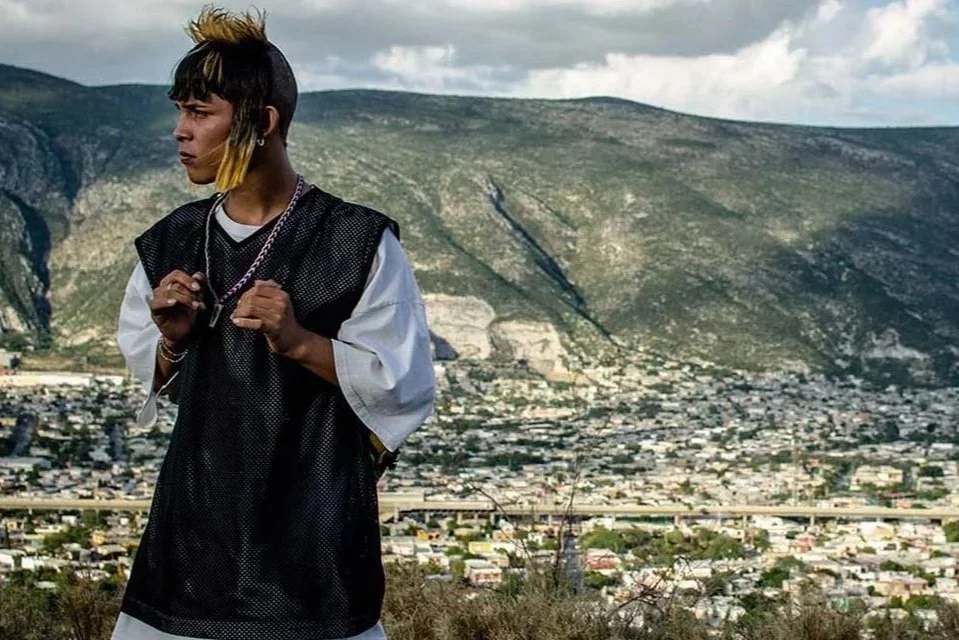
Ya no estoy aquí follows the life of Ulises, the stoic leader of a cumbia dance group called Los Terkos (the stubborn ones). Ulises is a teenager living in Colonia Independencia, a working-class area of Monterrey where illicit activity is commonplace. While he may be surrounded by crime and violence, his center of gravity is elsewhere. His devotion, identity, and allegiance are with Los Terkos and the Kolombia lifestyle.
The central tenet of Kolombia culture is listening and dancing to Colombian music, specifically cumbia and vallenato. Both genres often carry evocative themes of migration, longing, and the importance of home.
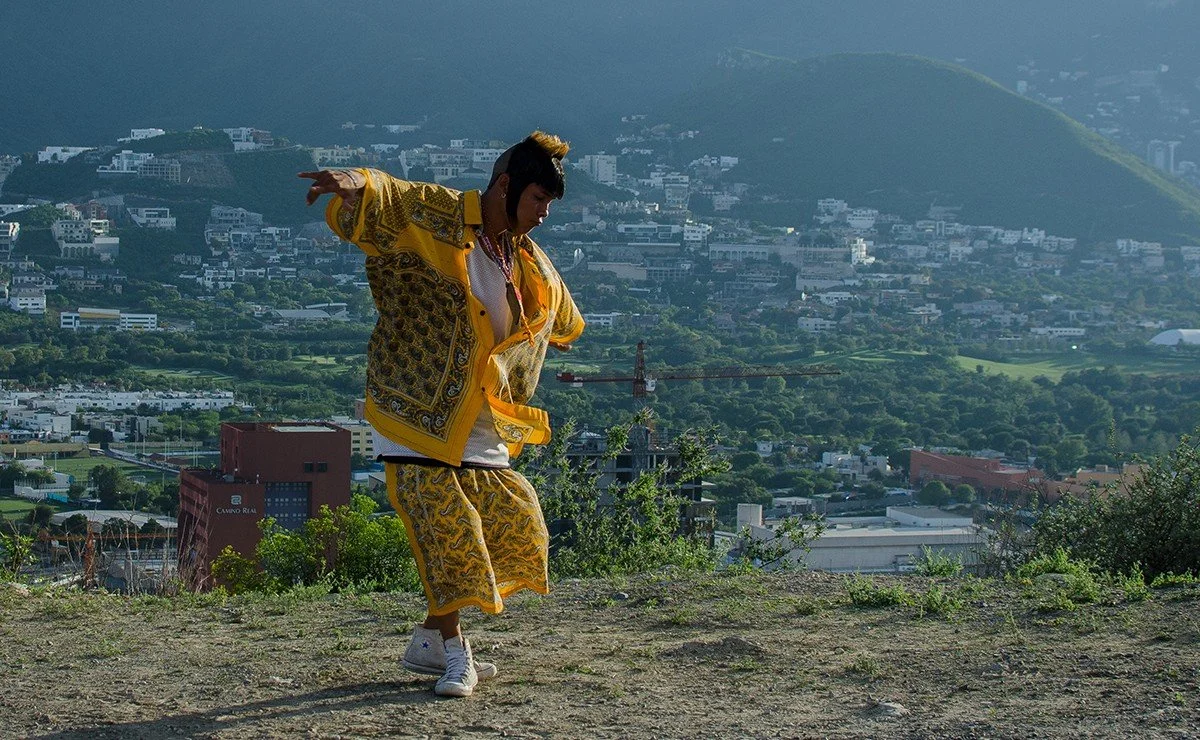
The Kolombianos favor a distinct style of cumbia known as rebajada. It’s slowed down so that an entirely new way of dancing emerges to match the wistful tempo. Dramatic spins and expressive hand gestures convey a jubilance that sits in striking contrast to the yearning melodies.
The Kolombianos, also called Cholombianos, stand out because their identity is loudly and unapologetically announced through eccentric fashion: baggy shorts, plaid button-ups, high-top sneakers, colorful bandanas, elaborate, bird-like hairstyles with gelled sideburns, and Catholic and Indigenous symbols such as escapularios and rosary beads. At first glance, the look can appear garish, even tacky. But the earnestness and pride Los Terkos exude while dancing and communing at cumbia parties gradually soften that perception.
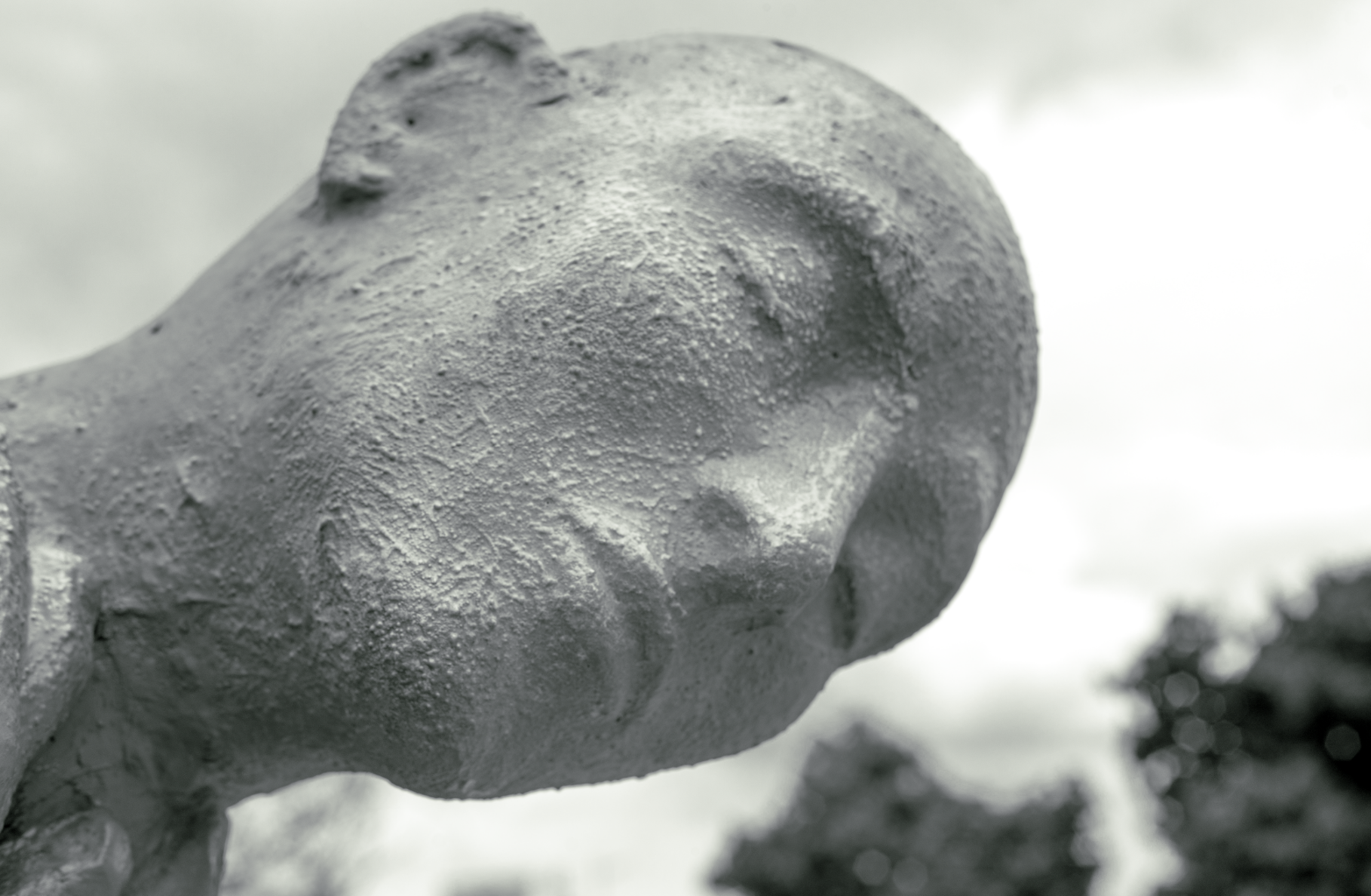
What first appears excessive and cheap begins to feel distinctive, deeply intentional, and emblematic of a culture entirely their own.Ulises has been part of Kolombia culture for most of his life, but, as bad luck would have it, he is caught in the wrong place at the wrong time and forced to abandon the world he belongs to..
Monterrey, like other parts of Mexico, was deeply affected by the war on drugs launched under former president Felipe Calderón, which unleashed devastating waves of violence in already vulnerable communities.
After receiving death threats, Ulises flees Mexico for New York City, where he struggles to build a life in a place that leaves him profoundly disoriented and untethered. Losing the people, place, and specific moment in time that are central to Ulises’s life and identity devastates him. He moves differently in New York City. He walks with a heaviness of heart and a faraway look in his eyes.
He misses his crew, the neighborhood that shaped him, cumbia rebajada, and the dance parties where he shone and came alive. His lack of English only deepens his sense of disconnection. He pines for everything he has lost.
Through Facebook, he realizes that home did not stay frozen in time, waiting for his return. Things are changing quickly in Monterrey, fueled by cartel violence, and his crew begins to disintegrate during his exile.
There is a dark irony in the fact that the music he loves now applies to him in a way it never did before. He, too, has migrated. He, too, has become displaced by circumstances outside of his control.
The Mexico I left behind in 2002 also transformed in my absence.
The war on drugs began in 2006, and within a few years, the violence had reached the part of Durango where I’m from. Between 2008 and 2012, I stopped returning for my usual summer and winter visits because it no longer felt safe.
The historical backdrop of Ya no estoy aquí felt familiar to me, but Ulises’s experience also gave me a more emotional point of entry into stories I had heard throughout my life about undocumented migration and long separations. I don’t know what those experiences feel like firsthand, but the film offered me an artistic glimpse into an emotional reality that has long existed in my community.
The film also stirred something open in me. I’ve always thought of nostalgia as a feature of my personality, but only as I’ve gotten older have I begun to wonder whether it has an origin.
I left Durango for Chicago at 12, an age when childhood is receding but the teenage years—and seemingly the rest of your life—still stretch ahead of you. I gained a great deal by moving to the U.S. with my family, but Ya no estoy aquí helped me recognize that leaving also came with losses I did not fully understand at the time. I still remember returning to Santa Rosa only six months later and feeling strangely disoriented. Everything and everyone seemed different, even though, in many ways, almost nothing had changed.
The film’s title, I’m No Longer Here, perfectly captures what Ulises has lost: the subculture his life once orbited around. But its title also feels like an elegy for the exuberant Cholombiano scene itself. The group was bullied, stigmatized, and persecuted for its flamboyant, unconventional style, and by the early 2010s, it had become increasingly dangerous to dress openly as a Cholombiano. Their numbers dwindled. Cumbia-loving dancers still exist in Monterrey, but the Kolombianos depicted in the film largely do not. Photographs, exhibitions, and the film itself now preserve this ephemeral chapter of Monterrey’s cultural history.
Ulises eventually returns home, only to discover that it is not quite the place he left and that he is not quite the person who left it.
The world he belonged to is no longer there. The friends who formed his crew are largely no longer there. And perhaps the version of any of us who once existed in a particular place and time is no longer there either. What once was, exactly as it was, cannot be recreated.
That may be the ache at the center of saudade: a profound longing for someone, somewhere, or some version of life that is absent but still deeply loved. When that feeling arrives, maybe the task is not to banish it or live inside it forever, but to let it visit. To honor what once was while accepting that things have changed.
We can look back fondly at a past, knowing that what we loved and what we lost still became part of who we are. Maybe what survives loss is not the life we once had, but who we became because we had it in the first place.
Whether or not you find yourself in a nostalgic mood, I’m No Longer Here is worth watching. It is both a celebration and an archive of Cholombiano culture. It is a reminder that, even when a moment in time disappears, art can keep something of it alive.