
A hope that ended in tragedy
Gordon Hawkes is a world traveller with over 110 countries visited. Mexico is his favourite place in the world, a land he turns to whenever he is lost or confused with life, which means he visits regularly! He loves hiking in a desert wilderness or sitting in a dusty library with old books.
In 1914, German troops marching through Belgium passed a castle at Bouchout and saluted the flag flying above it. Inside was a woman nobody outside the household had seen for almost fifty years, who spent her days in silence or in conversation with a guest who was not there. She had once been the Empress of Mexico, and she had held the title for three years.
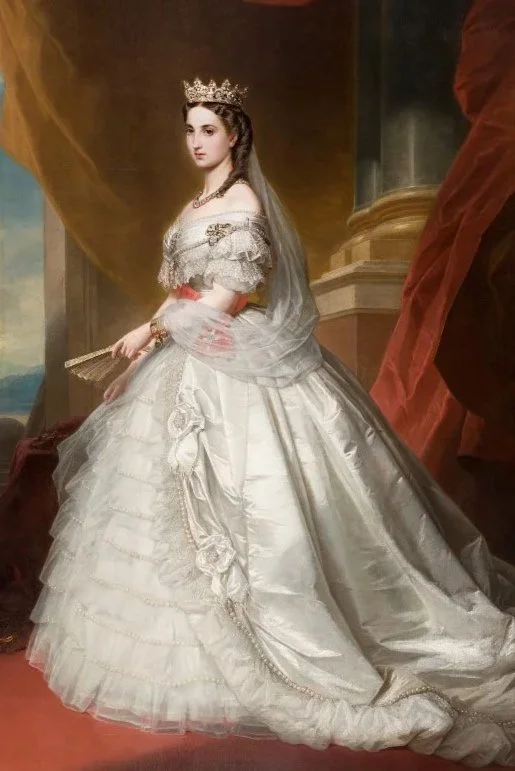
Marie Charlotte Amélie Augustine Victoire Clémentine Léopoldine of Saxe-Coburg and Gotha expected something special out of life. She was the daughter of Leopold I of Belgium and related to every royal family in Europe, a bright child who spoke numerous languages and read widely, though she became notably subdued after the early death of her mother. As she reached marriageable age, the man who caught her eye was Archduke Maximilian of Austria, younger brother of Emperor Franz Joseph I. He was eight years older, which seemed perfect, and the princess was taken with him, writing to a confidant that "our hearts always understand each other."
They married with all due pomp in July 1857 and then sought a suitable position. There was no lack of openings in a Habsburg Empire that stretched from Italy to the borders of Russia, and his brother decided the couple might best serve as Viceroy of the Kingdom of Lombardy–Venetia. This was a tricky posting, the Italian province being both rich and rebellious. By all accounts the young prince did well, helped by the charm and charisma of his beautiful young wife. However, his reforms were considered too liberal by his brother, and the couple were removed from office, after which they settled in their Miramare Castle on the Gulf of Trieste. In 1859 they sailed on the yacht Fantaisie, and while Charlotte stayed in Madeira, her husband went on to Brazil. It was his first view of a continent that would soon dominate their lives.
At the time, Mexico was in the middle of a bitter civil war between Liberals and Conservatives. When the Conservatives were defeated, they sought a man of royal blood who could be brought from Europe to be their emperor and savior. Who better than an unemployed member of the Habsburg royal family? Mexican exiles in Europe brought the offer to Maximilian in 1859, and the royal families of Europe considered the political implications. France would have the biggest say, for Napoleon III was the most powerful monarch in Europe, and it was French troops who would put the Conservative government in place and keep it there.
Maximilian would never take on such a position without his wife's consent. Indeed, less charitable souls might suggest that it was the princess who made all the major decisions, then cleverly convinced her husband that it had been his idea alone. For Charlotte, here was the grandeur she had always wanted, as well as the noble duty of returning the troublesome Mexicans to the authority of Rome. It would also get her away from her fraught relationship with Maximilian's family.
In April 1864, the couple boarded the Austrian frigate SMS Novara, arriving in Veracruz at the end of May. It was not a warm welcome from a town that was pro-Liberal, and the couple were whisked through to start the week-long journey to Mexico City. As they approached the capital they entered Conservative territory and were met by increasingly large and enthusiastic crowds. Their entry into the capital was a triumph, with a week of balls, services in the cathedral, and parades. This warm welcome gave a false impression. Half the country was in the hands of Benito Juárez and his Liberal supporters, and you did not have to travel far beyond Mexico City to be in the realms of bandits and guerrillas.
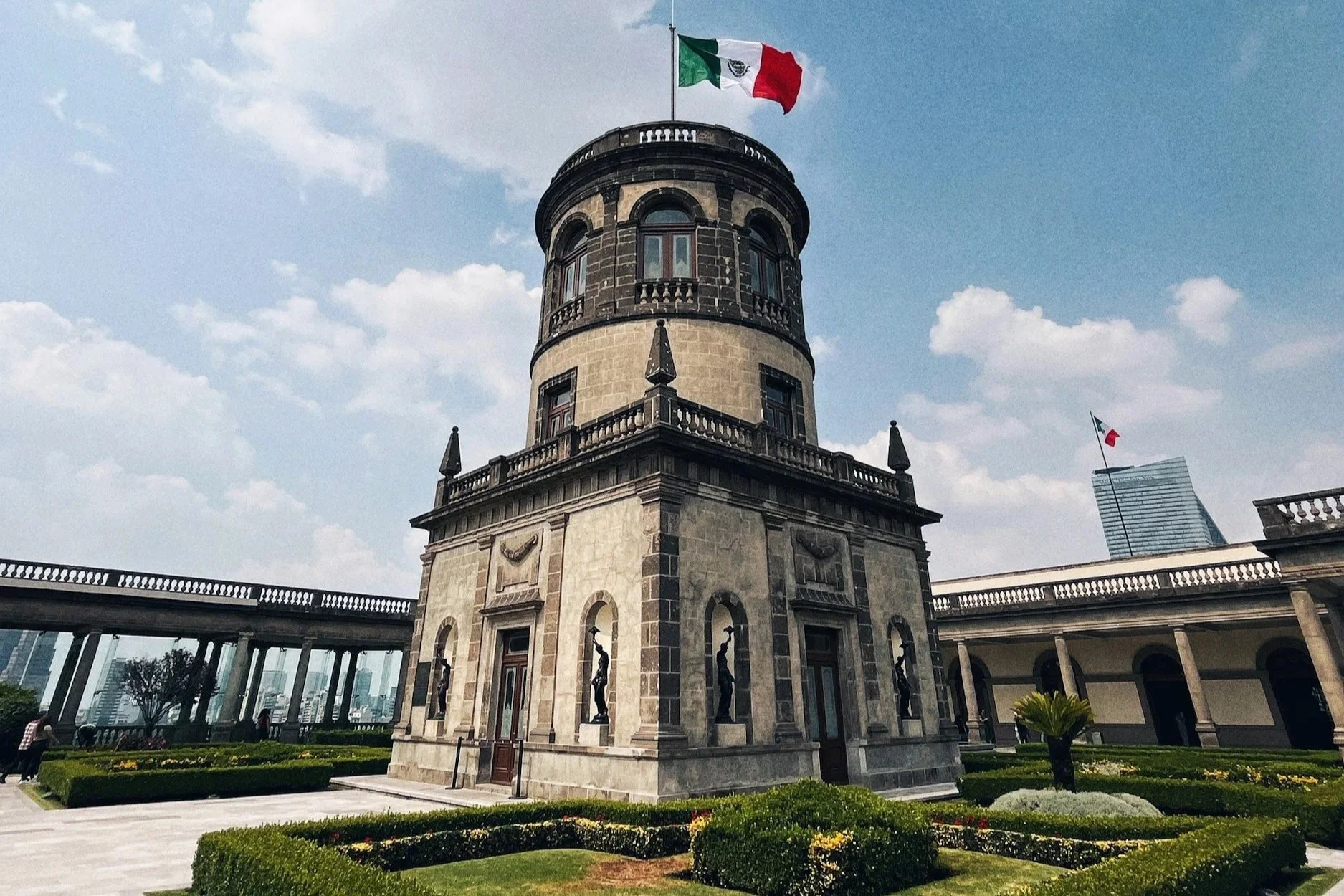
While the couple dreamed of creating a prosperous Catholic Mexico, their immediate concern was their own status. They set up a royal court and, unimpressed by the National Palace, moved into Chapultepec Castle, a building which required considerable work to bring it up to the standard they expected. The Mexican government quickly realized that a monarchy would not come cheap, the royal couple submitting a monthly budget four times that paid to the President.
Here at Chapultepec, Charlotte — or Carlota, as she was now known — would join her husband for a seven o'clock breakfast, the Emperor having already spent time on paperwork and taken his early morning ride. One issue that had to be dealt with quickly was church reform. Carlota was a passionate Catholic who saw her task as returning the country to the will of Rome, but she soon became disillusioned with corruption in the Mexican church. It is notable that whenever difficult messages had to be passed to bishops, Maximilian would employ his religious and charming wife as the messenger.
With their domestic routine settled, Maximilian set off on a tour of his new domains. He would be gone for nearly two months as his party paraded through loyal cities such as Querétaro, Guanajuato, and Morelia. While he was away, Carlota acted as regent. Whereas her husband oversaw long debates with ministers, she prided herself on keeping meetings short, and was more likely to offer the gathered officials a list of her "suggestions."
Few men had the courage or the poor manners to argue with their Empress to her face; how much energy they put into implementing her orders once they had left the room is another matter. While happy to be busy, Carlota missed her husband, and it did not help that the weather had changed, with rains and storms that turned the gardens into swamps.
In addition to her political duties, Carlota was the center of a lively social scene. Monday brought gatherings of the young and the gallant, who could enjoy the best of French wines and cuisine, and where the Empress could charm the diplomats and junior officers who attended. There were also regular evening balls at the Palacio Nacional. Carlota would make dramatic entrances around nine, sweeping through the room in her latest gown, greeting the guests in one of the five languages she spoke. She would watch events from a throne and, when finally tired, would leave — a signal that the party was over. In the early hours of the morning the rich and powerful of the city would come out onto the Zócalo, where the traders were setting up their stalls for the morning market.
While Carlota delighted in the balls, Maximilian was bored by them and attended only under duress. He was happier at their second home in Cuernavaca, where they could be surrounded by a smaller group of guests. Cuernavaca also brought out the best of the Empress. She was an excellent horsewoman and happily rode the fifty miles through the hills. She acquired an interest in the butterflies that fluttered in the garden, and the naturalist Dominik Bilimek became a regular visitor.
The church had not been brought to heel, and in December Maximilian declared freedom of worship throughout Mexico. It was not what Carlota had wished for, and it alienated many in the Catholic Church who had been their strongest supporters. February brought news that the French army had taken Oaxaca, one more victory in a long line of successes that year. However, the rebels could not be forced into a decisive battle, and Napoleon III was starting to question how long France could keep an army of 30,000 to 40,000 men in Mexico. For the Emperor, the cost of paying an army he did not command was a major frustration. He asked Carlota to intervene through her royal connections, and she wrote to Empress Eugénie, a great supporter of the Mexican adventure, to approach Napoleon on their behalf. The army should be expanded and placed under her husband's control. Then they might properly garrison the country. The French court took little notice of a letter from a 24-year-old Empress of a faraway land.
Maximilian, urged by Carlota, wanted further reforms. They dreamed of providing hospitals, orphanages, and public schools, and of improving conditions for the indigenous population and for laborers. These might seem noble concerns, but they ran against the policies of the Conservatives who had brought them to power. Despite the military success, the royal couple entered 1865 facing limited control over most of the country, fading support from the Conservatives and the church, the prospect of the French army being withdrawn, and an empty treasury.
There were also personal problems. There were rumors that Maximilian, who always had an eye for pretty women, had become infatuated with the daughter of a Cuernavaca gardener. Then the couple made a serious unforced error. Unable to conceive a child, they adopted two grandsons of a previous Emperor, Agustín de Iturbide. A legal dispute followed, and what had started as an adoption began to look more like an abduction. A fragile monarchy that depended so much on its image became the target of ridicule.
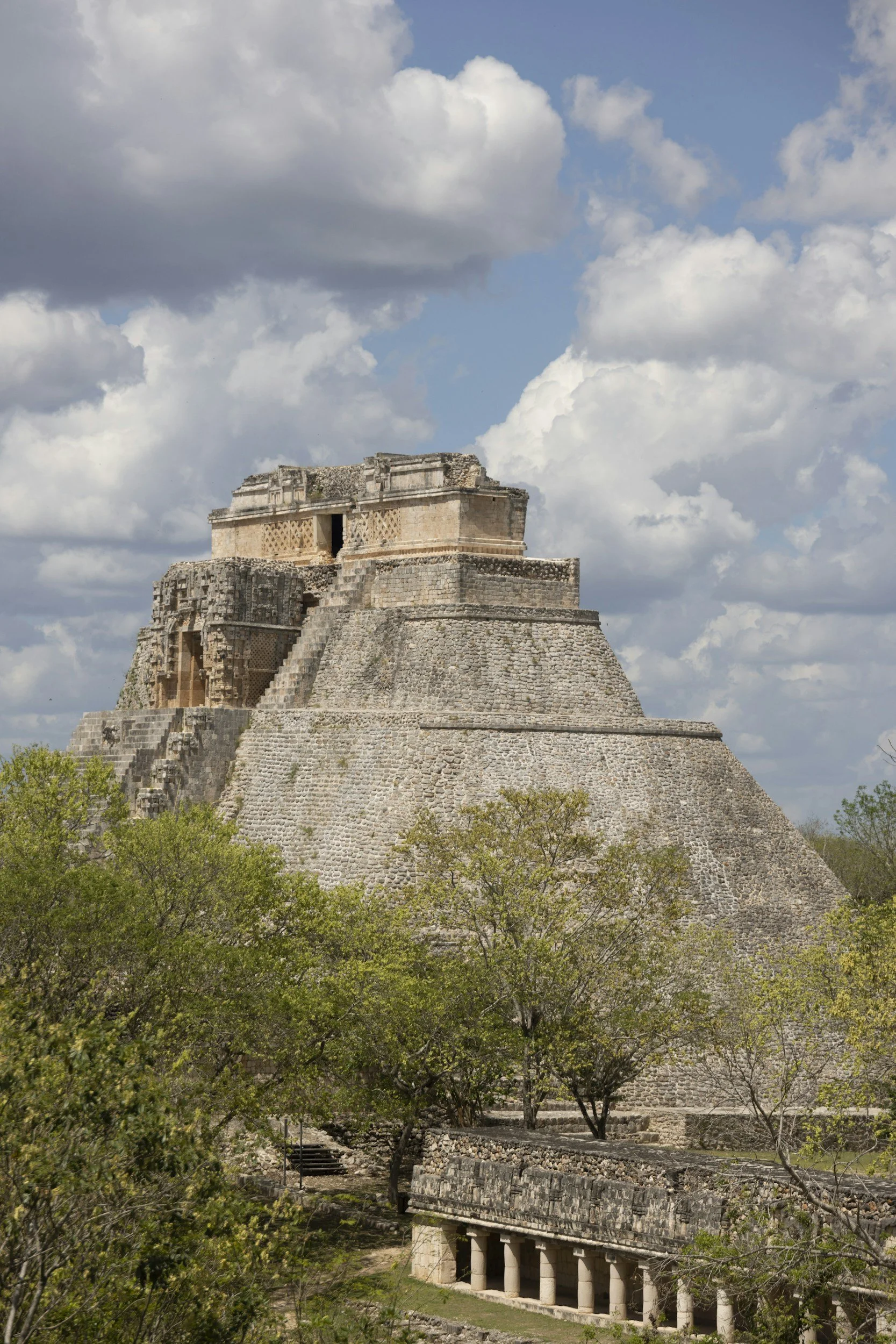
In August 1865, Maximilian once again set off for the countryside, this time to Pachuca and the silver towns. However, he was nervous of leaving his government unsupervised and was gone only a few days. By November, political events seemed so critical that the Emperor withdrew from a scheduled visit to the Yucatán and asked Carlota to take his place. The Yucatán upper class gave a warm welcome to the Empress, and she took the opportunity to meet the indigenous population and to visit the ruins of the ancient Maya city of Uxmal. The turmoil and violence taking place in villages a few miles away was hidden from her, and she sailed back for the mainland believing the situation in Mexico was manageable. Her return journey quickly reminded her of the seriousness of it. Her husband wrote, warning her to avoid Jalapa and not to linger in Orizaba.
Carlota was reunited with Maximilian in Cuernavaca the day before New Year's Day 1866, and a few days later learned of the death of her father, King Leopold I of Belgium. Then came the news that France was indeed withdrawing its troops. Whether the Empire could survive without French arms was doubtful, and Maximilian considered abdicating. Carlota, however, would not consider it, and persuaded her husband to cling on to the throne while she headed for Europe to appeal for help directly from Napoleon III.
She departed from Veracruz on July 13, 1866, just two years after she had arrived with such optimism. She would not see Mexico or her husband again. When she reached Paris, Napoleon III, pleading sickness, refused to see her, sending his wife to make a courtesy call at the Grand Hôtel instead. Having been rebuffed, Carlota began to show signs of a nervous breakdown. A few days later Napoleon finally met her, but only to confirm that France could no longer support the Mexican government. Carlota left for Miramare Castle, where she had once been so happy, but her mental state had declined and she was convinced she was in danger of being assassinated.
There was one higher authority she could appeal to, and she left for the Vatican. Pope Pius IX greeted her warmly but had no intention of becoming involved in the political affairs of either Mexico or France. It was what had happened in every room she had entered since leaving Veracruz. She was received with great courtesy, and nothing was done.
Carlota was now losing her grip on reality. She fled back to the Vatican and begged for refuge, convinced that she was being poisoned. News was sent to her family, and her brother Prince Philippe arrived to take her back to Miramare. When news of the capture and execution of Emperor Maximilian reached Europe, it was initially kept from her.
She was still only twenty-seven, and she lived in isolation for the rest of her life, attended by a few ladies-in-waiting and receiving the occasional family visit. She spent long periods in silence, or held conversations with an imaginary guest. Empires rose and fell around her, and the household went on flying the Austro-Hungarian flag long after there was an Austria-Hungary to fly it for. Carlota, once the grand Empress of Mexico, died at Bouchout on January 19, 1927, at the age of 86. She had not been seen by the outside world for sixty years.