
A literary second act
Charlotte Smith is a storyteller and unapologetic observer of life in Mexico, who writes about the country as she experiences it - with curiosity, a healthy dose of skepticism, and genuine affection. From people and places to the strange, funny, and sometimes complicated moments of everyday life, Charlotte believes there’s a story almost everywhere if you stop long enough to notice it.
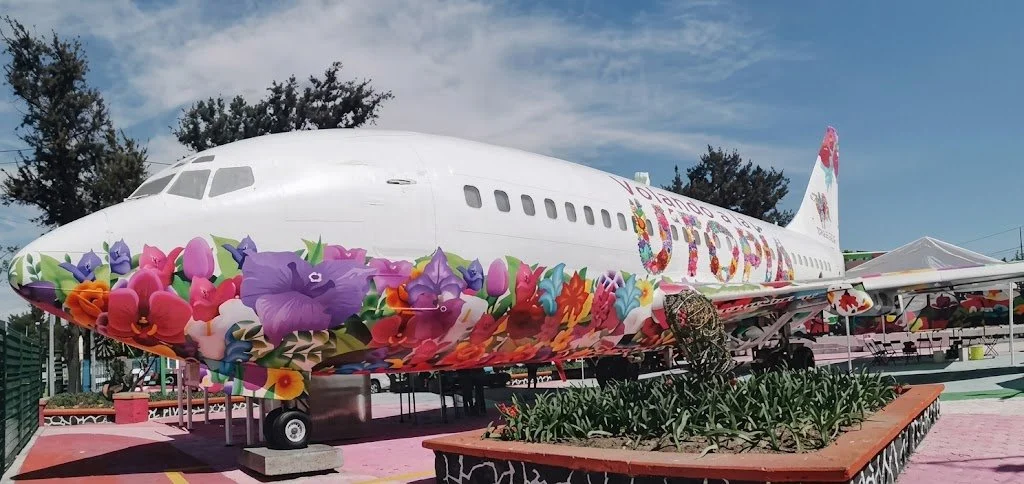
There are plenty of libraries in Mexico City. Some are grand, historic buildings. Some are tucked into neighbourhoods. Some are modern spaces with computers, study areas, and rows and rows of glorious books.
And then there are the ones where you walk through the door and find yourself inside an airplane.
Yes. An actual airplane.
The first one I came across was the Biblioteca Tlatoani, a retired Douglas DC-9 in the Venustiano Carranza borough. It’s been operating as a community learning space since 2005, offering digital resources and educational activities.
There are more of these airplanes in Iztapalapa. They’re part of the city’s Utopías program, a network of public spaces combining culture, sport, education, and recreation in neighbourhoods that haven’t always had easy access to those things.
At Utopía Teotongo, a decommissioned Boeing 737-200 was given a second life as an avión biblioteca. And honestly, I love the logic. You can tell a kid that reading is important. You can explain how books open doors and expand your imagination and all the other things adults say when they’re trying to convince children that reading is good for them. Or you can tell them there’s a plane.
I’m guessing we all know which one is getting them out of the house.
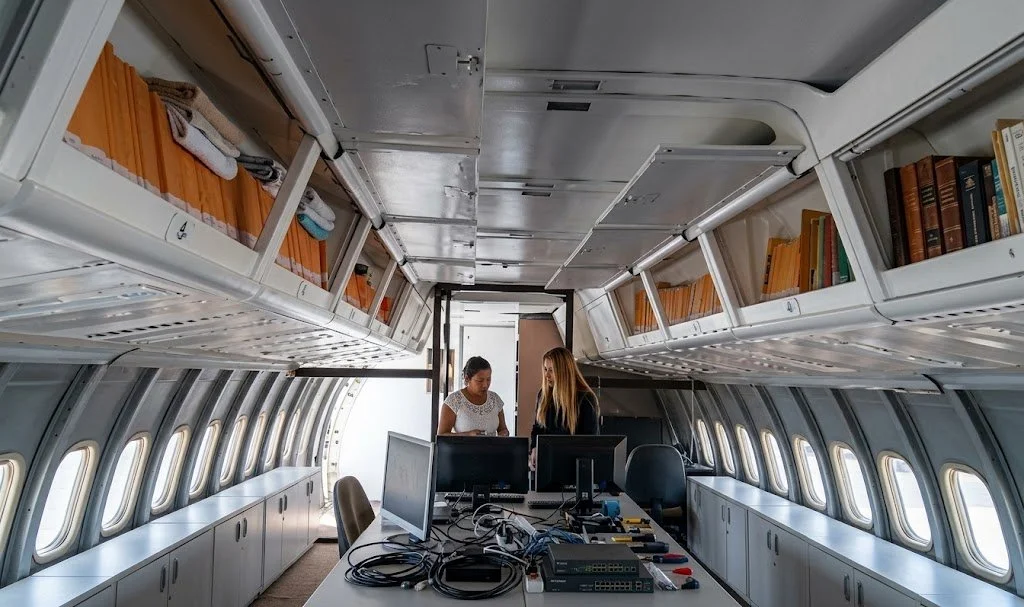
The Boeing 737 at Teotongo contains around 230 printed books and access to roughly 25,000 digital works. There are computer stations, reading areas, and even a flight simulator in the cockpit, giving children the chance to sit where pilots once did. Think about that for a minute. A child walks into a library and gets to sit in the cockpit of a Boeing 737. You’d have to work pretty hard to make reading sound boring after that.
And the plane isn’t sitting there on its own. Utopía Teotongo has a swimming pool, boxing facilities, outdoor exercise areas, a skate park and parkour circuit, cultural workshops, an auditorium, and spaces for community activities. So, the idea wasn’t really just to build a library. It was to build somewhere people wanted to go.
A library can be a wonderful thing, but if you’re a kid growing up in a neighbourhood where there aren’t many places to go after school, “Would you like to visit the library?” might not be the world’s most exciting invitation.
“Do you want to go inside a Boeing 737 and then go swimming before we hit up the skate park?” might be somewhat more exciting.
Another retired Boeing aircraft was incorporated into Utopía Quetzalcóatl where the avión biblioteca provides internet access and educational activities. Then there’s Utopía Oyamel/CenTlalli in Magdalena Contreras, a newer addition to the city’s collection of unusual public spaces, incorporating a retired passenger aircraft into its cultural facilities. Which means what initially sounds like one wonderfully strange idea has turned out to be something so much bigger.
Mexico City has been finding new jobs for old airplanes for more than 20 years, and I think there’s something particularly clever about that — take something that’s finished doing what it was built to do and ask what else it could become.
A plane becomes a library. A cockpit becomes a classroom. A passenger cabin becomes a reading room. And something that once carried people between cities now takes children somewhere else entirely. It’s a pretty good second act.
The program is built around the idea that good public spaces shouldn’t be something people have to travel across a huge city to find. Put them in the neighbourhoods. Make them free. And, perhaps most importantly, make the spaces interesting enough that people actually want to use them. That’s particularly relevant in Iztapalapa.
Mexico City is enormous, and access to its cultural and recreational resources isn’t evenly distributed. A brilliant museum on the other side of the city doesn’t help much if getting there is difficult or expensive. So instead of asking people to come to the city’s cultural center, the Utopías idea is, in a very real sense, to take culture to them.
There are obviously questions about the politics, cost, and long-term sustainability of a program as ambitious as Utopías. Those are fair questions, and they deserve asking. But there’s something about the basic idea that’s hard not to like. Take an abandoned or underused space and put something useful in it. Give people a reason to come, and don’t make it boring.
Because maybe that’s the bit we get wrong when we talk about public libraries, parks, and community centers. We concentrate on what they’re supposed to provide rather than asking what might actually make people want to walk through the door. The people behind these projects seem to have understood something very simple. Curiosity is a pretty good starting point.
A child who climbs onto an airplane because they think it’s cool might discover the books once they’re inside. Someone who comes to use the computer might stay for a workshop. Someone who comes to swim might wander into the library. Someone who never thought of themselves as the sort of person who goes to cultural spaces might find one sitting right in the middle of their neighbourhood.
Perhaps the reason I like the planes so much is that they’re not really just about planes at all. They’re about possibility.
About taking something ordinary and giving it another life.
About looking at a retired aircraft and not seeing a piece of junk but seeing a room full of children who haven’t discovered their favourite book yet.
Sometimes, getting people through the door isn’t about telling them how important something is. Sometimes, it’s just about giving people something that makes them curious enough to step inside.