
Here’s what you get when you subscribe to our great features, stories and insights into life in Mexico.
If you like what you see, head to our subscription page to sign up today.
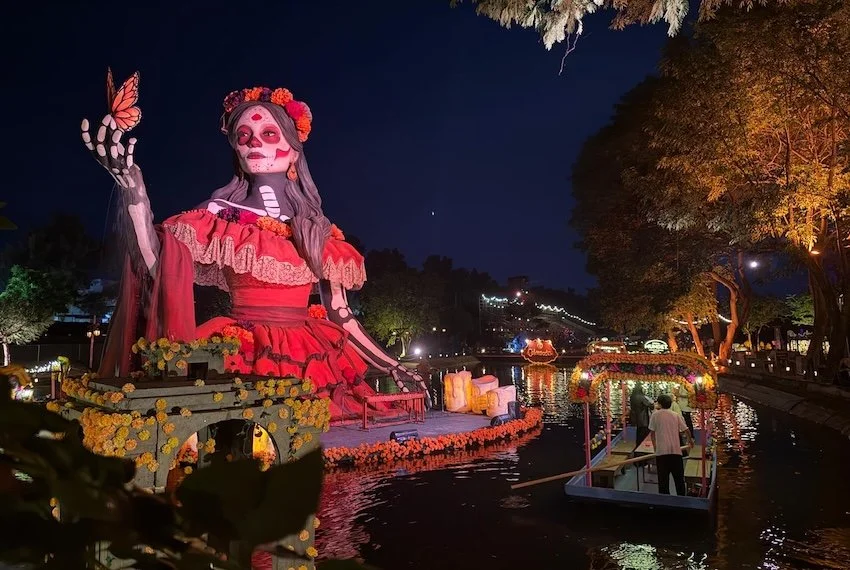
The night a skeleton queen taught me how to miss my grandmother
As our week of Día de Muertos stories continues, Charlotte Smith visited Mexico’s largest theme park dedicated to honouring the dead.
With spectacular light shows, enormous installations, and a giant Catrina rising from a lake, Calaverandia certainly delivers on spectacle.
But it was something much more personal that Charlotte took away from the experience, when she discovered that sometimes the best way to understand another culture is to experience it for yourself.
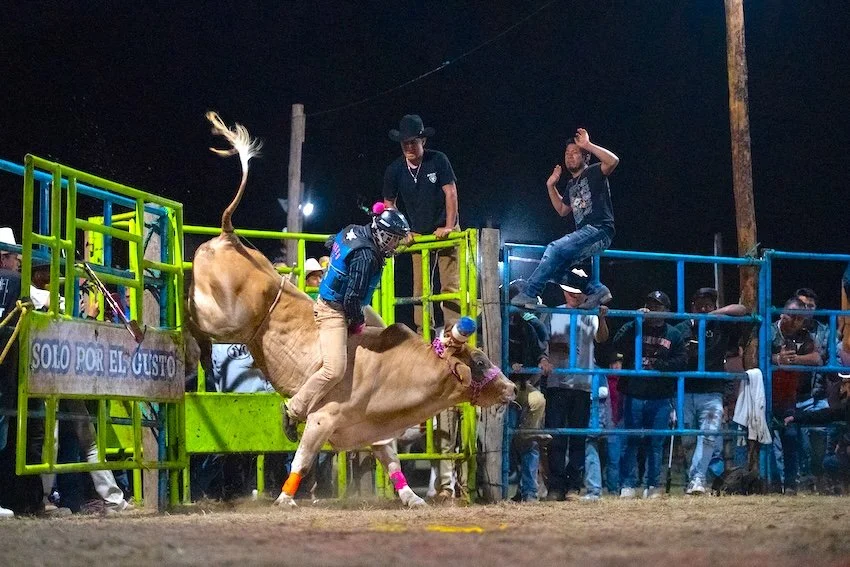
What happens at the Jaripeo, stays in the pueblo
In rural Oaxaca, there’s only one sport that anyone cares about, and it isn’t played with a ball.
Award-winning photographer Anna Bruce heads to the town of Macuilxochitl to get down and dirty with the men who ride bulls for a living.

Heretic, enigma, exile: An appreciation of Elena Garro
She was a Catholic anticommunist who defended landless peasants, a reactionary who wrote like a modernist, and the woman Mexico banished before it canonised her.
Hugo Sánchez on Elena Garro, the most awkward icon of Mexican letters, and the gap between what a nation says about itself and what it actually is.

A literary second act
For 20 years, Mexico City has been taking retired airliners and repurposing them as community assets.
Charlotte Smith explores these community spaces and looks closer at the magic that they bring to impoverished sections of the Mexican capital.
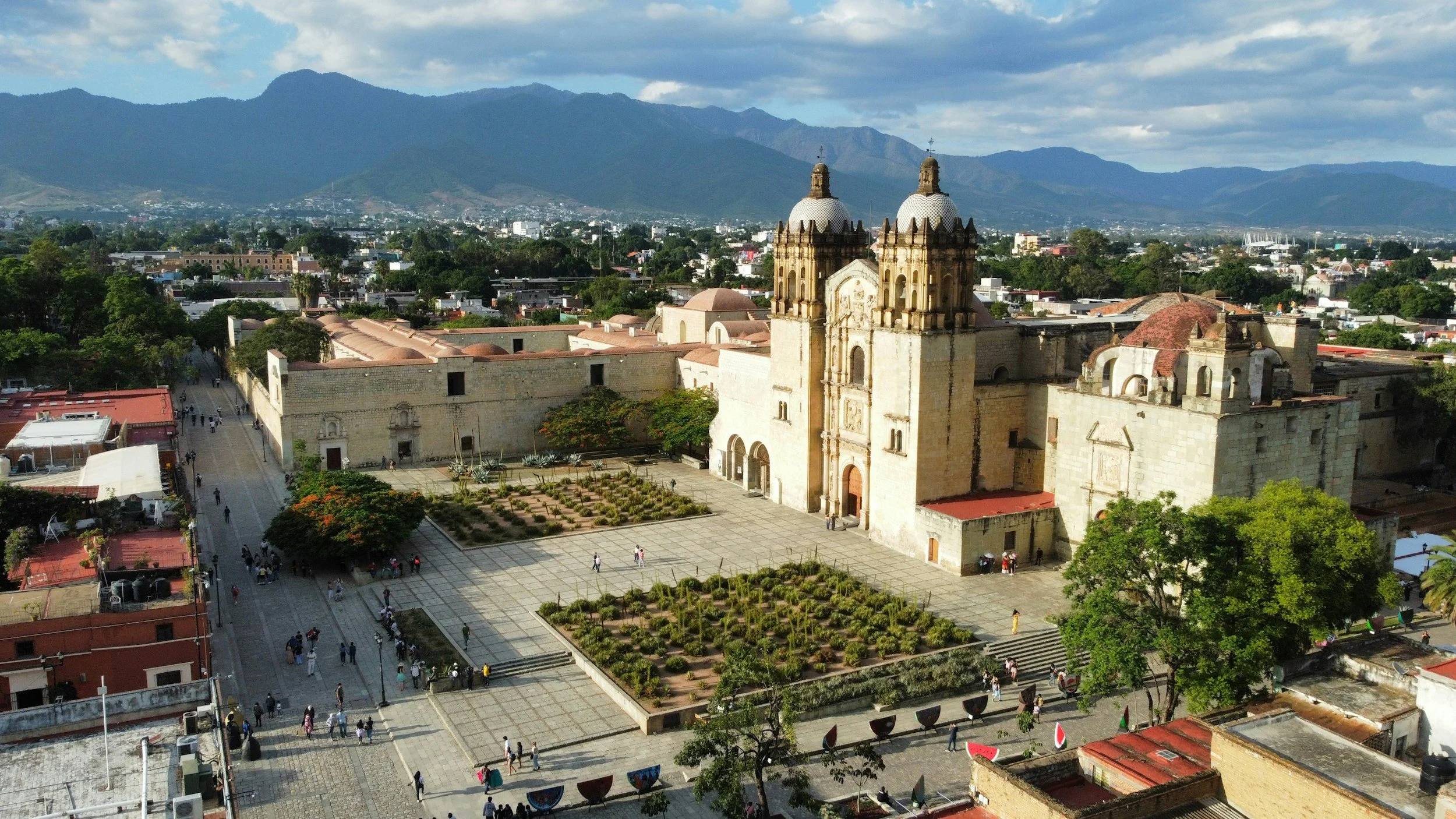
Counting Mexico's wonders: The UNESCO list
Antipater of Sidon listed the Hanging Gardens of Babylon among the world's wonders without ever seeing them, and archaeologists now doubt the place existed at all. Every such list, Gordon Hawkes suggests, records who was counting as much as what was counted.
He traces the line from Antipater's seven to UNESCO's 1,272 — and to the 36 that make Mexico the most decorated country outside Europe and Asia.

History, Pozole, and the power of a well-timed ‘¡Viva!’
In 1810 a priest rang his church bells and shouted for the end of Spanish rule. Two centuries on, every town in Mexico still shouts back.
On the night of September 16 the plaza in Puerto Vallarta fills by seven, becoming a sea of flags, children in charro suits, grandmothers with trays of pozole. A bell sounds, the names of the heroes are called out one by one, and the crowd answers each with a roar.
No matter if you’re Mexican or not, it’s impossible not to join in.

Who makes the giant people dance?
They arrive without warning — a band, then five-metre people swinging their arms down the street, and nobody in Oaxaca looking up.
These gentle giants are built by hand from reed and paste, a month's work for a figure that will spend its life being bounced through a procession and nearly knocking somebody over. Somebody bends the carrizo. Somebody paints the face. Somebody teaches a child to do both. On the difference between a tradition kept behind glass and one still light enough for a new generation to climb inside.

The many lives of Estación Indianilla
For a century the enormous hall in Colonia Doctores built and repaired the streetcars that moved the capital, until Luis Buñuel turned up in 1953 to make a film about one, until the trams disappeared and the rooms filled with government paperwork instead.
Charlotte Smith explores the history of a building that found new work without pretending to be something it wasn't.