
Heretic, enigma, exile: An appreciation of Elena Garro
Hugo Sánchez is an avid reader, author and devotee of Mexican literature.
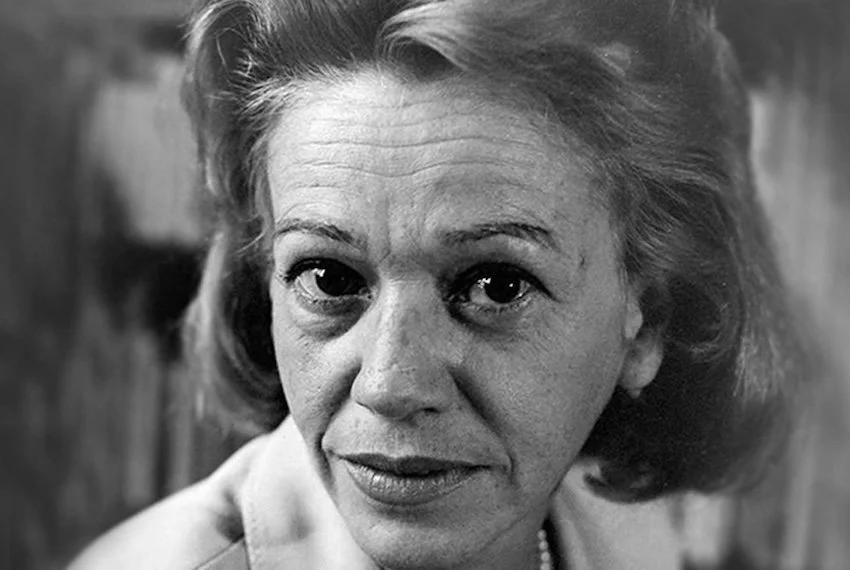
I have come to think that there is a particular kind of exile that does not require a passport. If such a thing does exist, then Elena Garro knew both kinds better than almost anyone. She spent the better part of two decades wandering between Paris, Madrid and the United States, poor, surrounded by cats, writing feverishly and publishing fitfully. But the deeper banishment, the one that interests me most, began long before she left Mexico in 1972, and I am not sure it ever really ended, not even when she returned in 1993 to die five years later in a modest house in Cuernavaca. She had been exiled from the story Mexico tells about itself. That she has since been welcomed back into that story, enshrined in the canon and taught in classrooms as one of the indispensable voices of twentieth-century Mexican letters, strikes me as one of the stranger ironies of the country's cultural life.
Mexico has made an icon of a woman who distrusted nearly everything its intellectual class held sacred.
The longer I spend with her, the more the enigma seems to gather around a single contradiction. Garro was, by temperament and conviction, a conservative: Catholic in sensibility, fiercely anticommunist, suspicious of ideological fashion and openly contemptuous of the salon revolutionaries who filled the cafés and faculties of Mexico City. And yet she wrote some of the most searing indictments of the Mexican state I have ever read, and she spent years of her life defending dispossessed peasants against the very government that claimed to have liberated them.
She was a reactionary who championed the poor, a traditionalist who wrote like a modernist, a woman who belonged to no camp and was, perhaps for that very reason, punished by all of them.
Born in Puebla in 1916 to a Spanish father and a Mexican mother, Garro spent her childhood in Iguala, in the state of Guerrero, and it was there, among the dust and the bougainvillea and the half-remembered violence of the Revolution's aftermath, that her imagination took its shape. The provincial town became the raw material of her masterpiece, Los recuerdos del porvenir, published in 1963 and set in the fictional Ixtepec during the Cristero War.
The novel is narrated not by a person but by the town itself, a collective voice of stone and memory watching its inhabitants suffer under the occupation of a federal general. It is a book in which time folds back on itself, in which lovers vanish into the air and a woman is turned to stone, and it predates One Hundred Years of Solitude by four years. Critics still argue over whether she deserves to be called a precursor of magical realism. What is more striking, and less often remarked upon, is the political charge concealed beneath the enchantment.
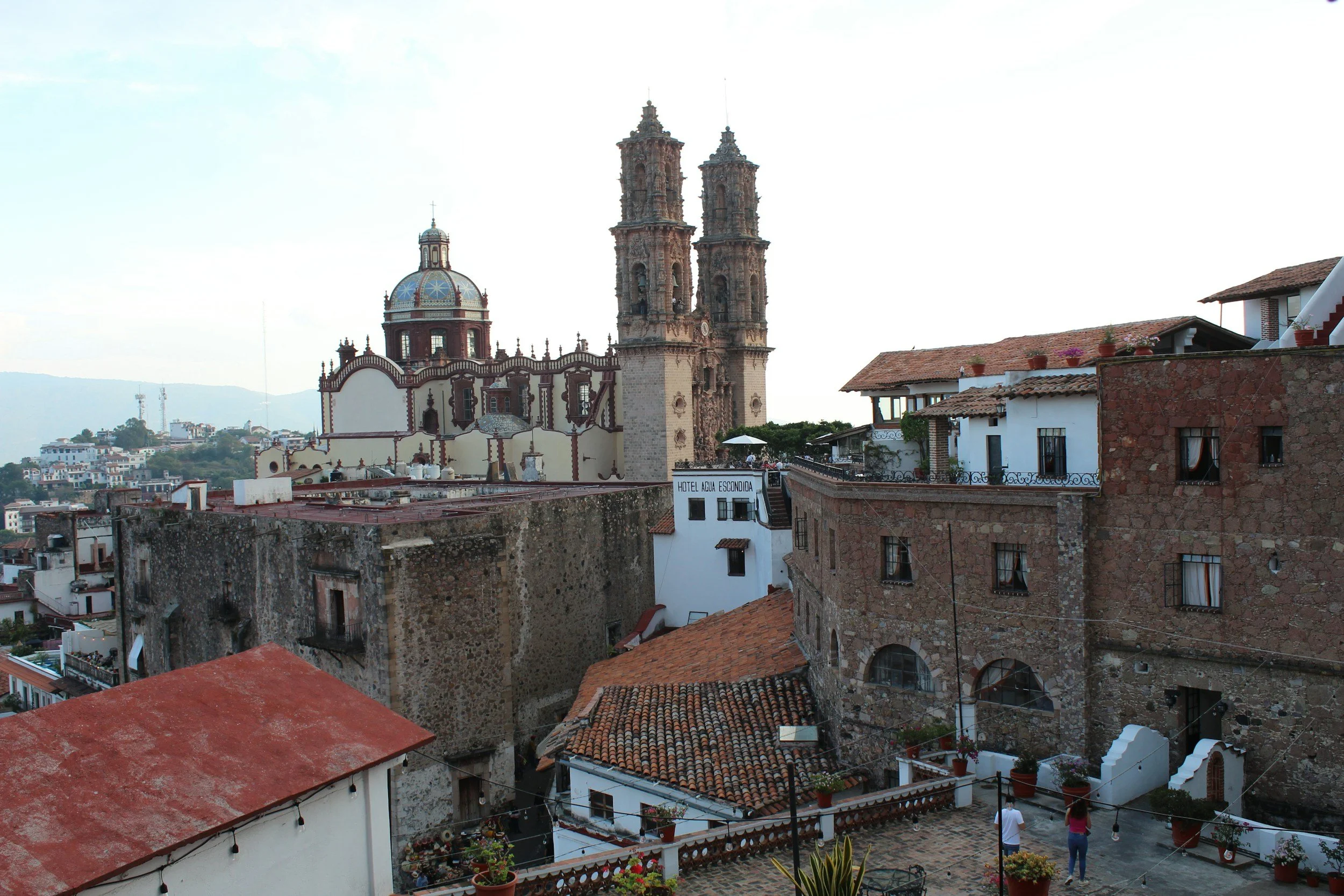
For Los recuerdos del porvenir is, among other things, a novel about the betrayal of the Revolution. Its villains are not the old landowners or the Church but the triumphant revolutionary generals who have become the new oppressors, persecuting Catholics and helping themselves to the land and the women of the town. In a country whose official mythology rested on the Revolution as a redemptive event, the founding act of a modern and just nation, this was not a neutral choice.
Garro saw in the revolutionary state not the fulfilment of popular aspiration but its confiscation. The language of liberation had hardened into a vocabulary of power, and those who spoke it most fluently were often those who profited from it most handsomely.
It is here, I think, that her conservatism and her compassion meet, and here that our usual categories begin to fail us. Garro's sympathies lay not with abstract masses but with particular people: the Cristeros who died for their faith, the indigenous communities whose ways of life were trampled in the name of progress, and the campesinos of Morelos whose lands were seized by politicians and speculators. In the 1950s and 1960s she threw herself into their causes, accompanying peasant delegations, writing letters, petitioning officials and generally making herself a nuisance to the authorities.
Hers was not the politics of the Marxist who sees the peasant as a historical category awaiting proletarian consciousness. It belonged to an older Mexico, Catholic and agrarian, rooted in the land, in faith and in community, and deeply wary of any ideology that claimed to understand the people's interests better than the people themselves. To the left she looked like a reactionary; to the regime she looked like an agitator. She was something the twentieth century had very little language for, though I am not convinced the twenty-first has found it either.
Then, of course, there was Octavio Paz. Garro married him in 1937, when she was barely out of her teens, and that same year travelled with him to Spain for the Congress of Antifascist Writers, an experience she later recorded in her Memorias de España 1937. What stays with me about that memoir is its unsentimental eye: at the very heart of the most romantic cause of her generation, surrounded by true believers, she was already watching them with a certain cool scepticism.
The marriage lasted more than two decades and was, by most accounts, a long war of attrition between two formidable and incompatible talents. Paz became the towering figure of Mexican letters, diplomat, Nobel laureate and arbiter of literary reputation for half a century, while Garro became, in the public imagination, his difficult former wife. It seems impossible to disentangle her marginalisation from his ascendancy, and her later writing seems haunted by the sense of having been erased by the man whose name she once shared.
The decisive rupture came in 1968. In the aftermath of the massacre at Tlatelolco, when government forces opened fire on student protesters in Mexico City, Garro found herself accused of involvement with the movement. Her response was to turn on the intellectuals she held responsible for leading the students into danger, publicly naming figures of the cultural left whom she accused of manipulating idealistic young people for their own ends. Whatever drove her, whether fear, conviction or a long-nursed resentment of the literary establishment, the consequences were catastrophic.
In a single gesture she was branded an informer, a traitor to her own world of artists and thinkers, and a collaborator with the very state she had spent years opposing. The left never forgave her, the regime had no use for her, and within a few years she was gone.
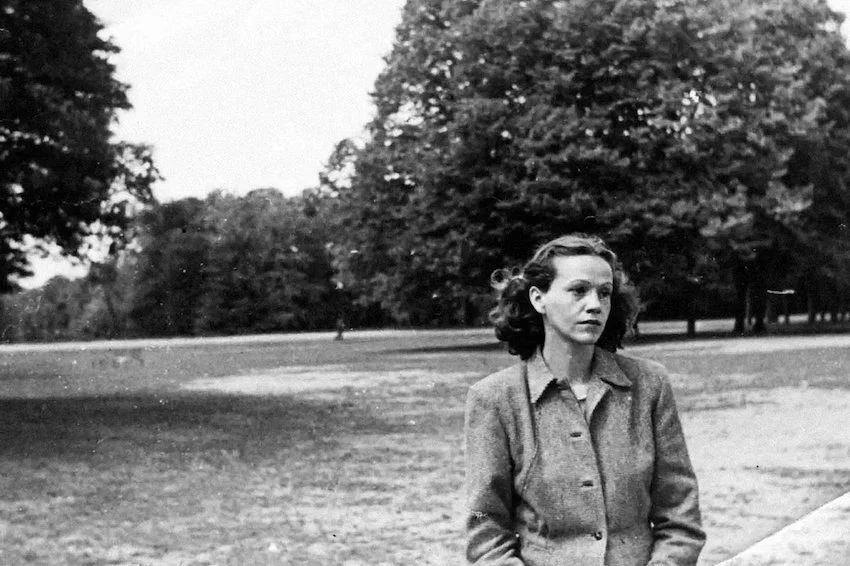
I am wary of reading that exile as a simple story of victimhood, though Garro herself sometimes invited the reading, with her tales of persecution, surveillance and conspiracy. She was both persecuted and self-destructive, both clear-sighted and paranoid, both brave and capable of real cruelty. Her fiction from those years, Testimonios sobre Mariana and Reencuentro de personajes among it, is crowded with women pursued by shadowy forces and trapped in marriages that resemble prisons, and reading it I often cannot tell where autobiography ends and nightmare begins. I suspect the distinction did not much matter to her.
Which returns me to the question that first drew me to her: how did this woman, anticommunist, Catholic, accused of betraying the students of 1968, come to be embraced by a national culture whose intellectual heart has beaten on the left for the better part of a century?
Part of the answer is simply time, which dissolves old enmities and leaves the work standing alone. Part of it lies in the feminist rediscovery of Garro from the 1980s onwards, which recast her as a woman silenced by a patriarchal literary order and by one man in particular, and which gave her trapped, defiant heroines, forever fleeing into memory and fantasy, a new and urgent readership. And part of it is the sheer quality of the writing, which no amount of political disapproval could suppress for ever. Los recuerdos del porvenir is simply too good to be left out of the story.
And yet I cannot shake the feeling that something remains unresolved in that embrace, something that makes Garro a perpetually awkward icon. To honour her fully would mean honouring her heresies: her contempt for revolutionary piety, her suspicion of intellectuals who presume to speak for the poor, her conviction that the Mexican state had betrayed the very people it claimed to serve. These are not comfortable ideas for any Mexican establishment, of the left or the right. The temptation, therefore, has been to celebrate the novelist and quietly set aside the polemicist, to admire the luminous prose of Ixtepec while passing over the woman who named names in 1968.
Today, Garro’s cultural monument sits quietly, three streets away from that of her more illustrious ex-husband. While the Octavio Paz house is a colonial marvel and national treasure, Elena’s memorial is a modernist library, nestled a few metres from the home of Mexico’s other great female pariah, La Malinche.
I like to imagine that Garro would have found this amusing, or infuriating, or most likely both. She understood better than anyone I have read that Mexico is a country of overlapping times, where the past is never quite past and the future arrives already remembered. Her own afterlife has followed the same logic. Rejected in her lifetime, she now belongs to the nation's memory, but on terms she would never have accepted. That, for me, is the final enigma of Elena Garro: that even in her apotheosis she remains impossible to domesticate, a writer whose great subject was the gap between what a nation says about itself and what it actually is, and who has ended up living, quite permanently, in precisely that gap.