
Anna Bruce is an award-winning photojournalist and author of Tequila, Mezcal and More (Shortlisted for the Andre Simon Drinks award 2026 and listed as one of Forbes' top 9 food and drink books of 2025). She has contributed to numerous publications including The Times, Dazed and Mezcalistas, and has self-published projects: 'Masters of the Spirit' and 'Perros y Palenques.'
Anna lives in Oaxaca with her partner and their pack of rescue dogs. Together they developed Rambling Spirits, offering bespoke experiences with mezcal producers.
The sun was going down as we drove out of Oaxaca City toward Macuilxochitl, a small Zapotec pueblo about thirty minutes east. As we turned off the highway, the peak of what looked like a circus tent rose above the rooftops. Banda music came rolling across the fields to meet us, and we fell in behind a procession of tuk-tuks all heading for the same place.
We had come for a jaripeo.
If you want to see Oaxaca at its loudest, proudest and most gloriously unhinged, this is where to find it. Jaripeo is a traditional form of Mexican bull riding, part of a rodeo culture woven deep into the communities of Oaxaca. Most are held during the fiestas patronales, the celebrations for a town’s patron saint, but on almost any weekend there’s one happening somewhere in the valleys around the city. They are community parties as much as sporting events: cowboy hats and boots, food and drink stalls, fireworks, crowd games, and Oaxacan banda and norteño groups playing as though their lives depend on it.
We followed the noise through the makeshift parking lot, past the hotdog stands, and around the bleachers until we found a spot right beside the ring. Families in full cowboy attire sat at tables pressed up against the railings, and the stands behind them were packed. Vendors squeezed through the crowd, holding trays of loaded micheladas, popcorn and crisps high above their heads.
Then the riders were introduced. Each was handed a six-pack of beer. Each knelt, traced a cross in the dirt and another across his chest, and prayed that tonight everything would be all right. The prayer they say is the Oración del Jinete, the rider’s prayer, and it speaks plainly of life and death. In the middle of all that noise and color, it was a quiet reminder of what these men were about to do.
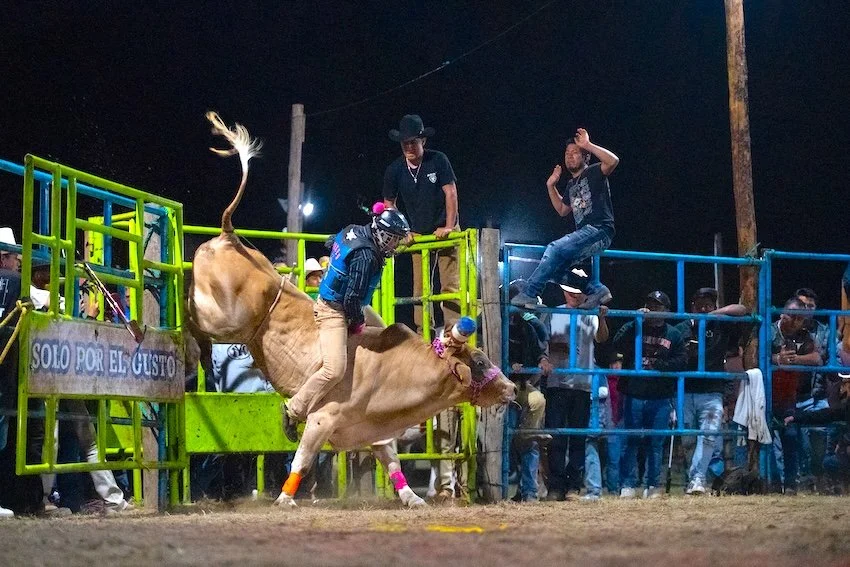
The jinetes, the riders, are the stars of the show. They wear leather chaps, some of them studded and jeweled in bright colors. Unlike in American rodeo, they don’t ride with one hand thrown in the air: in Oaxaca, holding on with both hands is standard practice.
A panel of judges scores each ride, usually out of a maximum of 150 points, based on the speed, height and violence of the bull’s bucks. A rider typically has to survive at least five clean bucks after leaving the gate; fall on the sixth and he can still be scored. Goading, hitting or throwing things at the bull to make it buck is strictly forbidden. And while an American rider needs to last eight seconds, a jinete in Oaxaca rides until the bull tires or he hits the dirt.
As the riders left the ring to wait their turn, I slipped away to the pens where the bulls were being held, to find Celestino Bautista Lazo. Celestino has been raising jaripeo bulls for years in the neighboring town of Teotitlán del Valle, and, as always, he was completely unbothered by the chaos around him, standing calmly beside his current star: a bull named Chicken Little.
Chicken Little is a perfect specimen of the local Oaxacan breed: small, black, short and stocky, with long horns and a long purple tongue. Think Ferdinand the Bull. I know this plucky little bull well, having visited Celestino at home, where Chicken Little and his friends spend their days munching corn cobs.
There’s real economics behind the spectacle. Jaripeos are usually organized by local governments and ranchers from the region, and the bigger tournaments, like the regional circuits in Teotitlán, Tlacochahuaya and San Francisco Tutla, offer cash prizes of between 80,000 and 150,000 pesos. The prize typically goes to the bull’s owner, who often shares it with the rider. But the owner also covers entry fees and pays the rider to take part, and some riders charge a small fortune. Celestino has built a good rapport with local jinetes, who know his bulls perform and are happy to lower their fee in exchange for a cut of the winnings. For Celestino, that makes all the difference.
We waited together for Chicken Little’s turn. His rider, Teo de Juquila, crouched above the chute, waiting for the bull to settle, then dropped onto his back just as the gate swung open. A rider is on the clock to mount and get out of the gate, and once he’s out, there’s nothing to do but hang on through the spinning, bucking, wild performance that follows.
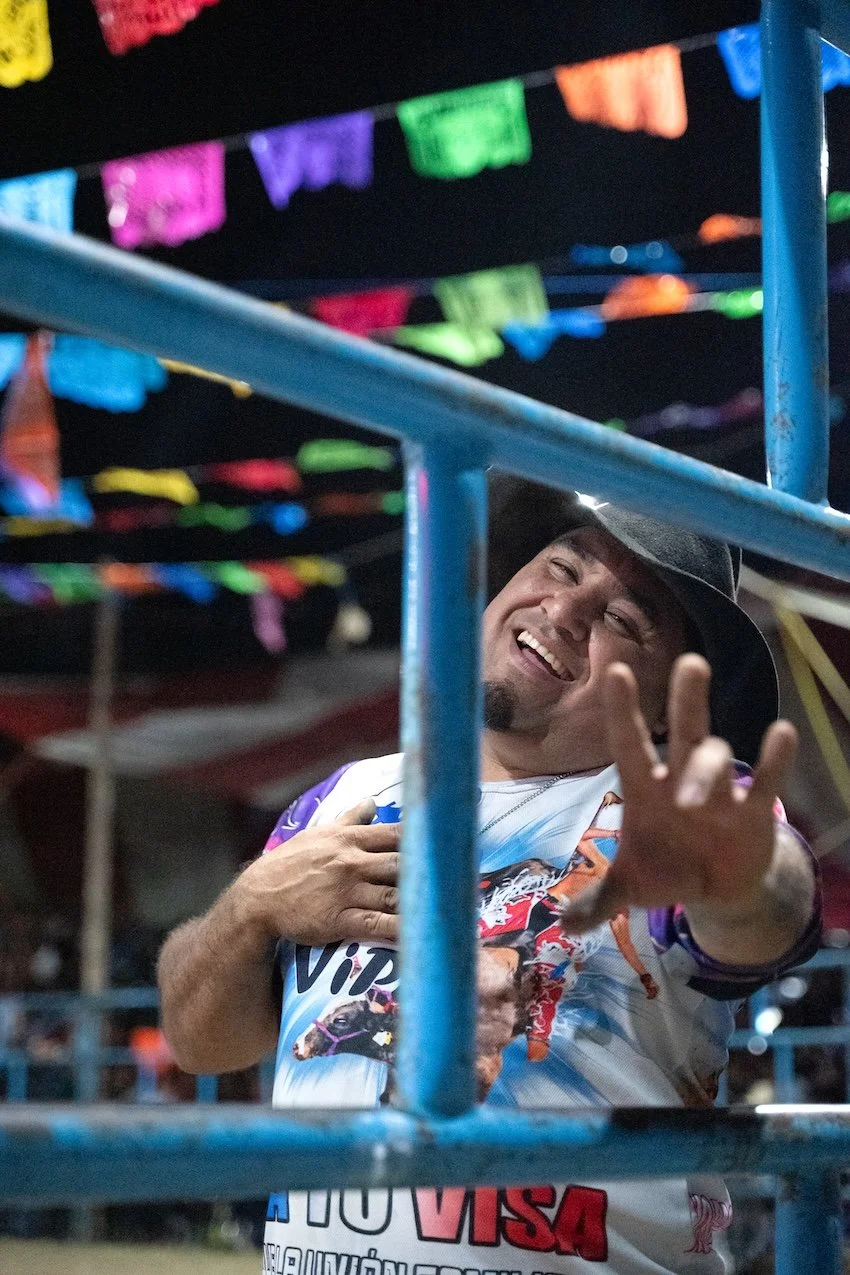
All night the music pounded from the stage, and plenty of people in the crowd had brought their own trumpets to join in. Between the sound, the colors and the lights, it would have been a crazy evening even without grown men being flung from the backs of bulls right in front of us.
It’s a fantastic spectacle, but not without its dangers, or even its horrors. At other jaripeos I’ve seen serious injuries, from concussions to riders being gored. Thankfully, Macuilxochitl was well run, with plenty of people around the ring ready to get riders and bulls out safely.
Celestino and Chicken Little didn’t win that night. But word reached me later that they took the very next tournament