
I used to see it; now I live it
Charlotte Smith is a storyteller and unapologetic observer of life in Mexico, who writes about the country as she experiences it - with curiosity, a healthy dose of skepticism, and genuine affection. From people and places to the strange, funny, and sometimes complicated moments of everyday life, Charlotte believes there’s a story almost everywhere if you stop long enough to notice it.
A few days ago, Omar and I were talking about how long I’ve been in Mexico.
“Almost four years,” I said.
He looked at me strangely.
“Ummm…we’ve been together for almost four years, Charlotte. I don’t think that’s right.”
So, I stopped to calculate it, and found that by January 2027, I will have been here for almost six years.
Six years. I’m not sure how that happened. Perhaps it’s because the old adage of time flying has quite the meaning. Or perhaps it’s because, in some ways, I’ve stopped noticing Mexico in the way I used to.

When I first arrived, I noticed everything.
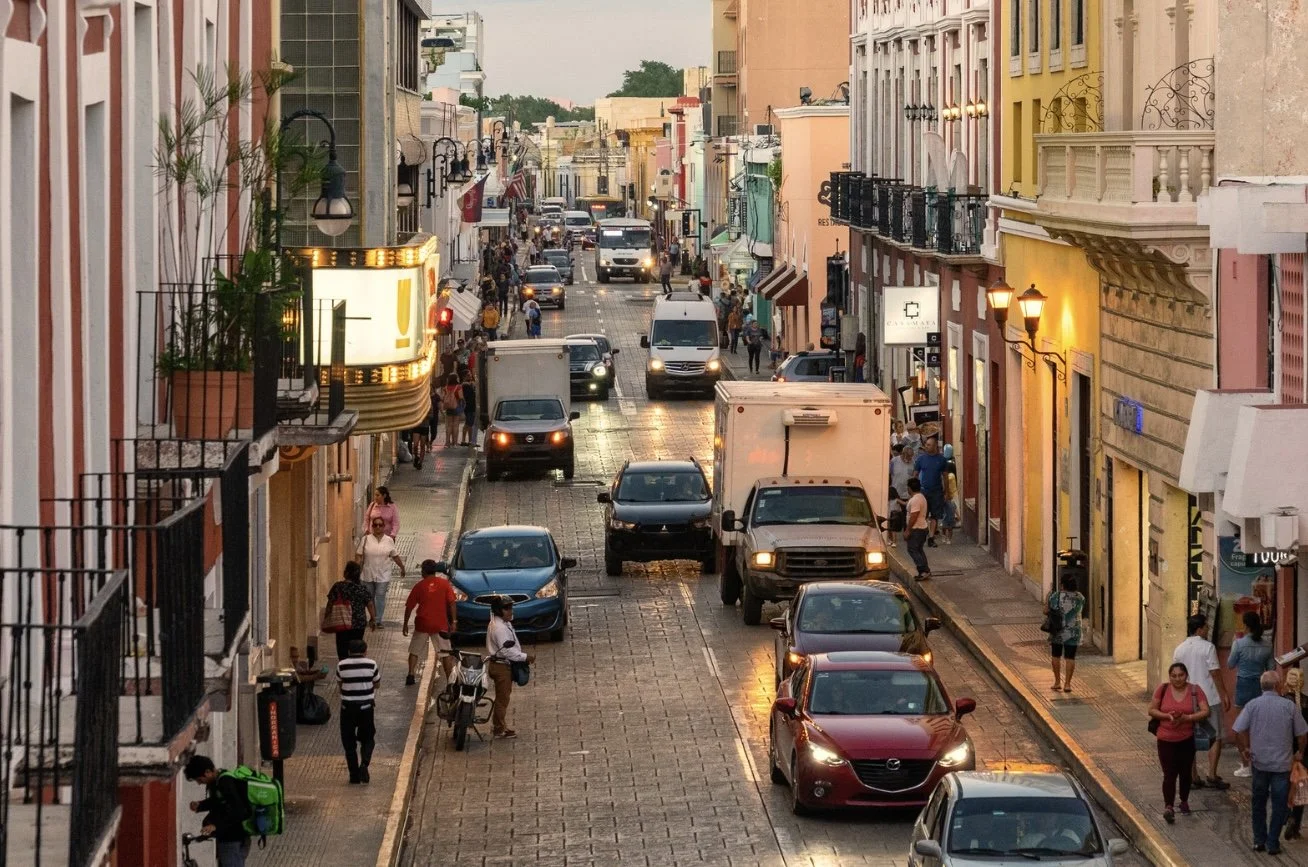
I noticed the noise of the gas trucks announcing their arrival, the fireworks going off without warning, the music spilling into the street, and the traffic moving according to rules I didn’t yet understand.
I noticed the tangled wires, the stray dogs, the brightly painted houses, the water tanks on the rooftops, the pavements that seemed to end or change direction without explanation.
I noticed the ways people solved problems creatively, often with whatever was available. I noticed how generous people could be, how neighbours looked out for one another, how much of daily life happened outdoors and in public view.
And I compared everything with England and Louisiana.
Sometimes consciously, and sometimes without meaning to, I measured the noise against what I was used to. I measured the roads against the roads I had known. The systems, the services, the expectations, the ways people moved through public space.
I was always observing. Always translating. Always trying to understand what something meant. Not only in itself, mind you, but in relation to the places I’d come from.
Perhaps that’s what it means to be new somewhere. You’re constantly being reminded of that newness because everything asks for your attention.
Over time, though, that began to change. The sounds were still there, but I no longer stopped to identify them. The houses were still colourful. The wires were still tangled. The dogs still appeared in the same places, often seeming to know exactly which homes would feed them.
The woman who set up her little stand in the same place every day was still there. The old man still sat outside the same shop. Children still played football in whatever space they had managed to claim as a pitch.
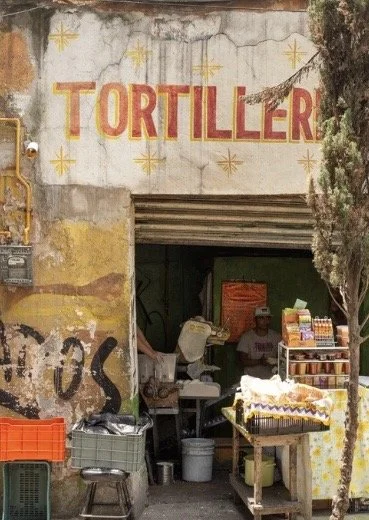
The smell of tortillas being made nearby still drifted through the neighbourhood. Plastic chairs still appeared outside houses and shops, ready for conversation, food or simply the business of sitting.
These things used to feel like Mexico. Now they feel like life.
That doesn’t mean I no longer see them, or that they’ve somehow disappeared. It doesn’t mean I’ve become indifferent to them. They’re simply no longer observations I make about a foreign place. They’re now part of the setting of my everyday life.
The same is true of the things that don’t work.
I still see the potholes. I still notice the crumbling pavements, the unreliable services, the needless wait times, and the gaps in infrastructure. I see the inequality, and I understand that it’s not just a matter of aesthetic difference or cultural contrast. These things affect the people who live here, including me.
Living here hasn’t made those problems acceptable. Nor has it made them invisible. If anything, they’re more immediate now because they’re no longer abstract. I don’t encounter them as a visitor noticing that something is different from England or Baton Rouge. I encounter them as a resident dealing with the consequences of the place I live.
That matters, as there’s a difference between becoming familiar with something and deciding that it’s fine. There’s a difference between no longer being surprised by a problem and no longer caring about it.
I can see the pothole. I can complain about the pothole. And I can still continue with my day. I can recognize that something is frustrating or unfair without needing to experience it as a fresh revelation every time.
Living in Mexico hasn’t made me stop questioning things. If anything, it’s taught me that you can love a place and still see its faults.
I no longer feel the need to defend Mexico every time someone points out that something isn’t working. But neither do I feel the need to criticize it simply because something is different from what I grew up with. I don’t have to choose between affection and honesty.
In the beginning, I felt as though I had to decide what Mexico was. Was it welcoming or not? Beautiful or neglected? Generous or unequal? Was it a place I could belong to, or a place I would always be observing from the outside?
Now I understand that it can be all of those things at once, because Mexico is messy, beautiful, frustrating, generous, noisy, complicated, and incredible. And sometimes that’s all in the same five minutes!
The contradictions no longer need to be resolved before I can feel at home here. I don’t constantly compare my new home with my old one anymore. England and Louisiana are still part of how I understand the world, of course, but they’re no longer the measuring sticks I use for every experience.
I don’t need Mexico to resemble my past to value it. And I don’t need to pretend that everything here is perfect in order to love living here. And that, I think, is what the passing of time has changed.
Mexico stopped being the place I moved to. Somewhere along the way, it became the place I live. Not because I’ve stopped seeing it, but because I’m no longer standing outside it, taking notes. The sounds, the streets, the houses, the dogs, the water tanks, the pavement, the potholes, the generosity, the frustrations…they’re no longer simply things I observe. They are the circumstances of my life.
Perhaps that’s the milestone I’d failed to notice. Not the number of years I’ve been here, but the moment when Mexico stopped being an experience I was having and became the place where my life was happening.