
Bethany Platanella is a travel planner and Michelin Guidebook writer based in Mexico City. She lives for the dopamine hit that comes directly after booking a plane ticket, exploring local markets, practicing yoga and munching on fresh tortillas. Sign up to receive her Sunday Love Letters to your inbox, peruse her blog, or follow her on Instagram.
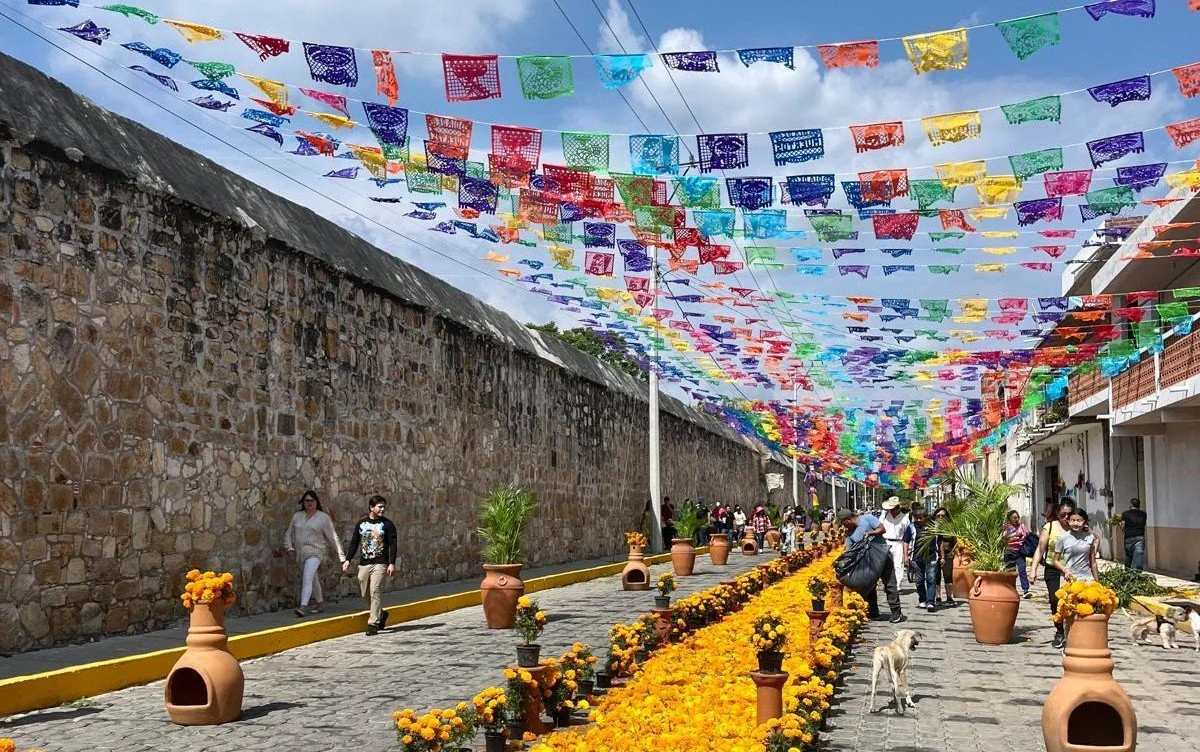
It’s the most wonderful time of the year, and I say that genuinely. I absolutely love Día de Muertos and everything it stands for. If you’ve watched someone die, you might have considered that death is not the end game. Perhaps it’s just a shift; a morphing into a different consciousness or dimension.
Of course, that could all just be a defense mechanism of sorts. “I’ll see you on the other side.” But even if that’s not true, and no “other side” exists, does it matter? The beauty of death is that no one, not even the Pope or the Dalai Lama, knows with 100% certainty what it truly is.
Which means we’re all at liberty to believe death is whatever we want to believe death is. And death in Mexico means journeying back and forth from Mictlán to Mexico, where every November you get to shoot back a few mezcals and chow down on a ton of tamales.
And since I’m assuming you’ve been here a handful of years, as most of our readers have, you’ve done the CDMX parade and Oaxaca City (or have actively avoided both). Maybe you’re wondering: what are some Day of the Dead options that aren’t overcrowded and are relatively easy to get to?
We’ve got you covered.
Below are nine places we’d love to go to immerse ourselves in Day of the Dead 2026, and beyond.
Atlixco, Puebla
Where: Puebla state, at the foot of Popocatépetl and Iztaccíhuatl.
Known for: A Pueblo Mágico known for an abundance of flowers and plant nurseries; it ain’t called Atlixco de las Flores for no reason!
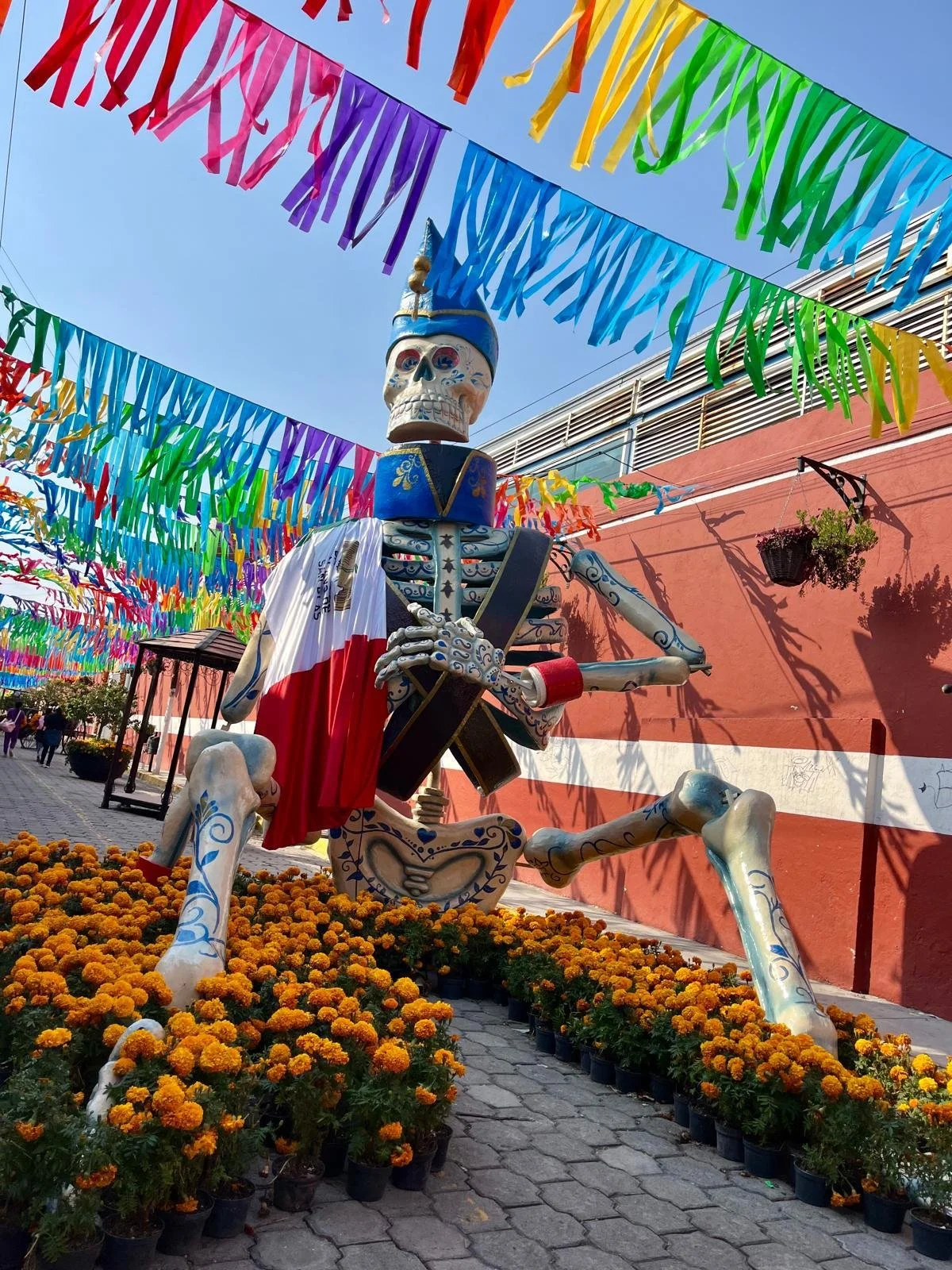
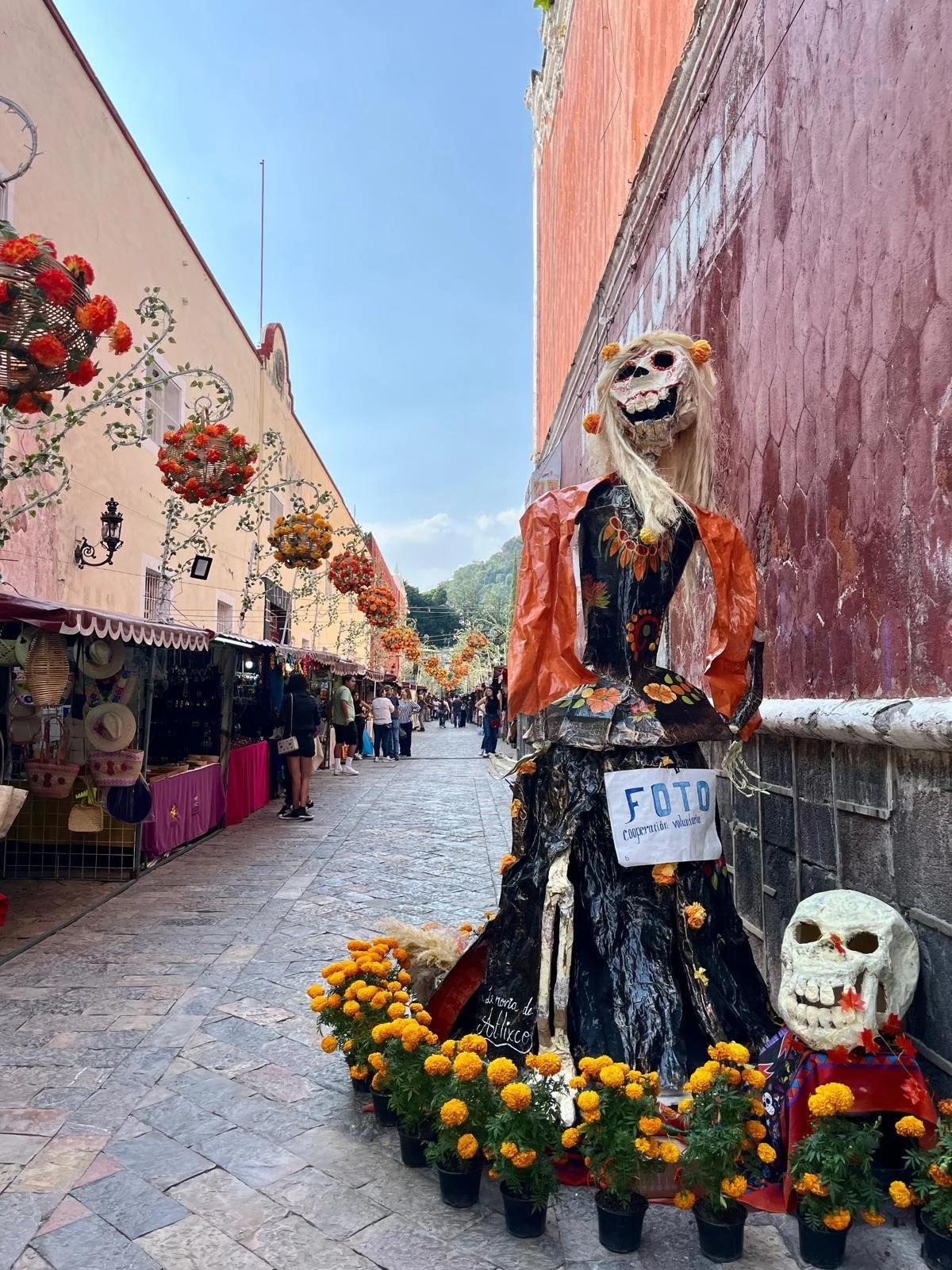
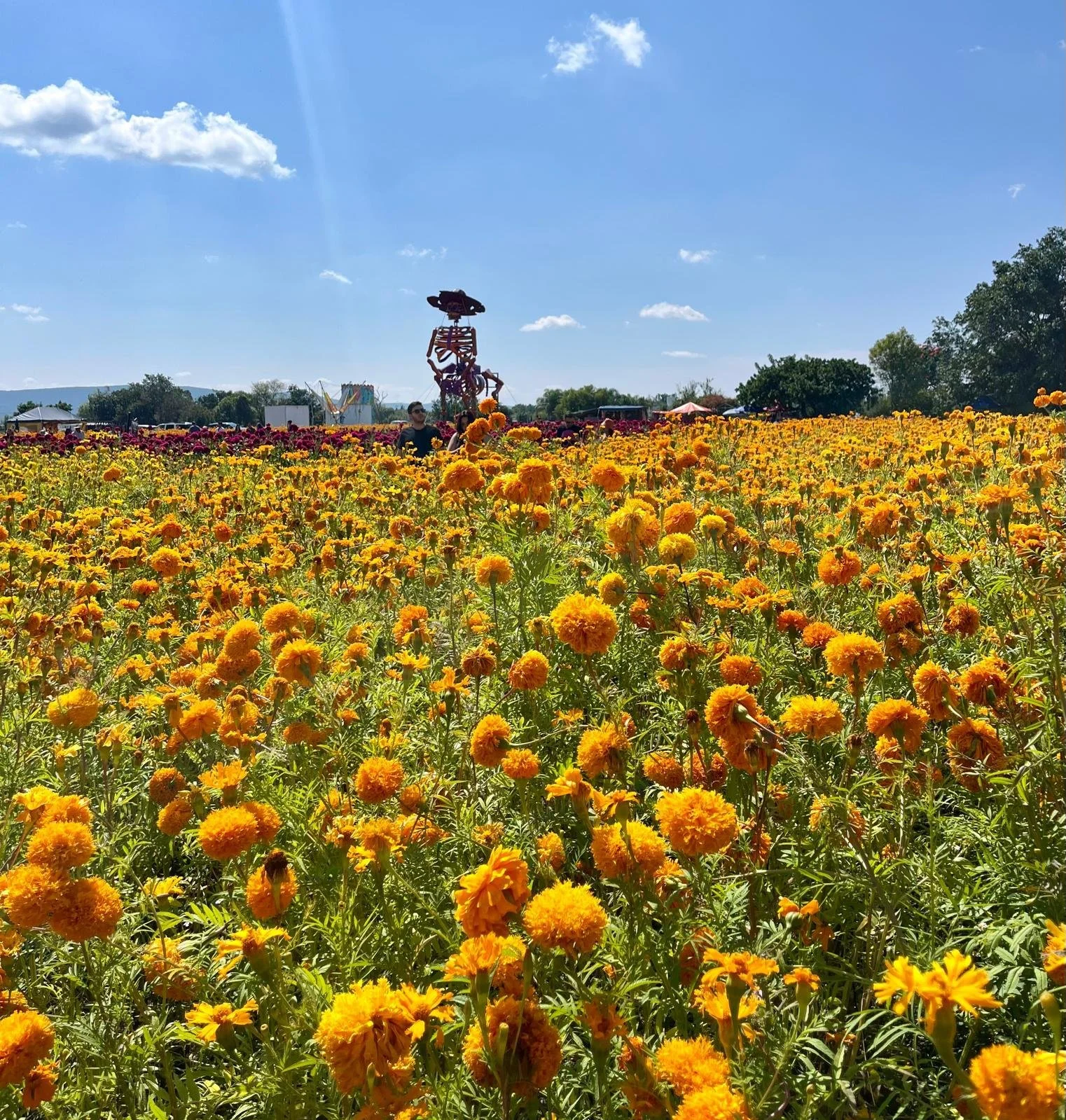
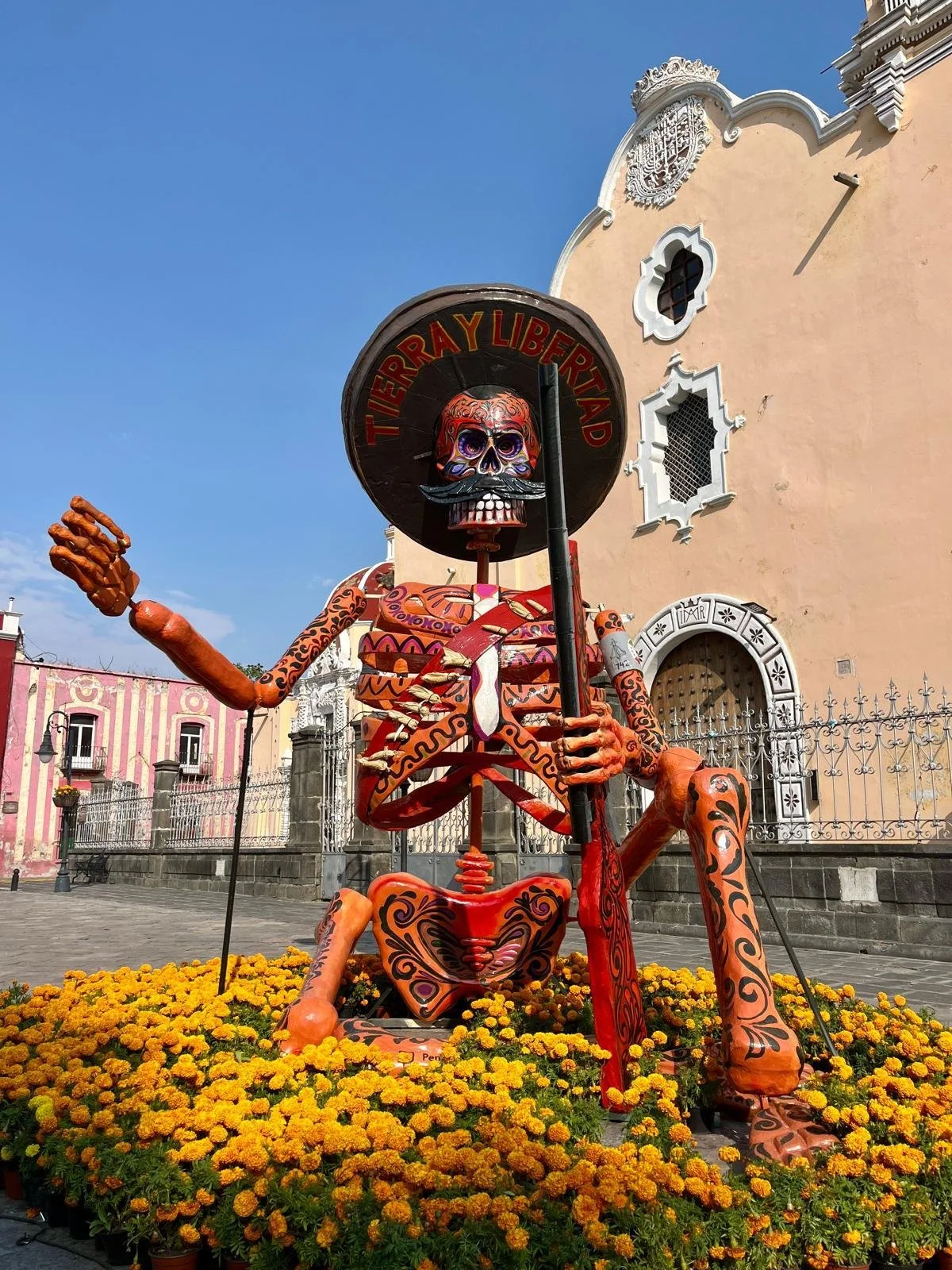
Why for Día de Muertos: The 2026 Valle de Catrinas runs October 2 to November 9, with 19 monumental catrinas themed on pre-Hispanic deities. Most are set up in the city’s center square, making them easy to visit (and free!). Just outside town are the famous cempasúchil fields which unfold in lines of orange and magenta, and a giant Catrina sits in the center. Additionally, you can take half-day trips to Tochimilco and Huaquechula, both famous for their elaborate altars and vibrant markets.
Chignahuapan, Puebla
Where: Sierra Norte de Puebla, about 106 km from Puebla city.
Known for: A Pueblo Mágico since 2012, known for hand-blown glass Christmas ornaments (esferas) and hot springs.
Why for Día de Muertos: The Festival de la Luz y de la Vida. Participants carry more than 1,000 torches from the Zócalo along the Calzada de las Almas, about 1.5 km, to the lagoon. There, dancers on a floating pyramid stage act out the soul's nine trials on its way to Mictlán, with a fireworks show closing the performance. In 2026, the show runs nightly from October 30 to November 2, and tickets range from $400 to 1,500 MXN.
Tepoztlán, Morelos
Where: Morelos, in a valley below the Sierra de Tepoztlán.
Known for: Among the first Pueblos Mágicos (2001), it lost the title in 2009 and regained it in 2010. It’s a spiritual center thanks to its proximity to Quetzacoatl’s birthplace; also known for El Tepozteco mountain, where a small temple on the ridge honors Tepoztecatl, god of pulque.
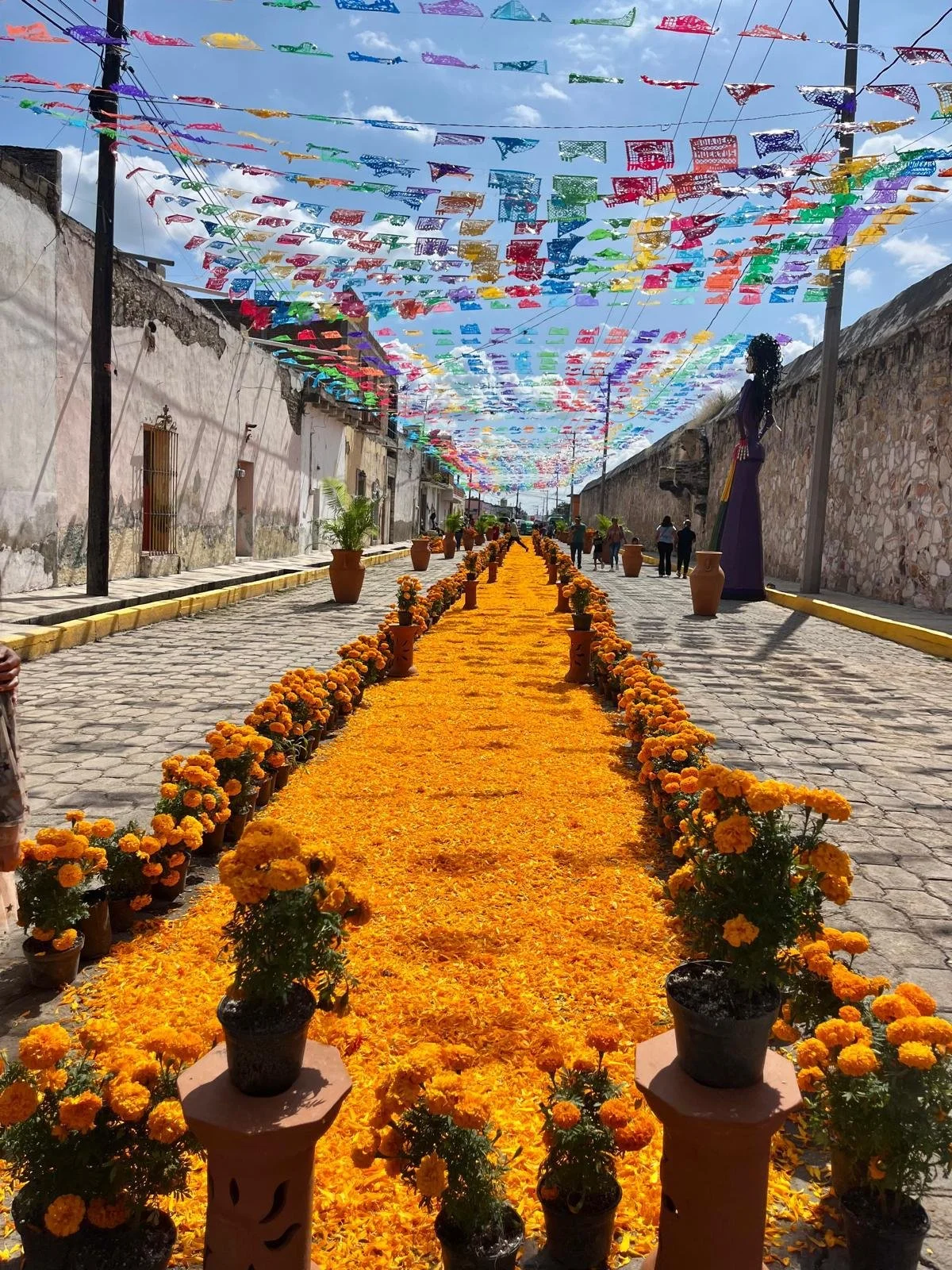
Why for Día de Muertos: It’s a long celebration in Tepoz, starting at midnight on October 18, when church bells across town ring to tell the dead the town is getting ready. Families lay a cempasúchil petal path from the front door to their personal ofrendas. On November 1 and 2, children walk the streets asking for their calaverita, traditionally carrying chilacayota squash carved into candlelit lanterns. Families also stack logs outside their houses for night bonfires and offer ponche de naranja to visitors. The season runs past November 2, with the Octava (the souls’ return to Mictlan) falling on November 8, and a mass at the town cemetery on November 9.
Sisal, Yucatán
Where: A small port on Yucatán's Gulf coast, one hour from Mérida.
Known for: Pueblo Mágico since 2020, full of mangroves and quiet beaches.
Why for Día de Muertos: Yucatán observes Janal Pixán ("food of the souls" in Maya) from October 31 to November 2. A day for children, a day for adults, then a mass for the souls, often held in the cemetery. Sisal's second annual Festival de las Ánimas starts on October 30, when small chalanas decked with flowers, candles, and lights float across the ciénaga. It runs through October 31.
*Alternatively, Mérida's Festival de las Ánimas runs October 24 to November 2, 2026, with its Paseo de las Ánimas on October 30 at 6 p.m.
Pátzcuaro, Michoacán
Where: On Lake Pátzcuaro, about 60 km from Morelia.
Known for: Pueblo Mágico since 2002, known for Purepécha lake communities and crafts. Janitzio is the lake's most populated island. Nearby Tzintzuntzan was the most important city of the Purepécha empire.
Why for Día de Muertos: Michoacán is Día de Muertos. The 2026 program lists more than 700 events from October 23 to November 2. I’ve decided to highlight Pátzcuaro for next year. It’s booked out months in advance (though, una nunca sabe, it’s worth checking hotel availability just in case!) Families keep night vigils in the cemeteries of the lake villages; boats to Janitzio leave from Pátzcuaro piers. Tzintzuntzan, reachable by road, is known for cemeteries decked with giant cempasúchil arches. In town, Plaza Vasco de Quiroga hosts an artisan market and the Basílica holds an organ concert.
San Sebastián del Oeste, Jalisco
Where: Western Jalisco, tucked between two mountain ridges near Puerto Vallarta.
Known for: A Pueblo Mágico since 2011 and an old silver-mining town, founded in 1605, with original streets and alleys. Think pine and oak forests, waterfalls, coffee plantations and fruit orchards, plus silver jewelry and hand-rolled cigars if you’re souvenir hunting.
Why for Día de Muertos: It’s quiet. Families set up altars and ofrendas around town, and on November 2, there are callejoneadas up to the Panteón Antiguo, the old cemetery. Fair warning: there’s not much about it online, so go for the mountain escape and treat the festivities as a bonus. Already in Vallarta? Easy add-on.
San Agustín Etla, Oaxaca
Where: Central Valleys of Oaxaca, roughly 20 to 40 minutes from Oaxaca City. That’s close enough to sleep in the city and still make it.
Known for: CaSa, the arts center Francisco Toledo pushed to create inside an abandoned textile mill. Not a Pueblo Mágico, which might be part of the charm.
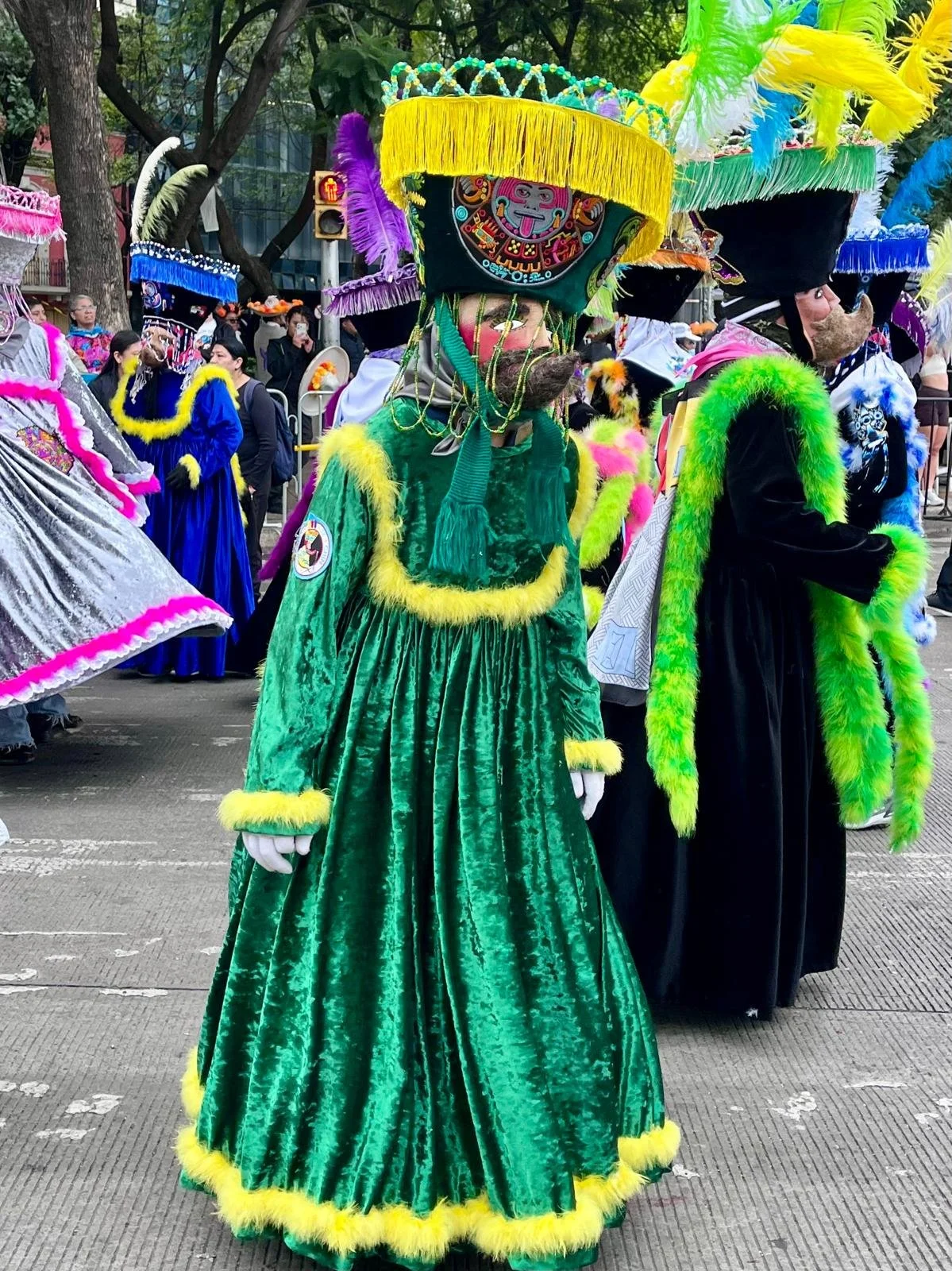
Why for Día de Muertos: The Muerteada. On the night of November 1, a comparsa with a live band parades through the streets until the early morning. At the center of it all is street theater: a spiritist, with help from a priest and a doctor, brings a dead man back to life while a devil tries to lure him away. Locals spend weeks on their costumes, and it shows. Bring comfy shoes and plan to sleep in the next day.
La Huasteca Potosina, San Luis Potosí
Where: Eastern San Luis Potosí. It’s a whole region, not a town; Ciudad Valles, Tamazunchale, Xilitla and Aquismón are among its municipalities.
Known for: Rivers, waterfalls and Las Pozas, Edward James’s surrealist sculpture garden in the Xilitla jungle. Xilitla and Aquismón are both Pueblos Mágicos.
Why for Día de Muertos: Known here as Xantolo, the holiday gets its name from the Latin sanctorum. It officially runs October 31 to November 2, but some communities stretch it to a week, with flower arches over altars, masked comparsas and cemetery visits. And the dancing is no casual commitment: join a comparsa and you’re in for at least seven years.
FYI: This one’s a road trip. The 2026 season kicked off September 29 with the Bajada de Máscaras in Ciudad Valles, and the state’s “Xantolo se Vive” program hits Huasteca towns October 30 to November 2. Want it less touristy? Head to Tamazunchale.
Xochimilco, Mexico City
Where: Southern CDMX, about 22 km from the Zócalo.
Known for: Canals, chinampas and trajineras. A UNESCO World Heritage Site since 1987 (together with the historic center) and CDMX’s first Barrio Mágico. It’s also home to the Isla de las Muñecas, a chinampa where old, broken dolls hang from the trees.
Why for Día de Muertos: La Llorona, performed at night on the Cuemanco canals while you watch from a trajinera. “La Llorona. La original” is in its 34th year. Shows run Friday to Sunday at 6 p.m. and 9 p.m. through November 22, with general tickets at $750 MXN. During the season, kayak tours also paddle out to the cempasúchil fields.