
Mexico gave my kids more than anyone expected
Laura-Lise Jeanine Wong is the author of Immersing in Mexico: How our family moved, adapted and built a life here.
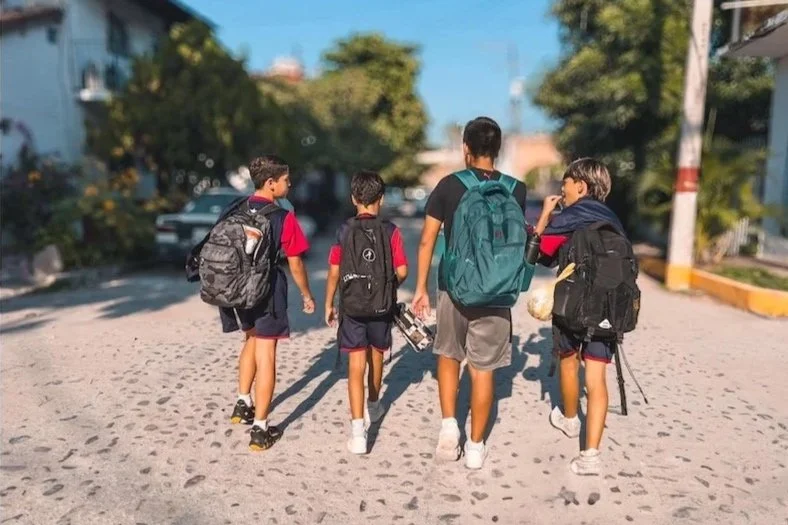
Not long ago, in a Facebook group, I came across a comment from a woman who had moved from the United States to Mexico just before her 14th birthday. She'd arrived barely able to read or write Spanish, entered third-year secundaria, and quickly discovered that the language barrier wasn't her only problem.
Her classmates had already covered geography, chemistry, algebra, and math concepts she had never learned. She remembered sitting down to take her entrance exams and realizing just how much these kids already knew.
My first thought was that I'd heard this story before. My second was that I'd lived a version of it. We've been raising our family in Puerto Vallarta for five years now, but before we moved here, people had plenty of opinions about what Mexico would mean for our children.
What about their education? Their healthcare? Their safety?
Underneath it all was an assumption that taking children from Canada to Mexico must mean accepting less for them. It always struck me as a strange way to think.
I know that Mexico, as it is often presented outside the country, can become shorthand for cartel violence, poverty and corruption. But it wasn't as though we were relocating our children into an episode of Narcos. That picture leaves remarkably little room for ordinary life: school runs, soccer practice, pediatricians, birthday parties, homework, and parents worrying about exactly the same things parents worry about everywhere else.
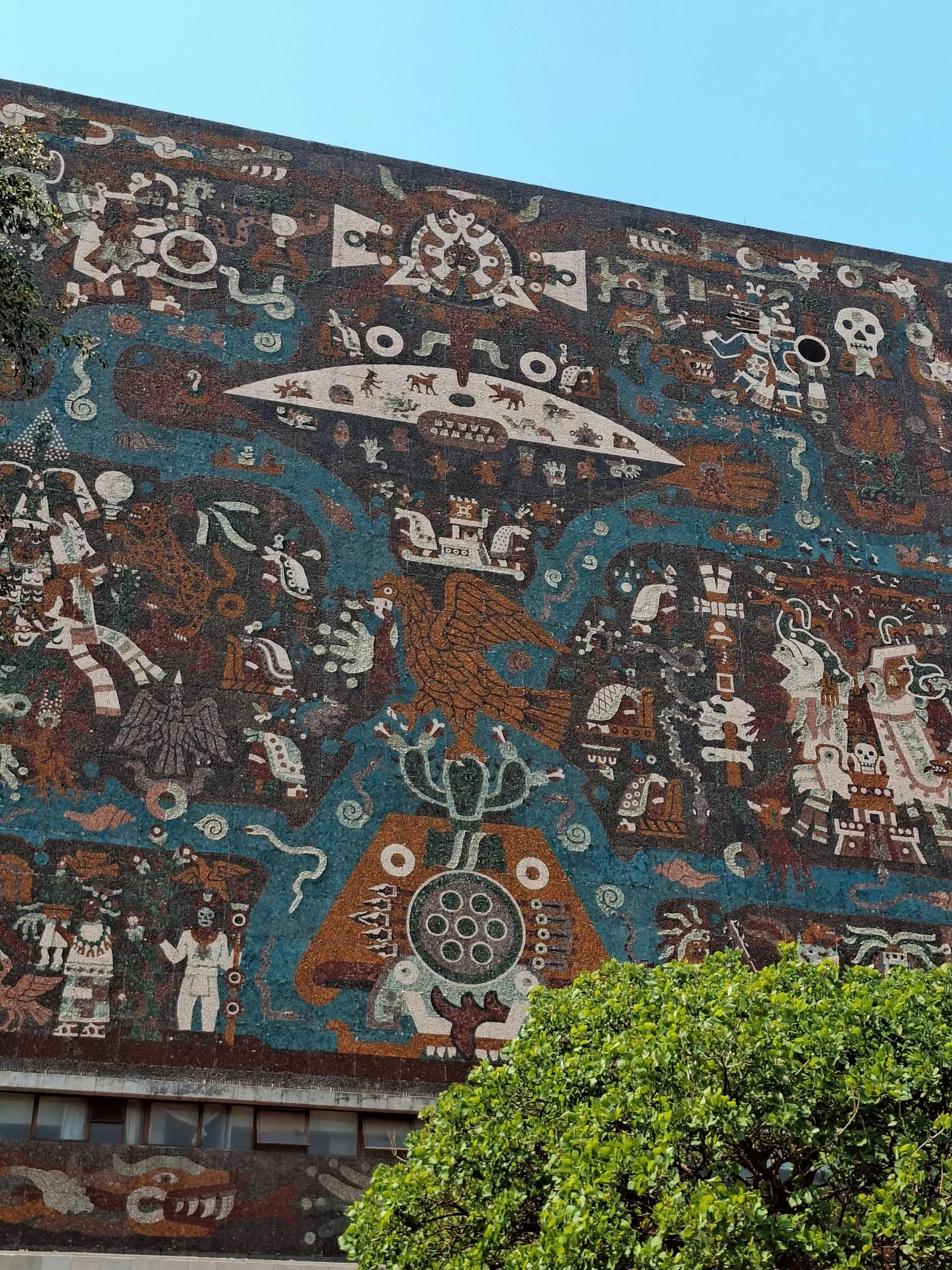
Education was one of my biggest questions, though probably not in the way people assumed. I expected Spanish to be the challenge. What I didn't expect was to look at what children their age were already learning and wonder whether our Canadian-educated kids were prepared for it.
The entrance exams were my first hint that people's assumptions about Mexican education might be backwards. Conversations with teachers reinforced it. One teacher, who had studied in both Mexico and the United States, told me she'd had the same experience in reverse. She went to the US for her senior year of high school and found that much of what her classmates were studying, she had covered in Mexico two years earlier.
Over the years, I've heard versions of that story again and again. The Facebook comment was simply the one that finally prompted me to write this.
It becomes much less surprising when you look at the curriculum itself.
In third-year secundaria, for example, SEP mathematics materials include quadratic equations, factoring, the quadratic formula, quadratic functions, the Pythagorean theorem, similarity and congruence, and probability. Mexico has a highly structured academic tradition, and secundaria alone covers a breadth of subjects that would surprise many Canadian and American parents.
That doesn't mean Mexican students, as a national population, outperform Canadian students on every international standardized test. They don't. But that's a different question.
National test results reflect enormous differences in poverty, access, resources, and socioeconomic circumstances. They don't tell you that the education offered inside a particular Mexican school isn't rigorous.
I'm well aware that our children have privileges that need acknowledging. They attend a private Mexican school, and not every child here has access to the education they've received. Schools vary enormously, just as they do elsewhere, and educational inequality in Mexico is very real. I'm not interested in pretending otherwise.
What I do question is the assumption that the education simply isn't here.
The school we chose follows the SEP curriculum. It offers English instruction, so technically it could be described as bilingual, but I think that word gives foreign families the wrong idea about the environment we deliberately chose. This isn't an international-school bubble where foreign children can spend their day functioning mostly in English. The overwhelming majority of students are local, so when our boys are with their friends, they speak Spanish.
That mattered to us because we didn't move here temporarily. We immigrated. We weren't trying to recreate our Canadian life with palm trees. If Mexico was going to be home, our children needed to be able to actually live here, and that meant far more than practicing Spanish for an hour in a classroom. We wanted them to have local friendships, to understand the culture around them, and to speak the language, because it was, and would remain, part of their lives.
I don't want to romanticize those first months. Our children went from essentially no Spanish to full immersion almost overnight. At first, they understood almost nothing. Then they caught words. Then sentences. Then conversations. There was frustration and overwhelm, but there were funny moments too.
My youngest once told me, "Mom, I have hunger." He was thinking tengo hambre while speaking to me in English. Sometimes the boys forget an English word. They'll start telling each other something in English and finish in Spanish. Somewhere along the way, Spanish stopped being the language they were learning and became one of the languages they live in.
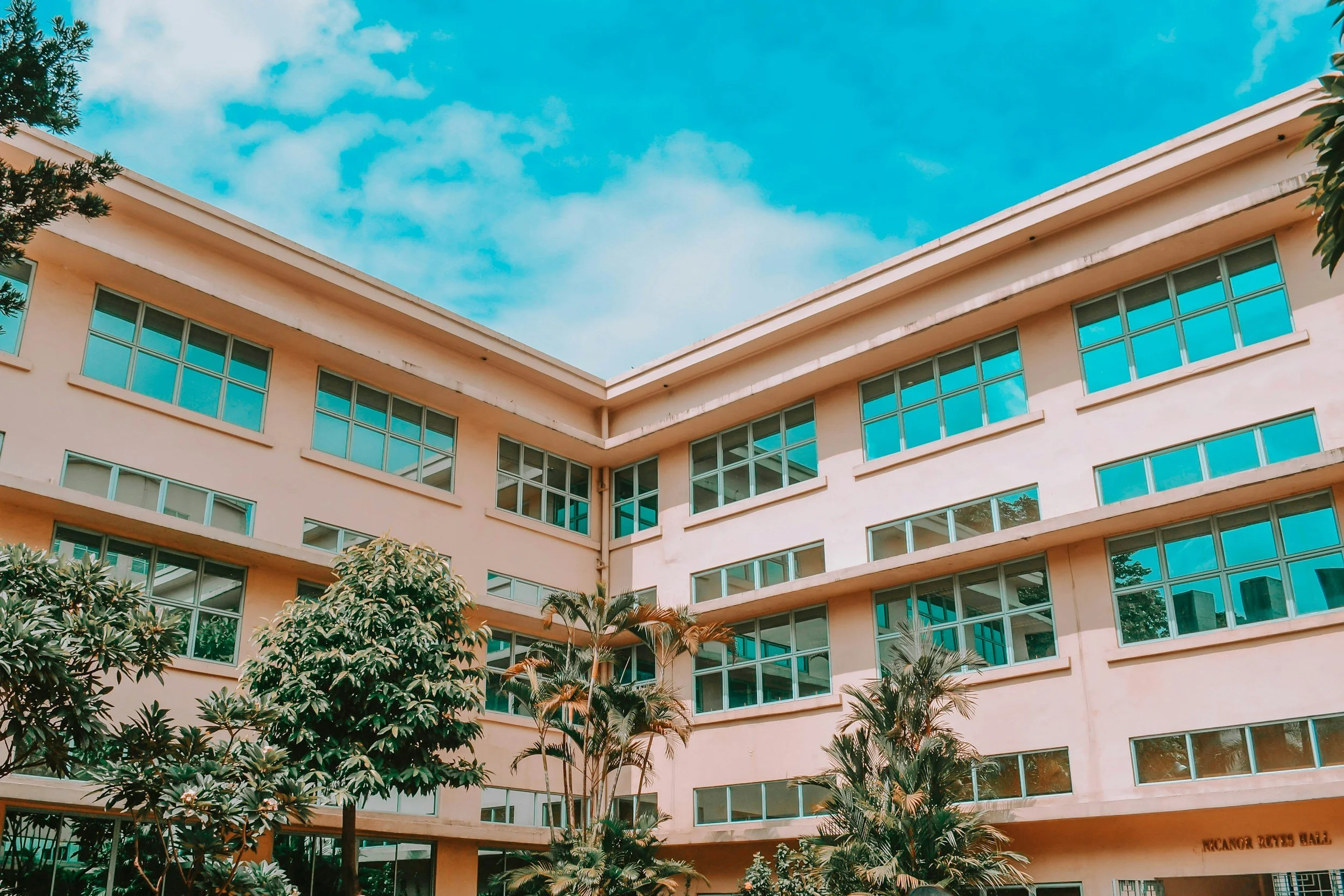
What we didn't fully appreciate when we made that choice was how demanding the environment would be. The material was harder, but the bigger difference was how broad and participatory the education turned out to be.
I've watched science fairs where students don't simply hand in a project. They stand in front of parents and visitors and explain what they've learned. I've watched geography events built around research and presentation. The school has academic teams whose competitions have taken students far beyond Puerto Vallarta, including robotics students to Singapore and math students to Japan.
The expectation is that students won't simply memorize something long enough to pass a test. They're expected to present it, explain it, demonstrate it, and sometimes compete with it. That kind of rigor isn't right for every child.
Our oldest son finished his second year of secundaria and chose not to continue. The workload and academic demands weren't the right fit for him, so we're now finding another route through the Mexican education system that better suits who he is and how he learns.
There's an irony in that I couldn't have imagined five years ago. People worried that moving to Mexico would mean our children wouldn't be challenged enough. A few years later, one of them left his school because it was too demanding. That doesn't make the school wrong for him, or him wrong for the school. It makes it a good school that wasn't the right fit for one particular kid. As a parent, it has led me to let go of another assumption: that the most academically rigorous option is automatically the best one.
Our youngest is still at that school and thriving. They're two children raised in the same house, by the same parents, who went through the same move, and they needed different things from their education. If anything, navigating that has made me much less interested in declaring one school system, one country, or one educational path "better" than another.
I'm more interested in why so many people assumed Mexico couldn't possibly offer enough in the first place. Five years ago, friends and family were thinking about what our children might lose by moving here. Would they fall behind? Would they have the same opportunities? Would we eventually discover that we'd limited their futures with a decision we'd made for them?
What they couldn't see yet was everything the boys were going to gain.
Their education here hasn't only happened in a classroom. They have friendships that exist in Spanish. They understand slang and cultural references I still have to ask them to explain. They move through Mexican culture without consciously decoding it first. Mexico isn't simply the country their parents chose to live in. It's their home, in a way I don't think it can ever quite be for me.
None of this means every family should move to Mexico, that every Mexican school is exceptional, or that every child will thrive in the kind of environment we chose. Our story is, and can only be, our story. But moving our children to Mexico did not mean lowering our expectations for them. If anything, one of the first lessons Mexico taught us was to question where those expectations came from in the first place.
They have a hometown in Canada and a childhood in Mexico. They've struggled here, succeeded here, learned another language here and, in the process, built lives that belong to them independently of us.
We moved here as a family, but in some ways, they arrived before we did.