
Coca-Cola and the sacred
María Castillo is a Mexican writer with a deep affection for her home and a passion for exploring the stories, customs, and everyday moments that help explain what makes Mexico unique.
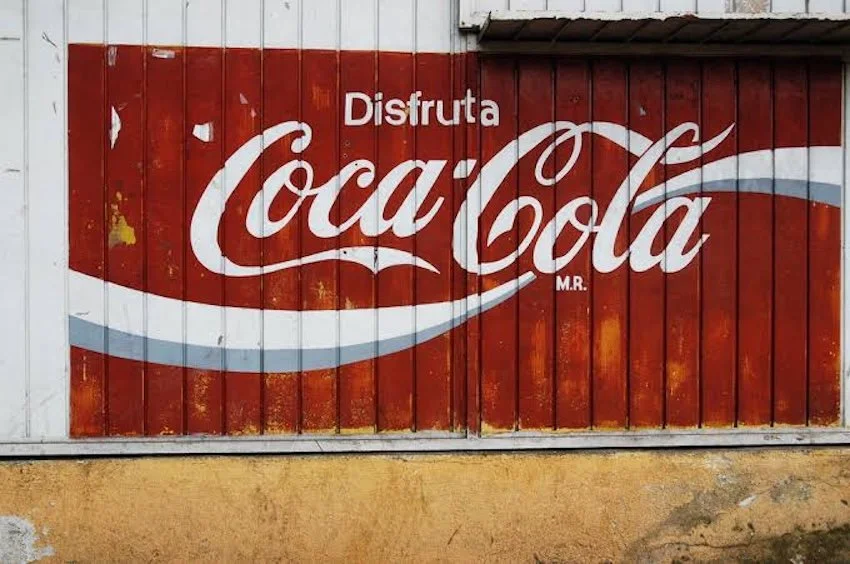
In 1969 Coca-Cola told the world that it was "the real thing." Nowhere has that slogan been taken more literally than in a church in the highlands of Chiapas, where the claim has acquired a meaning no advertising executive in Atlanta could have imagined.
In the Church of San Juan Bautista in San Juan Chamula, a Tsotsil Maya town a few miles from San Cristóbal de las Casas, there are no pews. The floor is carpeted with fresh pine needles, the air thick with copal smoke and the heat of a thousand candles, and families kneel in small clusters before the saints, murmuring prayers in their own language. Among the eggs, the candles, the bottles of posh, the fiery local cane spirit, and sometimes a live chicken destined for sacrifice, stand bottles of Coca-Cola. These are not there as refreshments, though. They are there as divine instruments of healing.
Illness, in this cosmology, can be a matter of the soul as much as the body, a question of spirits lodged where they do not belong. Carbonation produces belching, and belching expels whatever malign presence has taken up residence inside the sufferer. The fizz that elsewhere signals mere pleasure here becomes a kind of exorcism in a syncretism between Mexico’s ancient past and the capitalism that has flowed south from the United States over the course of the previous century.
What is most arresting about the practice is not its strangeness but its coherence. A product engineered to be identical everywhere, a monument to global uniformity, has been absorbed into one of the most stubbornly particular religious traditions in the Americas. Chamula hasn’t so much adopted Coca-Cola as converted it.
Mexico drinks soft drinks on a scale that is difficult to comprehend. For years it has ranked at or near the top of the world's per capita consumers, and within Mexico, Chiapas, the poorest state in the country by almost every metric, is often reported as the heaviest-drinking region of all, with studies around San Cristóbal suggesting consumption measured in litres per person per day rather than per week. Such figures are debated and difficult to pin down, but no one disputes the broad picture, nor the shadow that falls across it.
Diabetes has become one of the leading causes of death in the country, and in the indigenous communities of the highlands, where diets were once built on maize, beans and squash, the disease has spread with a speed resembling an epidemic. The same bubbles that drive out evil spirits in the church are letting in something worse.
But how does a drink become both holy and harmful?
Part of the answer lies in the most mundane facts of geography and infrastructure. In much of rural Chiapas, clean drinking water has long been unreliable, while Coca-Cola, with its formidable distribution network, reaches villages that the water pipes do not. A sealed bottle is safe in a way that the tap or the stream may not be, and it is often easier and cheaper to find.
The paradox is particularly evident on the edge of San Cristóbal itself, where Coca-Cola’s large bottling plant draws its water from the local aquifer, while residents of some neighbourhoods in the same city have complained for years of taps that run dry.
Whatever the technical rights and wrongs of the arrangement, the image has a terrible symbolic clarity: water flowing out of the ground and into the factory, returning to the people only once it has been sweetened, carbonated and sold.
Geography alone, however, cannot explain the depth of the attachment. The spread of Coca-Cola through the highlands was not simply a matter of the market reaching remote places. In Chamula and the surrounding communities, the distribution of soft drinks and liquor became bound up with local power, with the caciques, the political bosses whose authority rested on a blend of traditional office and close ties to politics. Control of the soda concession could be a source of wealth and patronage, and the drink's place in ritual life helped to secure its place in the economy. Tradition and commerce reinforced each other until it became difficult to say where one ended and the other began.
The bond between Coca-Cola and Mexican power, moreover, reached to the very top: Vicente Fox, who ended seventy years of single-party rule when he won the presidency in 2000, had earlier risen through the company to run its Mexican operations. Few nations can claim so intimate a relationship with soda.
Yet it would be a mistake to tell this as a simple story of corporate predation and native victimhood, because that would flatten the people at its centre into passive recipients of history. The families who place Coca-Cola before the saints are not dupes. They have chosen, adapted and assigned meaning, and their religion has never been a museum piece.
The Catholicism of Chamula is itself a synthesis, centuries in the making, of Spanish saints and Maya cosmology, and the community has guarded its autonomy with a fierceness that extends to expelling those who convert to evangelical Protestantism and forbidding visitors from photographing the interior of the church. It is not a culture that yields easily.
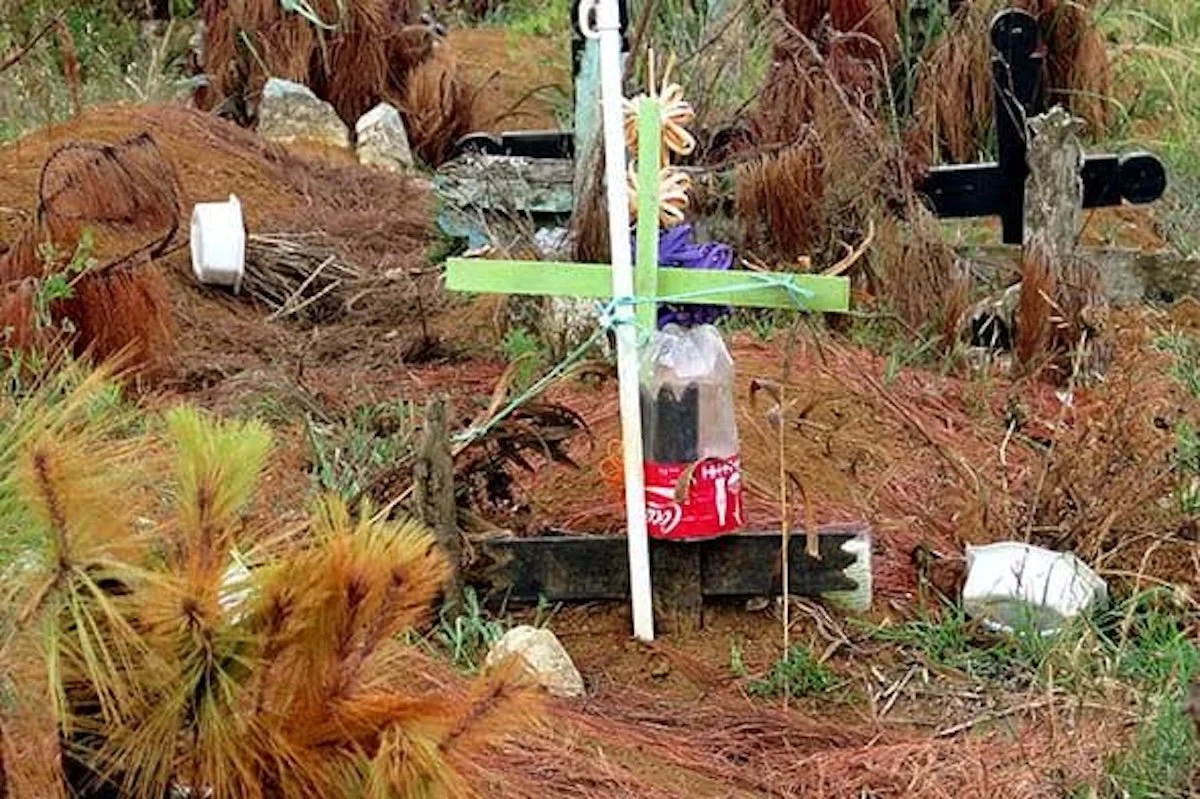
If Coca-Cola has found a place in its rituals, that is in part because the culture made room for it, much as it once made room for a Christian God.
Still, the freedom to choose is never exercised in a vacuum. A preference shaped by decades of advertising, by unreliable water, by the economics of local bosses and by the sheer ubiquity of the product is a preference of a peculiar kind.
Mexico has not been idle in the face of all this. In 2014 the government introduced a tax on sugary drinks, one of the first of its kind among large countries, and early studies suggested that purchases fell, at least for a time.
More recently, packaging has been stamped with stark black octagonal warning labels, and some states have moved to ban the sale of sugary drinks and junk food to children. These are serious measures, admired by public health advocates around the world. But a tax or a warning label speaks the language of the consumer, of individual choice and rational calculation, and it is far from obvious that it can reach a drink that has become, for some, a means of speaking to God.
There is one final irony. North of the border, in the delis and taquerías of Los Angeles, Chicago and New York, "Mexican Coke" has become a small cult object, prized for its glass bottle and its use of cane sugar in place of corn syrup, and sold at a premium to customers convinced it tastes more genuine. The drink that Mexico imported from the United States has returned there as a symbol of authenticity, the Mexican version of the real thing. Somewhere in that loop, between Atlanta, the highlands of Chiapas and an artisanal sandwich shop in Brooklyn, the very idea of the authentic seems to dissolve, like sugar in water.
Perhaps that is the lesson of the bottles on the pine needles. Authenticity is usually imagined as something pure and original, a tradition untouched by commerce, a culture sealed off from the world.
The church at Chamula suggests something messier and more human: that the sacred has always been made from whatever is at hand, and that what is at hand is shaped by forces far larger than the people who use it. The Tsotsil healer holding a bottle of Coca-Cola is a portrait of modern Mexico itself, faithful and globalised, ancient and commercial, healing and harmed, all at once.
The company was right, in the end.
It is the real thing, just not the thing it meant.